
Direct Answer: Pulling a tooth is the healthiest choice when infection, severe damage, or overcrowding makes saving it impossible, too costly, or harmful to the teeth around it.
Nobody wants to hear that a tooth needs to come out. There’s an automatic assumption that pulling a tooth means something went wrong — that you waited too long, didn’t brush enough, or somehow failed. But that’s not the full picture.
Sometimes removing a tooth is the most protective thing you can do for the rest of your mouth. We see this regularly with patients in Huntington Beach, from Oak View families dealing with infected teeth to adults in Huntington Harbour who’ve been nursing a cracked molar for months hoping it’ll hold. At some point, the math changes — and keeping a tooth that can’t be saved starts causing real harm.
This article focuses on the two situations where extraction genuinely makes sense: severe infection or structural failure, and overcrowding or impaction. If you’re trying to figure out whether your tooth is worth saving, these are the angles that actually matter.
When a Tooth Is Too Far Gone to Save
There’s a difference between a tooth that’s damaged and a tooth that’s gone past the point of no return. Dentists look at several factors when making that call — and it’s not just about how much it hurts.
A tooth is typically beyond saving when:
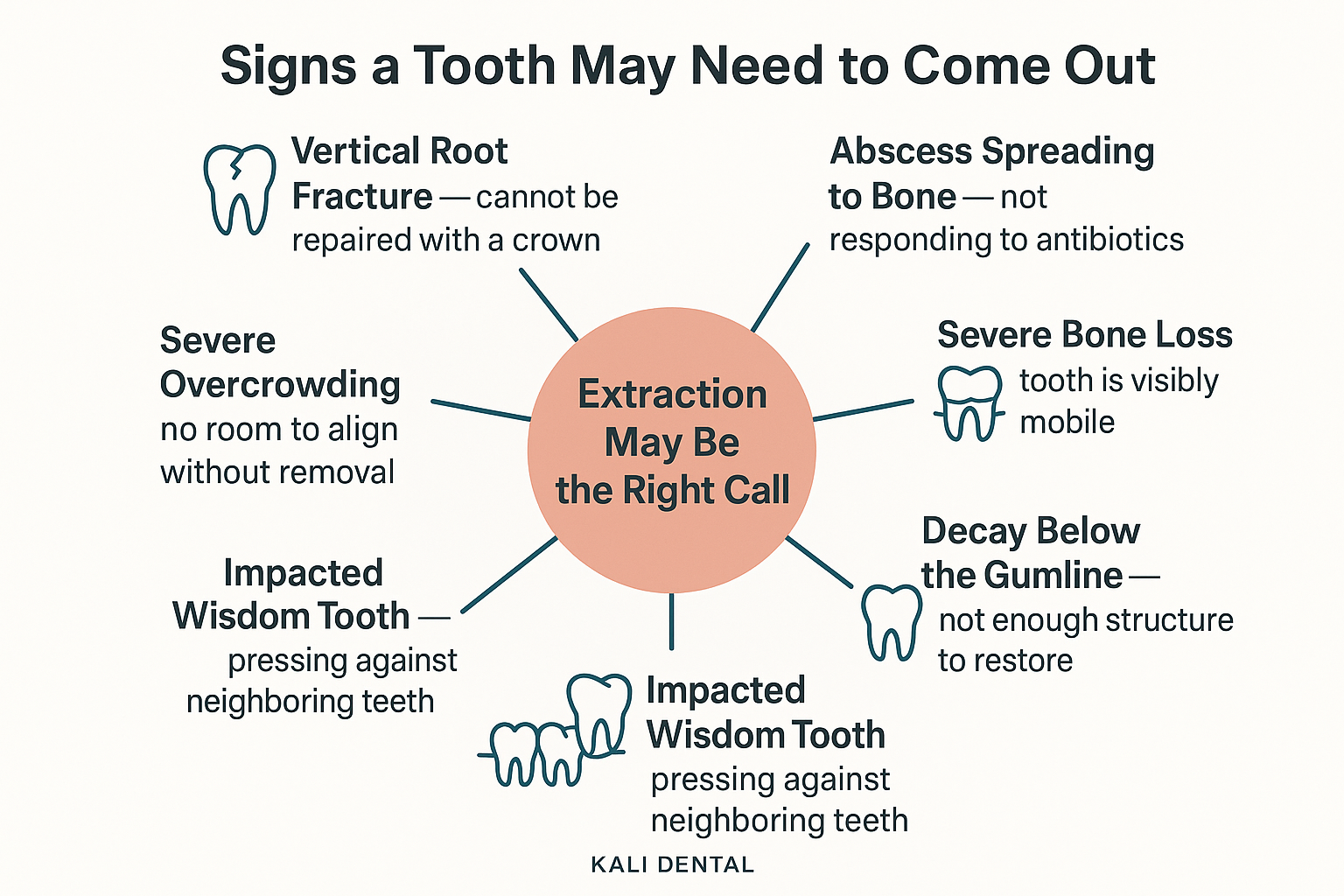
- The root is fractured vertically (a crack running down the length of the root, which can’t be sealed with a crown or root canal)
- Decay has reached below the gumline and there isn’t enough healthy tooth structure left to anchor a crown
- An abscess has spread into surrounding bone or soft tissue and hasn’t responded to antibiotics
- The bone supporting the tooth has deteriorated so severely from gum disease that the tooth is mobile — meaning it shifts when you press on it
For patients who’ve already gone through a root canal with temporary crown and the tooth is still failing, extraction may be the only path that stops ongoing infection from affecting neighboring teeth.
The hard truth is that a badly infected tooth doesn’t just hurt — it actively threatens bone. Waiting on an extraction in that situation often means a harder recovery later, not an easier one. Getting it out when the infection is still contained is almost always the better outcome.
The Cost of Saving a Tooth That Can’t Be Saved
When a tooth is borderline, we always talk through the real numbers with our patients. A root canal plus a crown in the Huntington Beach area typically runs $1,800 to $2,800 out of pocket depending on the tooth and whether you have insurance. That’s a reasonable investment — if the tooth is going to hold.
But if the prognosis is poor — say, a vertical fracture or significant bone loss — spending that $2,000+ may buy you 12 to 18 months before the tooth fails anyway. Then you’re back in the chair, paying again, and dealing with more bone loss in the process.
For patients on our in-house savings plan or without insurance, this is an especially important conversation. A straightforward extraction at our office can cost a fraction of that, and preserving your budget for a dental implant later is often the smarter long-term plan. We’d rather give you an honest cost-benefit picture than send you down a road that doesn’t end well.
If cost and insurance coverage are part of your decision — and for most Huntington Beach families, they are — this guide on affordable dental care options explains what’s actually available to patients without coverage.
Saving vs. Extracting: When Each Option Makes Sense
This isn’t a one-size-fits-all decision. Here’s a side-by-side look at the factors that typically point toward saving a tooth versus removing it.
| Factor | Lean Toward Saving | Lean Toward Extraction |
|---|---|---|
| Tooth structure remaining | At least 50% of crown intact | Decay or fracture below the gumline |
| Root condition | Roots intact, no vertical fracture | Vertical root fracture present |
| Bone support | Bone levels stable or treatable | Significant bone loss, tooth is mobile |
| Infection status | Localized, responds to treatment | Spread to bone, not responding to antibiotics |
| Cost vs. prognosis | Root canal + crown = good long-term value | High cost, poor prognosis — extraction is more practical |
| Adjacent teeth | Neighbors are healthy | Keeping tooth risks infection spreading |
When Overcrowding or Impaction Makes Extraction the Right Call
Infection isn’t the only reason a tooth needs to come out. Overcrowding and impacted teeth are two completely different scenarios — but both can make extraction the most protective option for your mouth.
Wisdom teeth are the most common example. Most adults don’t have enough room in their jaw for a third set of molars. When wisdom teeth come in at an angle, they can push against the tooth in front of them, cause pain along the jawline, and trap bacteria in spots that are nearly impossible to clean. We see this often with patients in their late teens and early twenties — it’s one of the most frequent reasons young adults in Goldenwest and Central Huntington Beach come in for oral surgery.
Overcrowding is a separate issue that sometimes shows up in patients considering clear aligners. If there genuinely isn’t room to move teeth into alignment, removing one or two premolars first can create the space needed for everything else to shift properly. This isn’t a workaround — it’s standard treatment planning when the jaw is too small for all the teeth it’s holding.
If you’re dealing with bite issues related to crowding, our article on how to fix an open bite covers some of the treatment paths that come into play. And patients exploring alignment options without traditional braces can read more about fixing crooked teeth without braces.
Signs a Tooth May Need to Come Out
These are the most common clinical signs that point toward extraction — the ones Dr. Kalvin looks for before making any recommendation.
What Happens to the Space After a Tooth Is Removed
One of the most common worries patients share is what happens to the gap left behind. And it’s a fair concern — an empty socket doesn’t stay static. The bone underneath a missing tooth begins to shrink over time because it no longer has the stimulation that a tooth root provides. This process, called bone resorption, can start within the first few months after an extraction.
This is why we talk about replacement options before or shortly after an extraction — not because we’re trying to stack up procedures, but because the window for the best outcome is real. A dental implant placed within several months of extraction tends to involve less bone grafting and a more straightforward process than one placed years later.
That said, not every gap needs an implant. Back molars that don’t affect your bite, smile, or adjacent tooth stability may not require immediate replacement. A tooth in a visible position, or one that anchors the surrounding bite, usually does. We go through this individually at every extraction appointment so patients leave knowing what their options are — and what happens if they wait.
For patients who want to understand the full range of replacement choices, our dental implants vs. dentures comparison lays out the pros, cons, and real costs of each path.
Frequently Asked Questions About Tooth Extraction
Does getting a tooth pulled hurt?
The extraction itself shouldn’t be painful. You’ll feel pressure — sometimes significant pressure — but not sharp pain. We use local anesthesia to numb the area thoroughly before anything starts, and Dr. Kalvin takes extra time to make sure the numbing has actually taken effect before proceeding. Most patients are surprised by how manageable it is. The day or two after the procedure is when you’ll feel soreness, and over-the-counter pain relievers typically handle that well.
How do I know if my tooth can be saved or if it needs to come out?
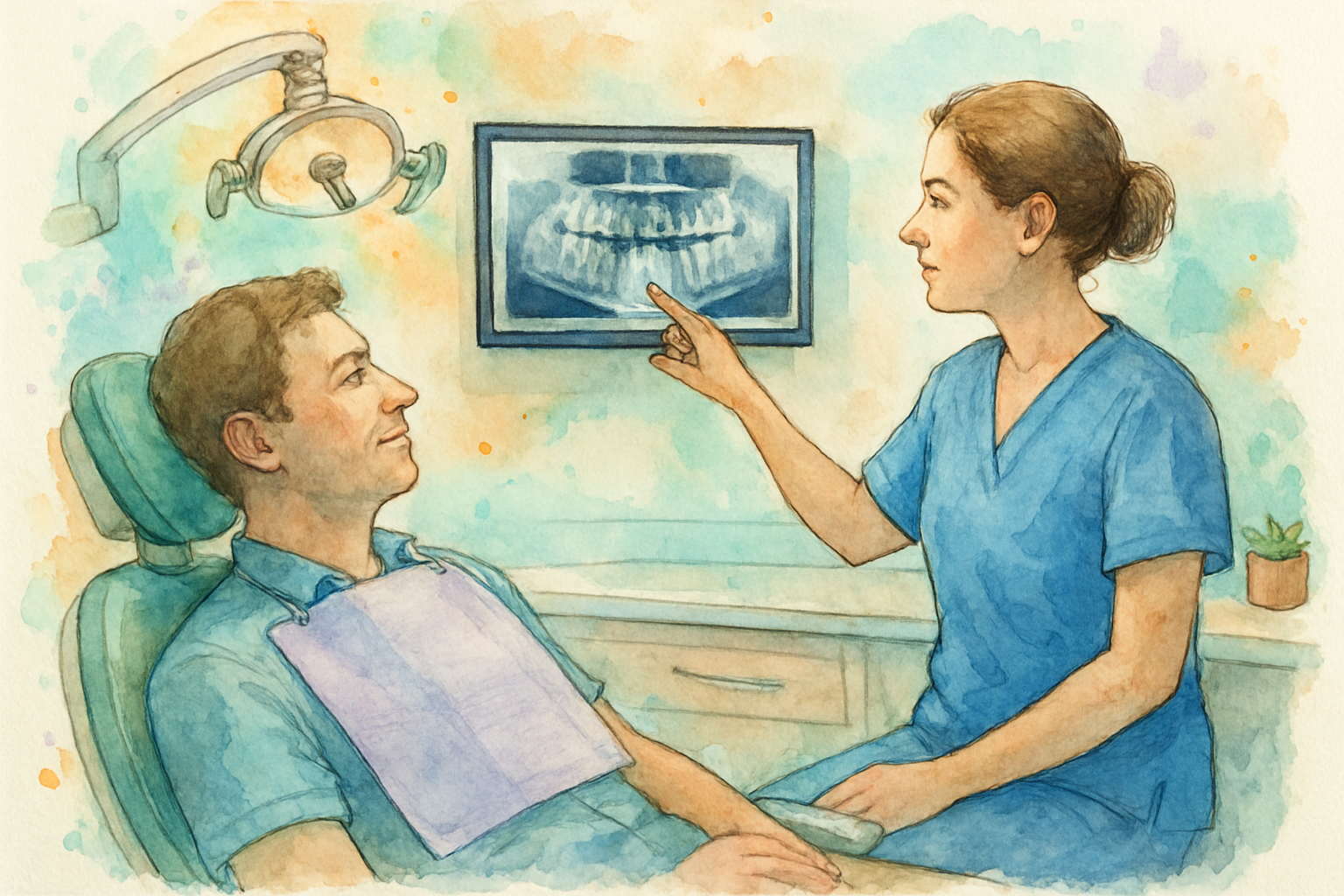
You need an X-ray and a clinical exam to know for sure. A dentist will look at the root condition, the amount of remaining tooth structure, and the bone levels around the tooth. If there’s a vertical fracture or the bone loss is severe, saving it usually isn’t realistic. If the damage is restorable, we’ll walk through what that costs and what the long-term prognosis looks like so you can make an informed call.
What is dry socket and how do I avoid it?
Dry socket happens when the blood clot that forms in the extraction site gets dislodged before the bone heals — usually within the first 3 to 5 days after the procedure. It causes significant pain and slows healing. To reduce your risk: avoid drinking through a straw, skip smoking, don’t rinse forcefully, and stick to soft foods for the first few days. We give every patient specific post-op instructions before they leave.
Can I get a same-day extraction at Kali Dental?
In most cases, yes. If you come in with a tooth that needs to come out and there’s no complex surgical complication, we can often take care of it the same day. Call us at (657) 800-5254 to explain your situation and we’ll let you know what to expect.
What if I don’t have insurance — how much does an extraction cost?
A simple extraction in the Huntington Beach area typically runs $150 to $300 for a single-rooted tooth. Surgical extractions — like impacted wisdom teeth — range from $300 to $600 or more per tooth, depending on complexity. Our in-house savings plan significantly reduces these costs for uninsured patients. We also give you the full price before we start anything, so there are no surprises.
Do I need to replace the tooth after it’s pulled?
It depends on which tooth it is and where it sits in your bite. Front teeth and teeth that affect your chewing or hold adjacent teeth in place should generally be replaced. A back wisdom tooth or a tooth that’s already isolated may not need replacement. We walk through this with every patient after an extraction so you leave with a clear picture of what your options are and what the timeline looks like.
Not Sure Whether Your Tooth Can Be Saved?
The only way to know for certain is to get a proper exam and X-rays from someone who will give you an honest answer — not a recommendation based on what costs the most. Our team at Kali Dental serves families and adults throughout Huntington Beach, and we’re happy to walk through your options without pressure. Call us at (657) 800-5254 or book directly at kalidental.com — we’ll help you figure out the right path forward.