
Quick Answer
Dental implants are fixed replacements that act like tooth roots, while dentures are removable teeth that rest on the gums. Implants usually offer better stability, chewing ability, and bone preservation. Dentures usually have a lower upfront cost and avoid surgery. The right choice depends on your health, comfort preferences, budget, and daily routine.
If you're trying to sort through dental implants vs dentures pros and cons, you're probably not just thinking about teeth. You're thinking about meals, conversations, photos, comfort, and whether life will feel normal again. That decision can feel heavy, especially if you're already dealing with missing teeth or a failing dental appliance.
Both options can restore your smile, but they do it in very different ways. Dentists also saw a 6.3% increase in the use of implants over dentures among patients ages 65 to 74 between 2019 and 2020, with that shift projected to reach 23% by 2026 according to this implant and denture trend overview. That doesn't mean implants are right for everyone. It means more patients are weighing long-term lifestyle benefits more carefully.
Understanding Your Two Main Tooth Replacement Options

A dental implant replaces the root of a missing tooth. A small post is placed in the jawbone, and once it heals, a crown, bridge, or other restoration is attached on top. The key idea is simple. The support comes from the bone, not just from the gums.
A denture replaces multiple missing teeth with a removable appliance. Full dentures replace all teeth in an arch, and partial dentures replace some missing teeth while working around the teeth you still have. Dentures sit on the gums and rely on their fit, natural suction, or clasps to stay in place.
How implants work in plain language
If you think of a natural tooth as having two parts, the root below the gum and the visible part above it, an implant is designed to replace that missing root support. That matters because the jawbone responds to pressure and function.
When the bone has enough strength and volume, implants can feel much closer to natural teeth in daily life. Dentists often use digital X-rays and CBCT scans to look at bone height, width, and nearby structures before deciding whether implant placement is realistic and safe.
How dentures work in everyday life
Dentures are made to match the shape of your mouth and restore appearance and basic function. For many people, they're a practical solution when they want to replace several teeth without surgery.
They're also often the more realistic path when bone has changed a lot, health history makes surgery less appealing, or a patient wants a removable option. Dentures can work well, but they usually come with an adjustment period for speaking, chewing, and learning how they sit.
| Feature | Dental Implants | Dentures |
|---|---|---|
| How they stay in place | Anchored in the jawbone | Rest on the gums |
| Daily use | Fixed in place | Removable |
| Feel | Closer to natural tooth support | More noticeable at first |
| Best for | Patients wanting stability and long-term support | Patients wanting a non-surgical tooth replacement |
A good consultation isn't about pushing one option. It's about matching the replacement to the way you actually live.
A Detailed Comparison of Implants vs Dentures
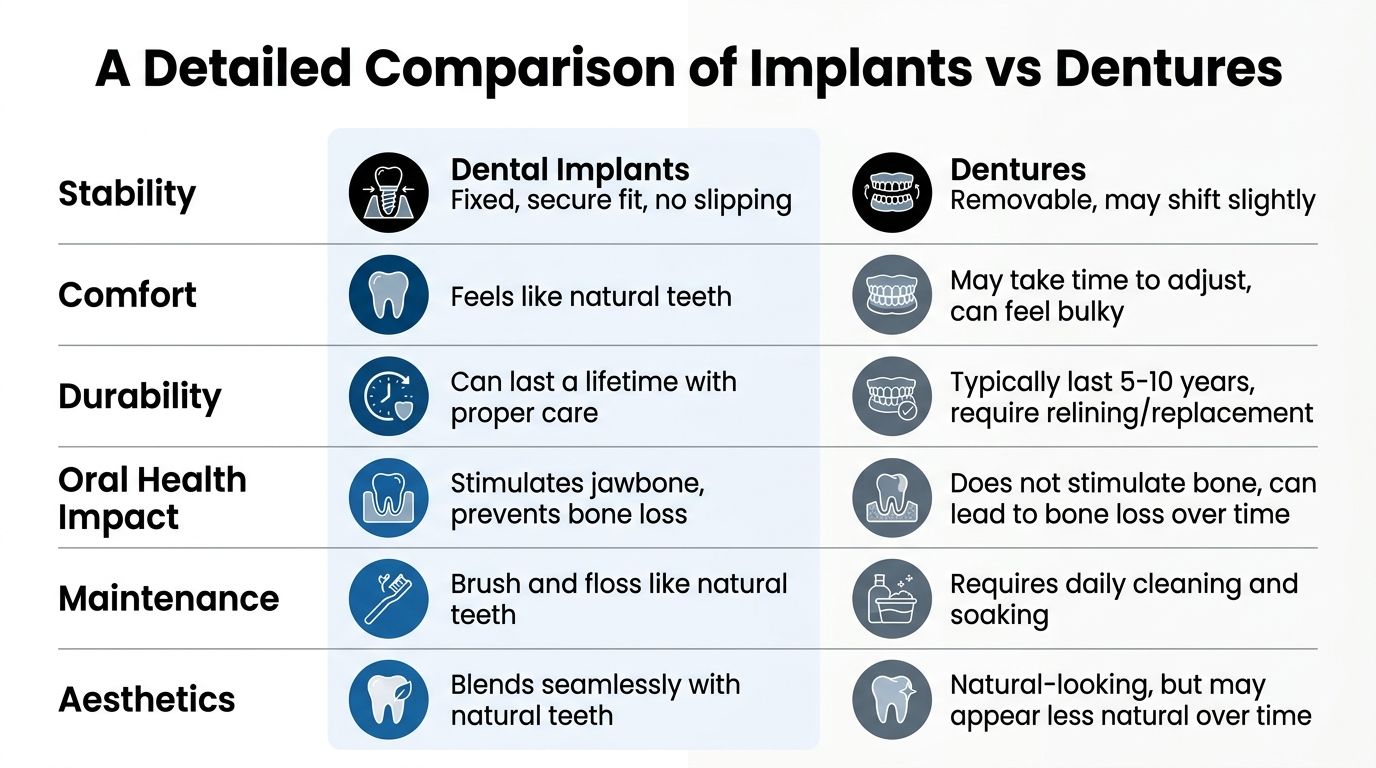
The biggest difference in dental implants vs dentures pros and cons is how each option affects ordinary parts of the day. Eating. Talking. Smiling. Cleaning your teeth before bed. Confidence in public. Small moments add up quickly.
Function and chewing
Implants generally win on function. Patients with dental implants can regain up to 90%+ of natural chewing efficiency, while traditional dentures typically restore only 20% to 30% of natural bite force according to this clinical comparison of chewing ability.
That difference shows up at the dinner table. Implants usually let patients handle a much wider range of foods with less fear of movement, while traditional dentures often push people toward softer choices.
Practical rule: If being able to bite and chew confidently matters a lot to you, that usually moves implants higher on the list.
Comfort and day-to-day feel
Implants are fixed, so they don't need to come out at night, and they don't rely on bulk across the gums for support. For many patients, that gives them a more natural sense of security.
Dentures can still look attractive and restore a smile well, but the experience is different. Some people adapt quickly. Others remain aware of them during speech, meals, or long social events.
Bone health and facial support
This is one of the most important clinical trade-offs. Traditional dentures can lead to 25% to 60% bone resorption in the first year, while implants stimulate the jawbone and can reduce resorption to near-zero according to this review on bone preservation with implants versus dentures.
When bone shrinks, denture fit can change. That often means more looseness, more sore spots, and more maintenance over time. Implants support the bone because they function more like a natural root.
Appearance and confidence
Both options can improve appearance. A well-made denture can restore the look of a full smile, support the lips, and improve facial balance.
Implants usually offer a more stable result over time because the support comes from below. That often helps patients feel less self-conscious in social settings because they aren't managing the possibility of shifting or needing adhesive before going out.
Longevity and what tends to hold up
Dentures are not a one-time solution. Fit changes as the mouth changes, so adjustments and replacements are part of the long-term picture.
Implants ask for more commitment up front, but they are built for longer service. The trade-off is simple. Dentures tend to be faster and less invasive at the start. Implants tend to be steadier and lower-maintenance in the years that follow.
Quick side-by-side summary
- Choose implants if stability, stronger chewing, and preserving jaw shape matter most to you.
- Choose dentures if you want a removable option, want to avoid surgery, or need a simpler starting point.
- Consider a hybrid path if you want more support than a conventional denture but aren't ready for a fully fixed solution.
The Treatment Process What to Expect at Kali Dental
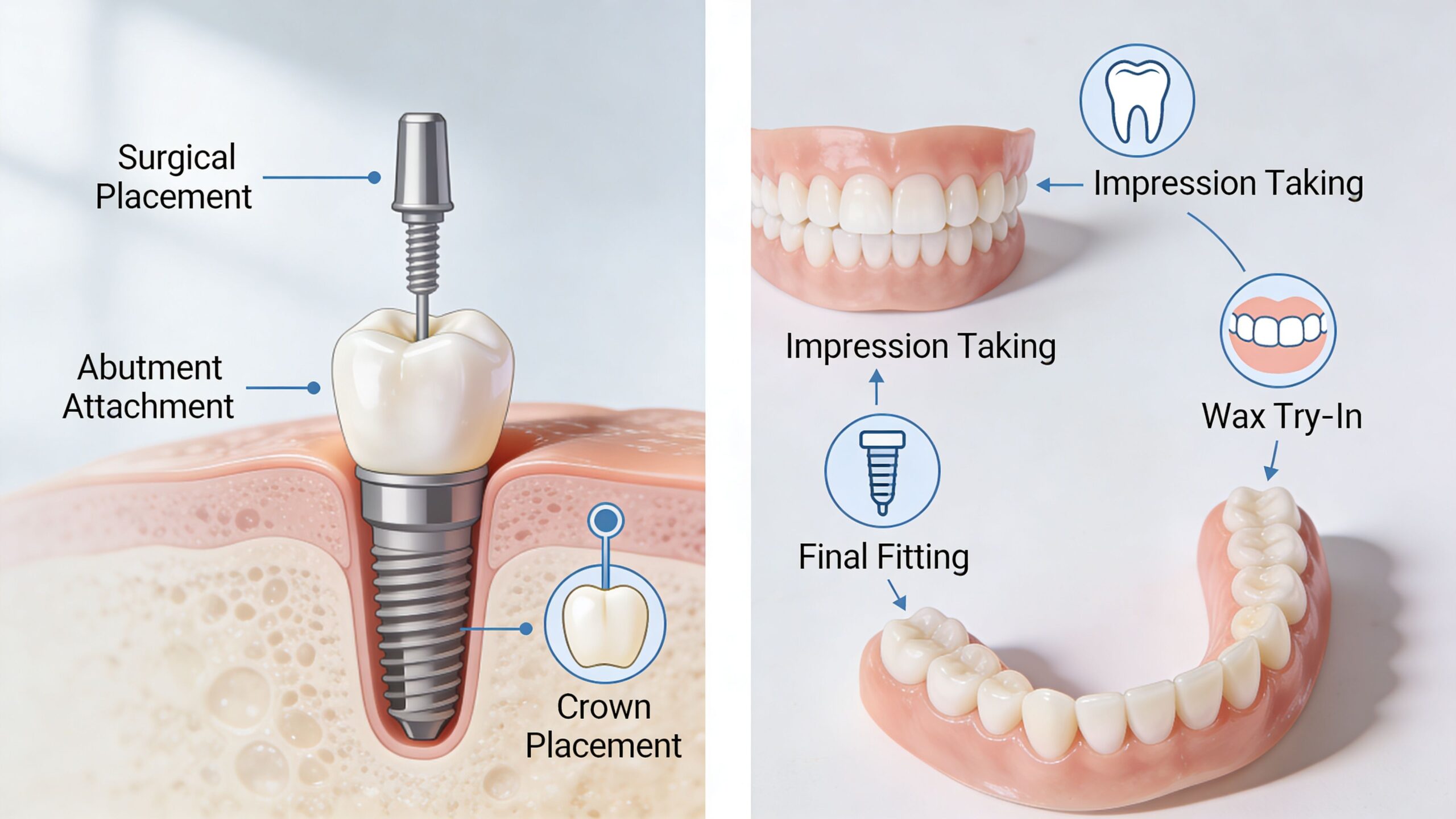
The process matters almost as much as the final result. People usually feel better once they know what the appointments look like, what healing involves, and where the difficult parts are. A calm, comfort-first plan makes the whole decision easier.
The dental implant process
Implant treatment starts with an exam, imaging, and a conversation about goals. Digital X-rays and CBCT imaging help Dr. Kalvin see whether there's enough bone and where the safest position for an implant would be.
If you're nervous about the surgical part, it's worth learning about different oral surgery anesthesia options so you understand the range of comfort approaches patients may discuss before treatment. Once the implant is placed, the area heals while the bone bonds to the implant. After healing, the final restoration is attached.
This path takes longer, but each step has a purpose. The waiting period is what turns the implant into a stable anchor rather than just a post placed in the mouth.
The denture process
Dentures usually begin with impressions, records of how your bite comes together, and a design phase. After that, the denture is made and adjusted to improve fit, appearance, and speech.
For patients considering a removable option, this page on dentures in Huntington Beach gives a useful overview of how denture treatment is approached. The main thing to expect is refinement. Dentures often need follow-up visits as the mouth adapts and pressure points become clear.
Most denture frustrations don't happen because the appliance failed. They happen because fit changes and small adjustments were delayed too long.
Caring for each option after placement
Implants need the same habits that keep natural teeth healthy. Brush carefully, clean between teeth, and keep up with routine exams and professional cleanings.
Dentures need a different routine. Remove them for cleaning, brush them with the right tools, clean the gums and tongue, and store them properly when they're out of the mouth. Neither option is difficult to maintain, but they are maintained differently.
Who is a Good Candidate for Implants or Dentures
A good candidate for implants isn't just someone missing teeth. The bone has to be able to support treatment, the gums need to be healthy enough to heal well, and the patient has to be ready for a surgical process that takes time.
Dentures are often a better fit for people who want to avoid surgery, want a removable replacement, or have significant bone loss that makes implant treatment more complicated. They can also be the practical choice when medical factors make a longer surgical process less appealing.
Patients who often lean toward implants
Implants tend to suit people who want a fixed solution and care a lot about chewing strength, stability, and preserving the shape of the jaw over time. Patients who are comfortable with a longer treatment timeline often feel that trade is worth it.
If you're comparing fixed tooth replacement options, this page on dental implants in Huntington Beach can help you understand what implant treatment is designed to accomplish. The final decision still depends on a direct exam and imaging, not just preference.
Patients who often lean toward dentures
Dentures may make more sense if you want treatment sooner, don't want surgery, or prefer a lower-commitment path to replacing multiple teeth. Some patients also like having a removable appliance they can take out and clean.
That doesn't make dentures a lesser choice. It makes them a different choice. For the right patient, they restore appearance and function in a way that feels practical and manageable.
Health factors that matter
A few issues can affect implant planning:
- Bone support: The jaw needs enough structure to hold an implant securely.
- Healing ability: Certain medical conditions and habits can affect recovery after surgery.
- Gum condition: Active infection or untreated gum problems usually need attention first.
- Daily habits: Long-term success depends on cleaning well and keeping regular follow-up visits.
The best candidate is not the person who wants implants the most. It's the person whose health, anatomy, and expectations fit the treatment.
Comparing the Costs and Long-Term Value

Cost is usually where the conversation gets personal. Most patients don't want the cheapest option. They want the option that makes sense for their life and won't leave them frustrated later.
Dentures usually cost less at the beginning, but they often need replacement every 7 to 15 years, while implants can last 20+ years, which is why implants can offer better long-term value according to this long-range cost comparison of dentures and implants. Dentures can also bring added upkeep from fit changes and the effects of ongoing bone loss.
What upfront cost doesn't tell you
A lower starting price doesn't always mean lower lifetime cost. If a patient replaces dentures more than once, needs repeated adjustments, or struggles with fit as the jaw changes, the total commitment can look very different over time.
Implants shift more of the investment to the front end. In return, many patients get a solution that asks for less replacement and gives more day-to-day stability.
Questions worth asking during a cost conversation
- How long do I want this solution to last
- Would I rather avoid surgery now or avoid repeated replacements later
- How important is strong chewing ability to me
- Am I comparing only today's cost, or the full timeline
For patients trying to think through treatment expenses carefully, this guide to comparing dental costs without insurance is a helpful starting point.
Daily Care and Upkeep for Your New Smile
How you feel about your tooth replacement six months from now often comes down to maintenance. The good news is that both options are manageable when the routine is clear.
Caring for implants
Implants need thorough brushing, regular cleaning between teeth, and routine checkups. The implant itself doesn't decay, but the surrounding gum tissue still needs attention.
Patients usually do well when they treat implants like natural teeth and stay consistent. Skipping follow-up care is what causes small issues to become bigger ones.
Caring for dentures
Dentures need to be removed and cleaned daily. The appliance should be handled carefully, cleaned with the right products, and stored the right way when it's out of the mouth.
The mouth also needs care. Gums, tongue, and any remaining teeth still need to be cleaned every day. If you're wearing a removable appliance, these updated denture care tips for a comfortable fit and longer wear are worth reviewing.
What doesn't work well
- Ignoring soreness: If a denture rubs, don't just live with it.
- Using the wrong cleaners: Harsh products can damage a denture surface.
- Treating implants like they're maintenance-free: They still need professional monitoring.
- Skipping exams: Fit, bite, and gum health change over time.
Frequently Asked Questions About Implants and Dentures
Do implants hurt more than getting dentures?
Implants involve surgery, so the process is more involved than getting dentures made. Most patients are more comfortable when they understand the steps ahead of time and have a clear plan for numbness, healing, and follow-up care. Dentures avoid surgery, but they can still come with an adjustment period and sore spots while the fit is refined.
How long does it take to feel normal with dentures?
That varies. Some patients adapt fairly quickly, while others need more time to get used to speaking and chewing with a removable appliance. Small adjustments can make a big difference, so follow-up visits matter.
Can I eat normally with dental implants?
In many cases, yes. Patients with implants can regain up to 90%+ of natural chewing efficiency, while traditional dentures usually restore only 20% to 30% of natural bite force, which is why implants often make foods like steak, nuts, and apples easier to handle in the long run, as noted earlier in the article. During healing, though, the diet is usually more limited until the implant is fully integrated.
Are dentures always the more affordable option?
They are often more affordable at the start, but that isn't the whole picture. Long-term upkeep, replacement, and comfort issues can change the overall value of treatment. The right financial decision depends on how long you want the solution to serve you and what trade-offs you're willing to make.
What if I don't have enough bone for implants?
That doesn't automatically rule implants out, but it does mean careful evaluation is important. Imaging helps determine whether the bone can support treatment or whether a different approach makes more sense. In some cases, dentures are the more practical path.
Will people be able to tell if I have dentures or implants?
Well-made restorations are designed to look natural. The bigger difference is usually not appearance at first glance, but how the teeth feel and function in daily life. Stability during eating and speaking is often where patients notice the biggest contrast.
Does insurance cover implants or dentures?
Coverage varies by plan. Some plans are more likely to help with dentures than implants, while others offer partial support for both. The smartest move is to have the office review your benefits before treatment so you know what to expect.
Find the Right Solution for Your Smile in Huntington Beach
The core question in dental implants vs dentures pros and cons is which option fits your health, your habits, and the way you want to live each day. Some patients want the fixed feel and long-term support of implants. Others want the simplicity and non-surgical path that dentures can offer.
If you're looking for a local practice that values clear communication and comfort-first care, you can learn more about why patients choose Kali Dental in Huntington Beach. A one-on-one consultation with Dr. Kalvin can help you sort out what's practical, what's realistic, and what will feel right long term.
If you're ready to talk through your options, Kali Dental offers a personalized dental experience for patients in Huntington Beach and nearby Orange County communities. Call (657) 800-5254 or visit 19201 Brookhurst Street, Suite 103, Huntington Beach, CA to schedule a consultation with Dr. Kalvin. Office hours are Monday through Friday 9:00 AM to 6:00 PM and Saturday 8:00 AM to 2:00 PM.