
Quick Answer
Fixing an open bite starts with finding the cause. Some cases improve with habit correction, myofunctional therapy, or orthodontic treatment such as clear aligners or braces. More severe skeletal cases may need surgery. A careful exam, imaging, and a personalized plan are what make treatment work and last. If you're comparing discreet options, this overview of clear aligners for adults in Huntington Beach can help.
If your front teeth don't touch when you bite down, or you can only tear food with your back teeth, you're probably dealing with an open bite. It can affect chewing, speech, comfort, and confidence, but the right treatment depends on why it's happening in the first place.
At my office, I start by looking past the gap itself. I want to know whether the problem comes from tooth position, jaw growth, habits like tongue thrusting, or a breathing pattern that's keeping the bite from settling the way it should.
What Is an Open Bite and What Causes It

A patient will often describe it the same way. "My front teeth never seem to touch." That is an open bite. The upper and lower teeth do not meet the way they should when the jaws close. It is usually most visible in the front teeth, called an anterior open bite, but it can also affect the back teeth.
The gap is only the surface problem. The underlying question is why the bite stayed open.
In practice, I sort open bites into three main patterns. Some are skeletal, where jaw growth and facial structure set up the bite that way. Some are dental, where the teeth have erupted or tipped into positions that keep them apart. Some are driven by habits and muscle patterns, which include tongue thrust, prolonged thumb or pacifier use, and breathing patterns that change how the tongue rests in the mouth.
That last group matters because teeth respond to light pressure over time. If the tongue presses forward during swallowing, or rests low instead of against the palate, it can keep front teeth from settling into a stable bite. This is one reason I often discuss myofunctional therapy early in the process. It addresses how the tongue, lips, and facial muscles function, not just where the teeth sit on the day of the exam.
Common causes in children and adults
Children often develop an open bite from repeated habits during growth. Thumb sucking and long-term pacifier use are common examples. Tongue posture can also shape the bite gradually, especially if a child swallows with the tongue pushing forward against the front teeth.
Adults can have those same habit-related patterns, but I also see open bites tied to long-standing jaw growth, relapse after orthodontic treatment, or airway and breathing issues that were never fully addressed. If you want a plain-language overview of the critical differences between nasal breathing and mouth breathing, that background can help patients understand why breathing and tongue posture come up so often in these conversations.
Genetics also play a clear role. Some patients have a vertical growth pattern in the jaws and face that makes the bite harder to close with tooth movement alone. In those cases, braces or aligners may improve alignment, but stability depends on whether the underlying jaw relationship and muscle habits are also addressed.
A simple rule applies here. If the teeth are apart because of both structure and function, treatment usually needs to address both.
Why early detection matters
Children have one major advantage. Growth is still active, so there is more opportunity to reduce harmful habits, guide development, and keep the problem from becoming more severe.
That does not mean every child needs major treatment right away. Sometimes the right first step is habit correction, observation, and support at home. Sometimes it means adding orthodontic guidance or myofunctional therapy before the bite becomes more difficult to correct later. The right timing depends on the cause, the child's age, and whether the bite is changing.
What does not hold up well over time
Teeth can often be moved. Keeping them in the right position is the harder part.
If treatment lines up the teeth but ignores tongue posture, mouth breathing, or a persistent oral habit, the bite may reopen after braces or aligners are finished. That is the trade-off patients deserve to understand from the start. Cosmetic improvement is not the same as long-term stability.
For that reason, I do not look at an open bite as only an orthodontic problem. It is a tooth position problem, a growth problem, a muscle pattern problem, or a mix of the three. Identifying which one you have is what leads to the right treatment plan.
The First Step A Diagnostic Visit
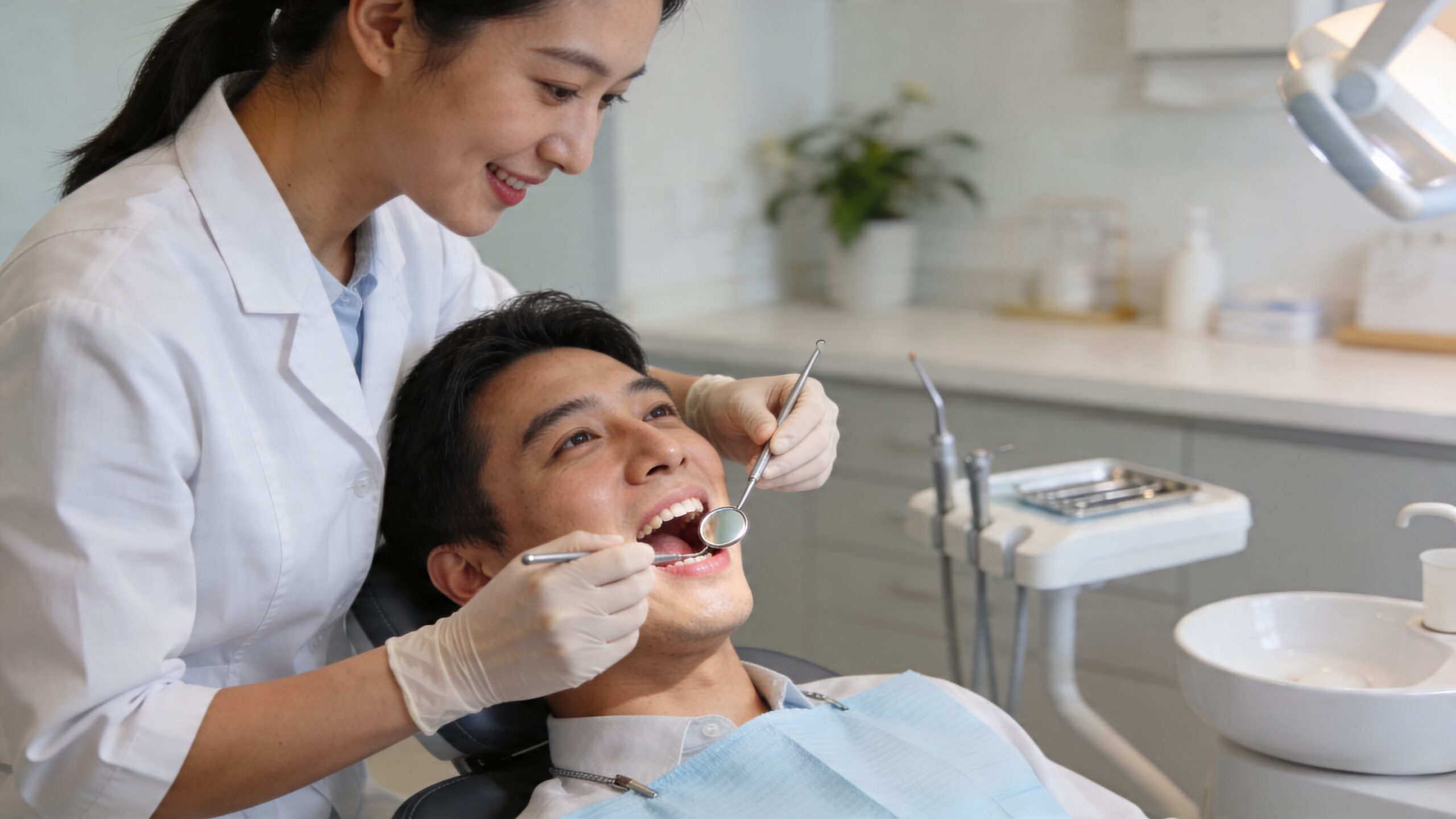
A patient will often sit down and say, "My teeth look straight, but I still cannot bite into a sandwich." That is a useful starting point, because open bite diagnosis is about more than spotting a gap between the front teeth. It is about finding out why that gap is there, what keeps it there, and what would make treatment hold.
At the first visit, I start with the history. I ask when the bite change was first noticed, whether chewing feels inefficient, whether speech has changed, whether there is jaw tension, and whether there is a past or current habit such as thumb sucking, tongue thrust, or chronic mouth breathing. I also ask about sleep, allergies, and congestion, because airway issues can influence tongue posture and facial growth over time. Patients often do not realize those details matter until we connect them to the bite.
The exam then moves from symptoms to structure and function. I look at tooth position, gum health, wear patterns, lip closure at rest, tongue posture, and how the back teeth meet when the patient bites together. Digital X-rays are often part of that workup, and some cases benefit from a CBCT scan to show roots, bone support, and jaw relationships in three dimensions. If you want a practical overview of digital X-rays and other dental technology we use, this page explains those tools clearly.
I also screen for breathing patterns. The position of the tongue and the way a patient breathes during the day and at night can affect stability after orthodontic treatment. For patients who are trying to understand that connection, this article explains the critical differences between nasal breathing and mouth breathing.
Dental open bite versus skeletal open bite
This distinction shapes the whole plan.
A dental open bite is usually driven more by tooth position and habit forces. A skeletal open bite reflects the way the jaws developed and how the face grows. Many patients have a combination of both, which is why a quick photo or mirror check can be misleading.
That difference affects what I recommend. A mostly dental problem may respond well to orthodontic tooth movement paired with habit correction. A more skeletal pattern may still improve with orthodontics, but the trade-off is that camouflage treatment can be less stable or less complete if the jaw relationship is the main issue.
The diagnostic pathway I use
Patients deserve a clear process, not a vague promise that treatment will "fix it."
- Confirm the type of open bite. I determine whether the problem is mainly dental, mainly skeletal, or mixed.
- Identify the drivers. That includes habits, tongue posture, mouth breathing, missing tooth support, and jaw growth pattern.
- Measure the severity. Mild and moderate cases often have different options than severe ones.
- Check stability risks. If the muscles and airway are working against the teeth, relapse becomes more likely.
- Match treatment to the cause. That may include braces, aligners, temporary anchorage devices, surgery, or referral for myofunctional therapy.
Myofunctional therapy matters here because it addresses function, not just position. If the tongue continues to rest low or press forward during swallowing, the teeth can drift back toward the old pattern after braces or aligners are finished. That does not mean every patient needs MFT, but in the right case it improves the odds that the result will last.
A good diagnostic visit should leave you with a map. You should understand what kind of open bite you have, what is causing it, which treatments are realistic, and what each option asks of you.
Early Intervention and Habit Correction for Children
Parents often notice an open bite when a child smiles, bites into pizza, or rests with lips apart. That can feel alarming, but in many young patients the first step is gentle and practical. We look for the habit, how long it's been present, and whether the bite is still changing.
Open bites in children are often tied to thumb sucking, finger sucking, pacifier use, tongue thrusting, or mouth breathing. When those patterns are addressed early, treatment is often simpler and more conservative.
What parents can do at home
Children usually do better with encouragement than pressure. A calm, consistent plan works better than turning the habit into a daily battle.
- Name the habit clearly: Kids respond better when adults point out what to change in simple language.
- Watch timing: Some habits happen mostly during sleep, screen time, or stress.
- Use positive reinforcement: Reward progress, not perfection.
- Bring it up early: A short exam can tell you whether the bite is self-correcting or needs added guidance.
For families getting started with dental care, this article on making your child's first dental visit a positive one can help set the tone.
When simple habit correction isn't enough
Some children benefit from interceptive orthodontics, which may include a habit appliance such as a tongue crib or another device designed to guide function while the jaws are still developing. The goal is not to make treatment bigger than it needs to be. The goal is to stop a pattern that keeps pushing the bite open.
In some cases, a child may eventually need orthodontic treatment later. In others, early intervention reduces the complexity of what comes next.
Small changes during growth can have a big effect on how a child's bite develops.
When severe cases need a different conversation
Not every open bite in a child is habit-driven. If the jaw pattern itself is severe, I explain that orthodontic monitoring is still important, but future care may involve collaboration with orthodontic and surgical specialists once growth is complete.
That conversation is calmer than it sounds. It means we stay honest about what can be corrected with growth guidance and what may need a more structural solution later on.
How to Fix Open Bite with Non-Surgical Treatments
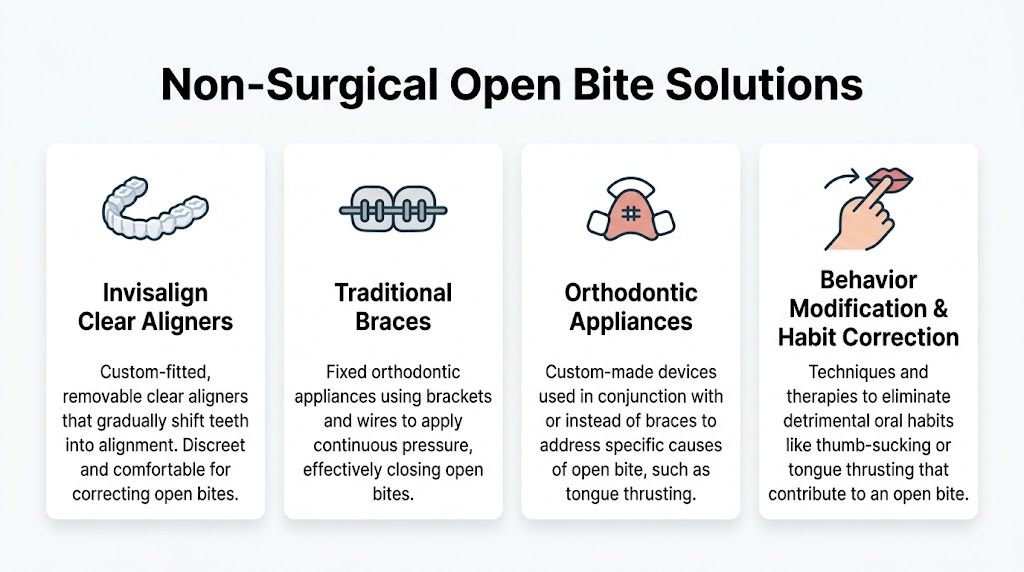
Most teens and adults asking how to fix open bite want to know whether they can avoid surgery. In many cases, the answer is yes. The right non-surgical plan depends on severity, tooth position, jaw pattern, and whether a habit is still actively pushing the bite open.
Clear aligners for mild to moderate cases
Clear aligners can work well for mild to moderate anterior open bites, especially when the problem is more dental than skeletal. They can be planned to intrude certain back teeth, extrude front teeth, and improve vertical control with attachments, bite ramps, and elastics.
A step-by-step aligner protocol for open bite cases includes diagnostics with CBCT or cephalometric analysis, staged aligner movements, refinement aligners during treatment, and long-term retention afterward. Reported outcomes show 66% of programmed overbite achieved in this type of protocol, with aligners often converting the bite to positive overbite in suitable cases (Capital District Orthodontics citing Progress in Orthodontics).
Clear aligners are also very dependent on compliance. If a patient doesn't wear them as directed, treatment becomes less effective and less stable. That's not a flaw in the aligner itself. It's inherent to a removable appliance.
If you're weighing appearance, convenience, and control, this comparison of Invisalign versus traditional braces in Huntington Beach is a useful next read.
Traditional braces and referral-based orthodontic care
Braces remain one of the most dependable ways to move teeth when the bite is more complicated. They give orthodontists strong control over extrusion, intrusion, rotation, and coordination of both arches.
That matters in open bite cases where the teeth don't just need straightening. They need a coordinated change in how they meet.
In the clinical study noted earlier, fixed appliances were recommended more often than any other non-surgical option, at 42% of cases (Kevin O'Brien Ortho Blog, 2026). That lines up with what we see clinically. Braces are often the workhorse option when the mechanics need to be precise.
Myofunctional therapy for long-term stability
This is the part many patients have never heard explained clearly. Myofunctional therapy focuses on tongue posture, swallowing pattern, lip seal, and related muscle habits that can keep an open bite from closing fully or staying closed.
If the tongue presses forward every time you swallow, or rests low and forward through the day, teeth can keep receiving pressure from the wrong direction. Orthodontics can move the teeth, but muscles and habits can move them back.
What I tell patients: If we close the bite but don't address the pattern that opened it, we haven't finished the job.
Myofunctional therapy is especially useful when patients have a history of tongue thrust, mouth breathing, or lip incompetence. It isn't a substitute for orthodontics in most cases. It supports orthodontics so the result has a better chance of holding.
What tends to work best
The strongest non-surgical plans are usually combinations, not one isolated tool. That may include:
- Aligners plus habit correction: Often a good fit when the bite is mild to moderate and the patient wants a discreet option.
- Braces plus muscle retraining: Useful when tooth movements are more demanding and the tongue pattern is still active.
- Monitoring plus retention: Essential after active treatment, because open bites can relapse if retention is inconsistent.
Long-term stability depends on finishing well, not just closing the space. Retainers matter. Habit correction matters. Follow-up matters.
One practical example is Kali Dental, where I use exams, digital imaging, and clear communication to determine whether an open bite looks manageable with aligner-based treatment and supportive therapy, or whether referral for orthodontic or surgical care makes more sense.
When Jaw Surgery Is the Right Solution
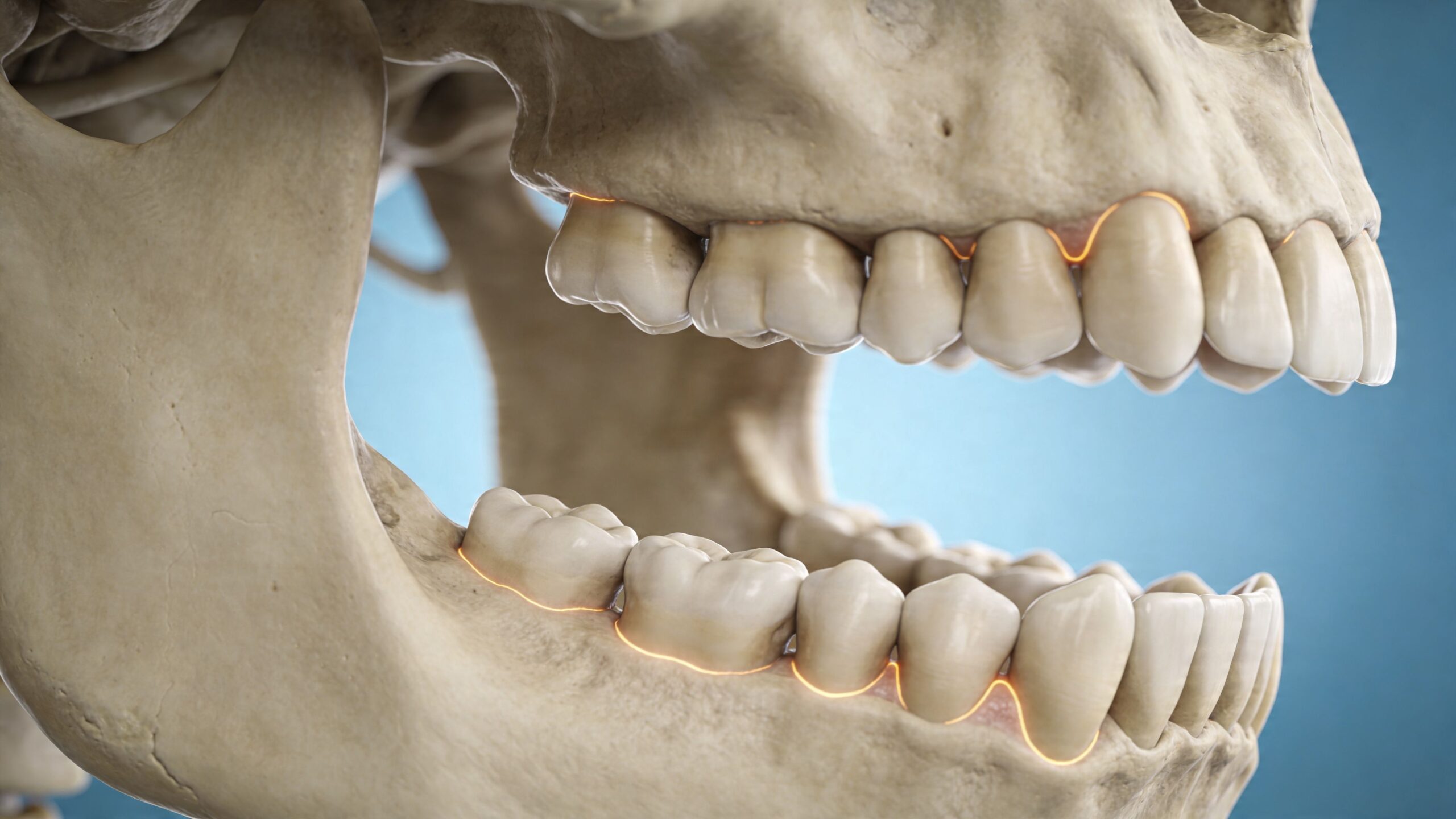
Some open bites are too severe to fix predictably with tooth movement alone. This is most often true in adults with a strong skeletal open bite, where the upper jaw, lower jaw, or both are positioned in a way that leaves the bite open even if the teeth are aligned.
Surgery isn't the first answer for most patients. It is the right answer for a specific group of patients who need a structural correction, not just an orthodontic one.
What the process usually looks like
For severe skeletal open bites, treatment typically includes:
- Pre-surgical orthodontics: Teeth are aligned so the jaws can be positioned correctly.
- Orthognathic surgery: The oral and maxillofacial surgeon repositions the jaw or jaws.
- Post-surgical orthodontics: Fine-tuning follows so the bite settles properly.
That sequence is standard because the teeth and jaws have to work together. Moving one without planning the other creates a compromise.
Why surgery can be worth it
A systematic review and meta-analysis found that surgical intervention significantly reduces the risk of open bite relapse, with an odds ratio of 0.33 compared with non-surgical treatment alone. In plain terms, patients who underwent surgery had 67% lower odds of noticeable relapse in severe cases (NIH, 2024).
That doesn't mean surgery is easy, or that everyone should choose it. It means that for the right skeletal case, it can provide a more stable correction than trying to camouflage the problem orthodontically.
Surgery is reserved for the cases that need it. When it is indicated, the goal is not only to close the bite but to put the jaws in a position that supports a stable, functional result.
My role is to help patients understand whether they are in that category and, if they are, to coordinate care calmly and clearly.
Frequently Asked Questions About Open Bite Treatment
Can an open bite be fixed without surgery?
Yes, many can. The key question is whether the bite is being held open by tooth position, jaw structure, airway concerns, tongue posture, or a combination of those factors.
Mild to moderate cases often respond well to braces or clear aligners, especially when treatment also addresses the habit or muscle pattern that caused the problem. If the jaw relationship is the main issue, orthodontics alone may improve the appearance but leave stability limits.
How long does open bite treatment take?
It depends on the diagnosis and on how much retention and habit retraining the case needs after tooth movement. Some patients finish active orthodontic treatment in a reasonable window, then need additional time with retainers and myofunctional therapy to protect the result.
I give timelines after an exam because open bite cases are rarely one-size-fits-all.
Is open bite treatment painful?
Most patients feel pressure, tightness, or temporary soreness, not sharp pain. The first few days after a new aligner, wire change, or appliance adjustment are usually the most noticeable.
Good planning makes a difference here. Smaller, controlled changes are often easier to tolerate than aggressive mechanics that move teeth quickly but create more discomfort.
Will my open bite come back after treatment?
It can, especially if the original cause is still present. An open bite that closes nicely during treatment can drift back if the tongue continues to press forward, the lips stay apart at rest, mouth breathing is ongoing, or retainers are not worn as directed.
That is why I put so much emphasis on retention and myofunctional therapy in the right cases. Straight teeth alone do not guarantee a stable bite.
Why is tongue posture so important for open bite treatment?
Tongue posture affects the bite for hours each day, often without the patient realizing it. If the tongue rests low, pushes against the front teeth, or moves forward during swallowing, it can keep pressure on the teeth and interfere with long-term stability.
This is also why myofunctional therapy matters. It helps retrain rest posture, swallowing, and oral muscle habits so the corrected bite has a better chance of staying corrected.
Is Invisalign enough to fix an open bite?
Sometimes. Invisalign can work very well for selected dental open bites, particularly when the patient is consistent with wear and the case does not require major skeletal correction.
Other cases need braces, temporary anchorage devices, referral to an orthodontist, or a surgical workup. The appliance matters less than matching the plan to the diagnosis.
How do I know if my child needs help now or can wait?
A visible front gap during biting, thumb or finger sucking, speech concerns, mouth breathing, and a tongue-thrust pattern are all good reasons to schedule an evaluation. Early evaluation does not always mean early braces. Sometimes the right first step is habit correction, airway screening, or monitoring growth at the right intervals.
This is one area where timing can change the whole course of treatment.
Will insurance cover open bite treatment?
Coverage depends on the plan and the type of care involved. Orthodontic benefits, dental benefits, and medical benefits for surgical cases are often handled separately, so patients need a clear breakdown before treatment starts.
We review that carefully so there are fewer surprises.
For patients weighing conservative care against a larger procedure, I often compare the decision process to physical therapy vs. surgery. The less invasive option is appealing, but it still has to fit the actual cause of the problem.
Start Your Journey to a Healthier Bite in Huntington Beach
If you're wondering how to fix open bite, the best first step is a straightforward exam and conversation. I can help you understand whether the issue looks habit-related, tooth-related, or more structural, and what that means for treatment.
If you're in Huntington Beach or nearby Orange County communities and want a personalized dental experience with modern, gentle dentistry, you can request a visit through this free consultation page. We focus on clear answers, stress-free visits, and practical next steps.
Sources
The research and reference material for this article was cited in the relevant sections above to keep each recommendation tied to its context and to avoid repeating the same links.
One additional reference used for general background on orthodontic correction of open bites is Capital District Orthodontics: https://capitaldistrictortho.com/how-does-orthodontics-fix-open-bites/
If you want to talk through your own diagnosis, treatment options, or whether myofunctional therapy should be part of your plan, you can request a free consultation for open bite concerns.
You can also contact Kali Dental at (657) 800-5254 or visit us at 19201 Brookhurst Street, Suite 103, Huntington Beach, CA. Office hours are Monday through Friday 9:00 AM to 6:00 PM and Saturday 8:00 AM to 2:00 PM.