
Quick Answer
A root canal with temporary crown means the inside of an infected tooth is cleaned and sealed, then a short-term crown is placed to protect it while the final crown is being prepared. If you're wondering whether this treatment fits your situation, this root canal guide for Huntington Beach patients gives a helpful starting point.
Learning that you need a root canal with temporary crown can make your stomach drop a little. Patients often find themselves thinking the same things right away. Will it hurt, what will I feel after, and what exactly am I supposed to do with that temporary crown in the meantime?
I explain this to patients every day in plain language. The process is meant to save your tooth, calm the infection, and protect the tooth while it heals and gets ready for its final restoration.
Why a Temporary Crown is Part of Your Root Canal

After a root canal, the tooth has done a lot of work. The unhealthy tissue inside has been removed, the space has been cleaned, and the tooth needs support. A temporary crown works like a protective cover while the tooth waits for its final crown.
That in-between phase is where patients often get confused. If the root canal is finished, why not just leave the tooth alone? Because a treated tooth can be more fragile, and the temporary crown helps shield it during normal daily use.
If you want a simple overview of how crowns compare with other restorations for damaged teeth, this explanation of crowns and bridges for broken teeth can help.
What the temporary crown actually does
A temporary crown has a few jobs, and each one matters.
- Protects the tooth: It covers the treated tooth so everyday biting and chewing don't put too much stress on it.
- Keeps the area sealed: It helps block food and bacteria from getting into a tooth that has just been treated.
- Holds the space and shape: It acts as a placeholder so the final crown can fit the way it's supposed to.
- Lets you function normally: You can still talk, smile, and eat with some care while waiting for the permanent crown.
Practical rule: The temporary crown isn't the finish line. It's a short-term shield that helps your final result succeed.
Why this step shouldn't be skipped
Patients sometimes ask if the temporary crown is optional. In most cases, it isn't something to brush off. The tooth needs protection during healing, especially if it has lost structure from decay, a crack, or a large old filling.
Without that protection, the tooth is more likely to chip, feel uncomfortable when you bite, or collect debris around the treated area. The temporary crown gives the tooth a safer, more stable window until the permanent crown is ready.
The simple habits that help it stay in place
A temporary crown is useful, but it isn't as strong as the final one. A few small habits make a big difference.
- Choose softer foods at first: Eggs, yogurt, pasta, soups, and softer cooked foods are easier on the tooth.
- Chew on the other side if you can: That lowers the chance of loosening the temporary.
- Brush gently: Keep the area clean without scrubbing hard at the gumline.
- Be careful with floss: Slide floss out to the side instead of snapping it straight up.
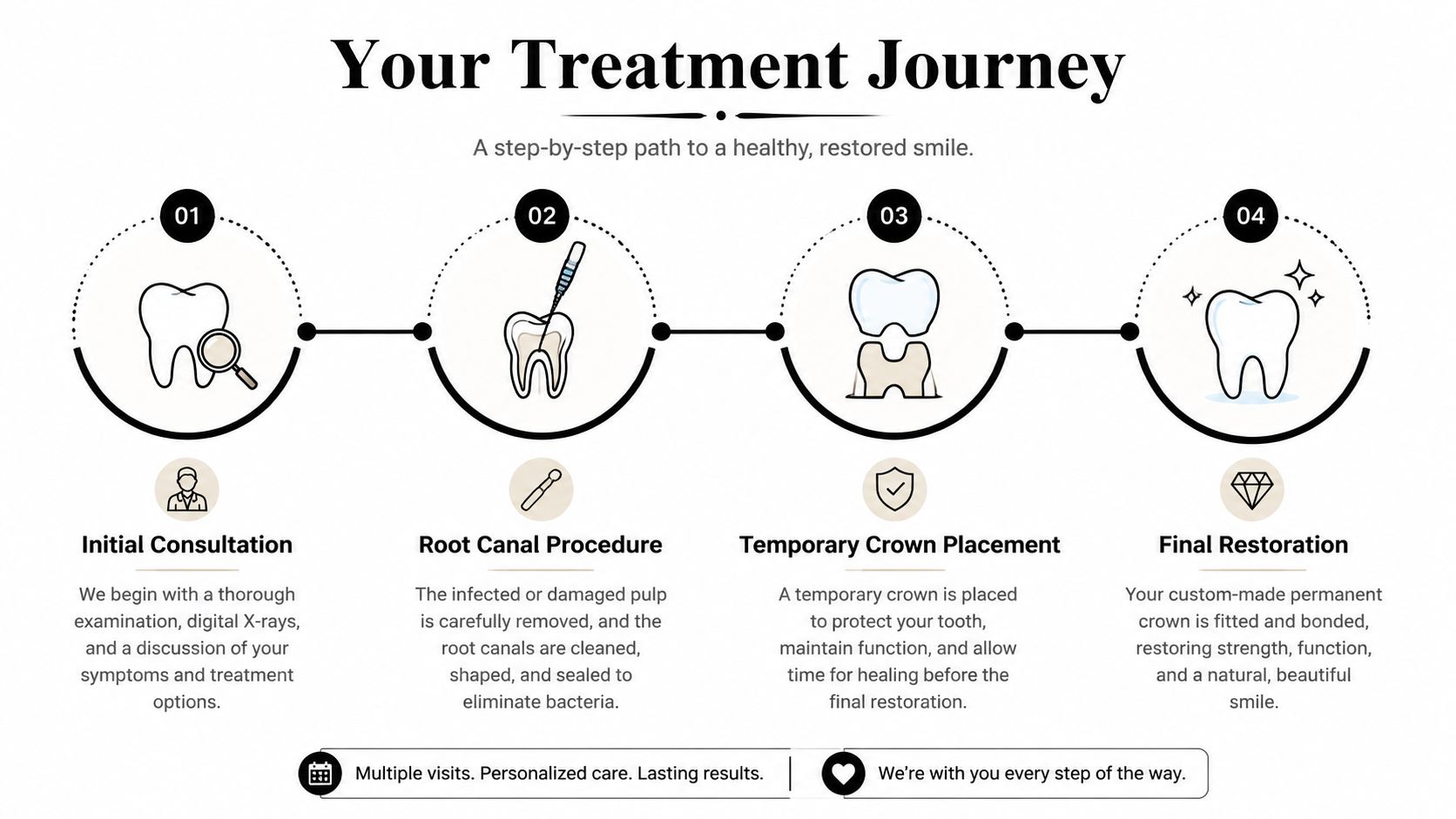
Your Treatment Journey The Root Canal and Temporary Crown Process
The process usually feels less intimidating once you know the order of events. Most of the stress comes from not knowing what the appointment will feel like, what comes next, and how long the temporary phase lasts.
This visual gives you the overall flow from start to finish.
If you're curious how modern diagnostics and same-day restoration technology can support treatment planning, this look at digital X-rays and one-day crown technology gives useful background.
The first visit with the root canal and temporary crown
At the first visit, the main goal is to treat the infected or inflamed tooth and protect it right away. The area is numbed first, so you should feel pressure and movement more than sharp pain.
Once the tooth is comfortable, the inside of the tooth is cleaned and shaped. This part takes care of the damaged tissue causing the problem. You may hear dental instruments and suction, but none of that means something is going wrong. It just means the tooth is being carefully treated.
After the root canal part is complete, the tooth is prepared for coverage. A temporary crown is then placed so the tooth isn't left exposed.
Here is what many patients notice during that appointment:
- Numbing first: You may feel a quick pinch and then pressure as the anesthetic starts working.
- Mouth staying open for a while: Your jaw can feel tired before the tooth feels sore.
- Pressure, vibration, and water: Those sensations are common and expected.
- A different bite afterward: The temporary may feel a little unfamiliar at first because your mouth is noticing something new.
Most patients don't say, "That hurt." They say, "That was a lot easier than I expected."
The days between visits
This is the part people worry about most. You're not done-done yet, but you're not in active treatment either. You're living life with a temporary crown, and that can feel uncertain if nobody explains it clearly.
During this period, it's normal to pay extra attention to the tooth. You may notice mild tenderness when biting, some gum sensitivity near the edge of the temporary, or a general awareness of the tooth for a short time. That doesn't always mean a problem. It often means the area has been treated and is settling down.
The temporary crown is made to get you through this stage, not to serve as the final restoration for the long term. You'll want to be careful with sticky candies, ice, hard nuts, or chewing directly on that side if it feels tender.
The final visit for your permanent crown
At the final appointment, the temporary crown is removed and the tooth is checked. The permanent crown is tried in to make sure the fit, contact, and bite feel right.
You may be asked to bite down a few times so small adjustments can be made. This is normal. The goal is a crown that feels secure and natural, not high or awkward.
Once the fit is confirmed, the permanent crown is cemented into place. After that, the tooth should feel more solid and dependable than it did with the temporary.
A lot of patients tell me the final crown feels like a relief. The in-between stage is over, the tooth is protected, and chewing starts to feel more normal again.
Sensations and Healing After Your Temporary Crown is Placed
Once the numbness wears off, the treated area may feel a little different than you expected. That doesn't automatically mean anything is wrong. Your tooth, surrounding ligament, and gum tissue may all need a little time to settle.
Common healing sensations can include tenderness when you bite, mild soreness around the gumline, or a bruised feeling in the area. Some patients also notice that the temporary crown feels slightly bulky at first because the tooth now has a covering on it.
What's usually normal
A few sensations tend to fall into the normal range after treatment:
- Light soreness: Especially when chewing or tapping the teeth together
- Gum irritation: The tissues around the tooth may feel tender for a short time
- Temporary bite awareness: Your mouth can be very good at noticing even small changes
- Sensitivity as the area settles: More of an awareness than a sharp toothache
A treated tooth can feel "used" for a little while. That sensation usually fades as the area calms down.
When you should call the office
There are also times when it's smart to check in. You don't need to guess your way through it.
Call if you notice any of these:
- Your bite feels off: If the temporary crown hits first every time you close down, it may need adjustment.
- Pain is getting stronger instead of easing: That deserves a closer look.
- The temporary crown feels loose: It should not wobble.
- The crown comes off completely: The tooth needs protection.
- You see swelling or drainage: That needs prompt attention.
Patients in Huntington Beach and nearby Orange County communities often feel better once they know the difference between healing and a true problem. If something doesn't feel right, I'd rather you ask than sit at home worrying.
How to Care For Your Root Canal with Temporary Crown
This is the part you can control. A few simple habits help protect the temporary crown and keep the tooth comfortable until the final visit.
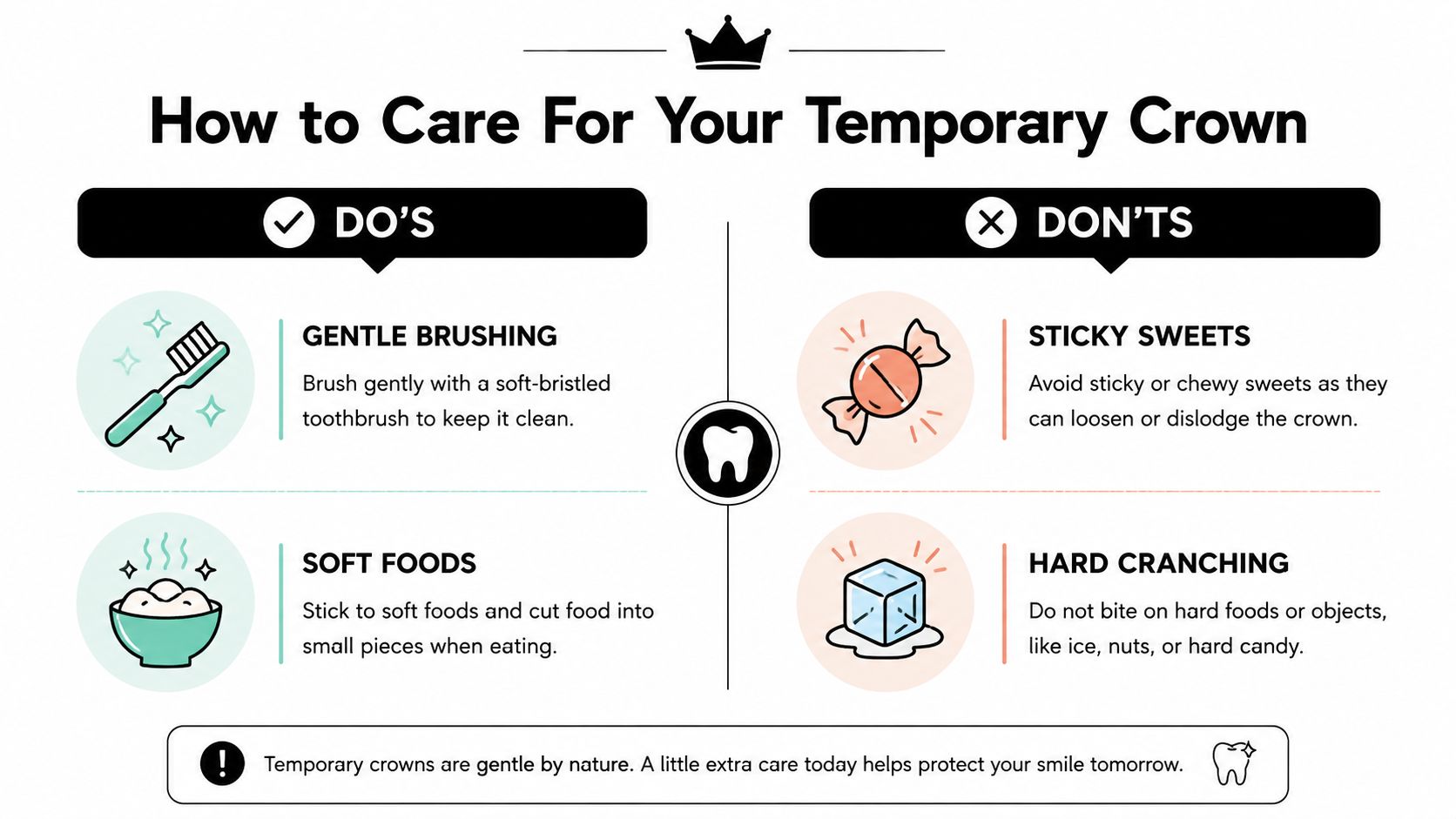
If you're also trying to stay comfortable at home while waiting to be seen, this guide on managing a nagging toothache effectively is a practical resource. For instructions designed for after treatment, review the office's post-op care guidance.
Daily care habits that help
You do not need to baby the tooth constantly, but you do need to be thoughtful.
- Brush twice a day: Use a soft toothbrush and clean around the crown gently.
- Keep flossing: Just slide the floss out from the side rather than lifting it up forcefully.
- Stick with easier foods: Softer meals are usually the safest choice during the temporary phase.
- Pay attention when chewing: If one side feels safer, use it.
Foods and habits to avoid for now
Temporary crowns can loosen when too much force or pull is placed on them. The biggest troublemakers are foods that are sticky, hard, or require a lot of tearing.
Try to avoid:
- Sticky foods: Caramel, chewing gum, taffy, and similar foods can tug on the crown
- Hard foods: Ice, hard candy, and popcorn kernels can crack or loosen it
- Very tough bites: Crusty bread edges or chewy meat can stress the tooth
- Testing the crown: Don't keep pushing on it with your tongue or trying to "check" if it's loose
The best aftercare is boring aftercare. Keep it clean, eat carefully, and leave the temporary alone.
If something feels strange
If the temporary crown feels rough, catches your bite in a strange way, or shifts, don't wait it out too long. A small issue is often easier to fix early than after the crown has come off or the tooth gets irritated.
Understanding Costs and Insurance
Cost is a fair question, and patients typically want a straight answer before they commit to treatment. The honest answer is that the total cost of a root canal and crown can vary based on the tooth involved, how damaged it is, and how complex the treatment turns out to be.
Back teeth often require different planning than front teeth because they handle heavier chewing forces. The condition of the tooth also matters. A tooth with a large fracture or very little remaining structure may need more careful restoration planning than a tooth with more support left.
Insurance can also affect what you pay out of pocket. Every plan is different, and dental benefits don't all classify treatment the same way. That's why it's worth having the office review your specific plan instead of relying on general assumptions.
If you don't have coverage, it still makes sense to ask about your options. This overview of how Kali Dental helps patients without insurance save on quality dental care may answer some early questions.
What matters most is clarity. Before treatment begins, you should understand what is being recommended, why it matters, and what your financial responsibility may look like. A consultation is usually the best place to get that information without pressure and without surprises.
Frequently Asked Questions
How long will the temporary crown stay on?
A temporary crown usually stays on until your final crown appointment. The exact timing can vary depending on your treatment plan and how the crown is being made. If your appointment needs to be moved, don't assume the temporary can stay indefinitely without being checked.
What do I do if my temporary crown falls off?
Call the dental office as soon as you can. Try to keep the crown if you still have it, and avoid chewing on that tooth until you're seen. The tooth underneath can be more vulnerable without that cover in place.
Will the root canal itself hurt?
During the procedure, the goal is to get the area numb so you feel pressure and movement more than pain. After the appointment, some soreness or bite tenderness can happen while the area settles. Most patients feel the anticipation is worse than the procedure itself.
Why can't I just keep the temporary crown?
Temporary crowns are made for short-term use. They are not designed to handle long-term chewing, wear, and daily stress the way a permanent crown is. The permanent crown is the one meant to give the tooth a stronger, more stable future.
Can I get a same-day crown after a root canal?
In some situations, same-day crown technology may be an option, but it depends on the tooth and the treatment plan. Not every case should be rushed into one timeline. The best choice is the one that protects the tooth properly and fits your bite well.
How do I know what my insurance will cover?
The office can usually help review your benefits and give you a clearer idea of what your plan may contribute. Sometimes insurance decisions involve approvals or extra review steps. If you've ever wondered what that process means, this explanation of understanding prior authorization in healthcare gives a useful general overview.
Is it normal for my bite to feel weird after the temporary crown?
Yes, a temporary crown can feel unfamiliar at first. Your mouth is very sensitive to small changes, so even a slight difference can stand out. If it feels high every time you bite, though, it should be checked.
Can I eat normally with a temporary crown?
You can eat, but you should be selective. Softer foods and careful chewing are usually the safest approach. Avoid sticky, hard, and very chewy foods until the permanent crown is in place.
Schedule Your Consultation at Kali Dental
If you've been told you need a root canal with temporary crown, or you're dealing with tooth pain and want clear answers, Dr. Kalvin and the team at Kali Dental are here to help. Patients across Huntington Beach and nearby Orange County communities appreciate a personalized dental experience that focuses on comfort, clear communication, and stress-free visits.
You can call (657) 800-5254, visit 19201 Brookhurst Street, Suite 103, Huntington Beach, CA, or learn more at kalidental.com. Office hours are Monday through Friday, 9:00 AM to 6:00 PM, and Saturday, 8:00 AM to 2:00 PM.
If you have questions about a Kali Dental root canal with temporary crown, Dr. Kalvin and his team are happy to talk through your symptoms, your treatment options, and what to expect at each step. Call (657) 800-5254 for a low-pressure consultation or stop by 19201 Brookhurst Street, Suite 103, Huntington Beach, CA.