
Quick Answer
Yes, it’s often possible to fix crooked teeth without braces using clear aligners, porcelain veneers, or dental bonding. The right option depends on whether your teeth need to be moved or only reshaped cosmetically. A dental exam is the first step to find out what will effectively work for your smile and goals.
If you’ve been putting off treatment because you don’t want metal braces, you’re not alone. A lot of patients want a straighter smile, but they also want something that fits real life, work, family, photos, and daily comfort.
When people ask me about how to fix crooked teeth without braces, the most useful answer is this: there isn’t one single fix for everyone. The right choice depends on how crooked the teeth are, whether your bite is involved, and whether you want actual tooth movement or a cosmetic change in appearance.
First Step Is Your Smile a Candidate for Non-Braces Treatment
A patient will often tell me, “I want straighter teeth, but I do not want braces.” That is a reasonable place to start. The next question is more useful. Do your teeth need to be moved, or do they mainly need to look more even from the front?
That distinction shapes the whole decision.
Non-braces treatment is usually a good conversation for smiles with mild to moderate crowding, small gaps, slight rotations, uneven edges, or front teeth that appear crooked because of shape and wear. If the problem involves a significant bite issue, severe crowding, or teeth that need larger movement, cosmetic fixes can look better at first but still leave function problems behind.

Signs you may be a good fit
A non-braces option is often worth discussing if your goals and your dental condition line up in a practical way. Good candidates often have:
- Minor crowding that shows in photos or bothers them when they smile
- Small spaces between front teeth
- Slightly rotated teeth without a major bite problem
- Chips, wear, or uneven edges that create the look of crooked teeth
- Healthy teeth and gums with goals that are mostly cosmetic
Lifestyle matters too. Some patients want the most conservative option, even if it takes longer. Others care more about getting a polished result before a wedding, job change, or family photos. Budget, timeline, and how much tooth structure you are comfortable changing all matter here.
If you want help comparing true tooth movement with cosmetic correction, this guide to Invisalign vs traditional braces in Huntington Beach can clarify where aligners fit.
Practical rule: If the teeth are in a workable position and the main concern is appearance, bonding or veneers may be enough. If the teeth need to physically change position, aligners are usually the more accurate solution.
When a cosmetic shortcut is not the right shortcut
Veneers can make a smile look straighter very quickly. That can be a strong option for the right patient, especially if crooked-looking teeth also have discoloration, wear, uneven size, or old dental work that already needs attention.
The trade-off is straightforward. Veneers do not move teeth. They change shape, color, and what shows when you smile. In some cases, that is exactly the right answer. In others, it means treating the appearance while leaving the underlying alignment alone.
That is why the first appointment matters. A careful exam helps sort out whether you need orthodontic movement, cosmetic reshaping, or a combination that gives you a result that looks good and holds up well.
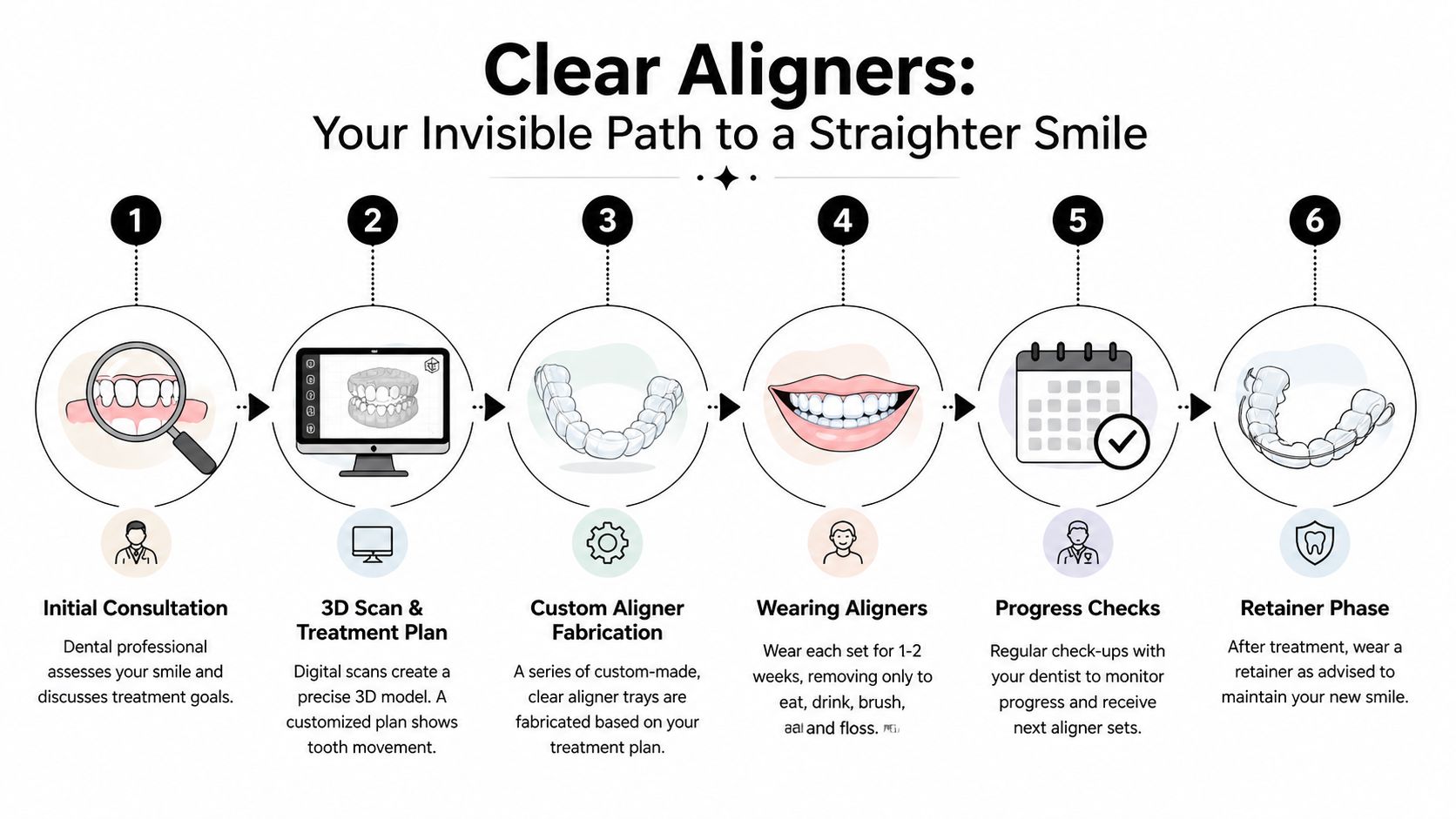
Clear Aligners The Invisible Path to a Straighter Smile
For patients who want to move teeth without metal braces, clear aligners are usually the first conversation. They’ve become a common choice because they’re discreet, removable, and much easier to fit into daily life than brackets and wires.
Clear aligners like Invisalign have treated over 18 million patients since FDA approval in 1998, and the standard protocol is to wear them for a minimum of 22 hours a day, changing sets every 1-2 weeks. With strong compliance, success rates exceed 96 percent, according to Invisalign’s treatment overview.
What treatment feels like day to day
The process starts with a digital scan, not a mouth full of impression material. That scan lets us map out tooth movement and build a custom sequence of trays.
You wear each set most of the day and night, removing them to eat, drink anything other than water, brush, and floss. For many adults, that convenience is what makes treatment realistic.
The trays are smooth and low-profile, which usually means less irritation than traditional brackets. They also let you keep your normal brushing and flossing routine, which is a big advantage for patients who want a cleaner, simpler experience.
Who clear aligners work for
Aligners are best for:
- Mild to moderate crowding
- Interdental gaps
- Minor rotational issues
- Adults who want a low-visibility option
- Patients willing to follow instructions closely
They’re not magic. If someone wears them inconsistently, leaves them out for long stretches, or keeps “forgetting” to switch trays, treatment slows down or stops working the way it should.
Wearing aligners only part-time won’t give part-time results. It usually gives frustrating results.
What often makes or breaks the result
Compliance is the whole game with aligners. They work well because the movement is controlled and gradual, but they only work when they’re in your mouth.
If you’re considering this route, it helps to understand the habits that cause problems early. This guide on common clear aligner mistakes to avoid covers the issues that tend to derail otherwise good cases.
For patients who want a braces-free option that changes tooth position instead of masking it, aligners are often the cleanest fit. If you want to see why more adults are choosing them, this article on invisible braces and real results gives a useful local perspective.
Porcelain Veneers An Instant Smile Makeover
A common scenario is this: you look in the mirror and the teeth don’t seem badly crooked, but one or two look off in photos, and you want that fixed before a wedding, a new job, or another big event. In that situation, veneers may be the right conversation to start with.
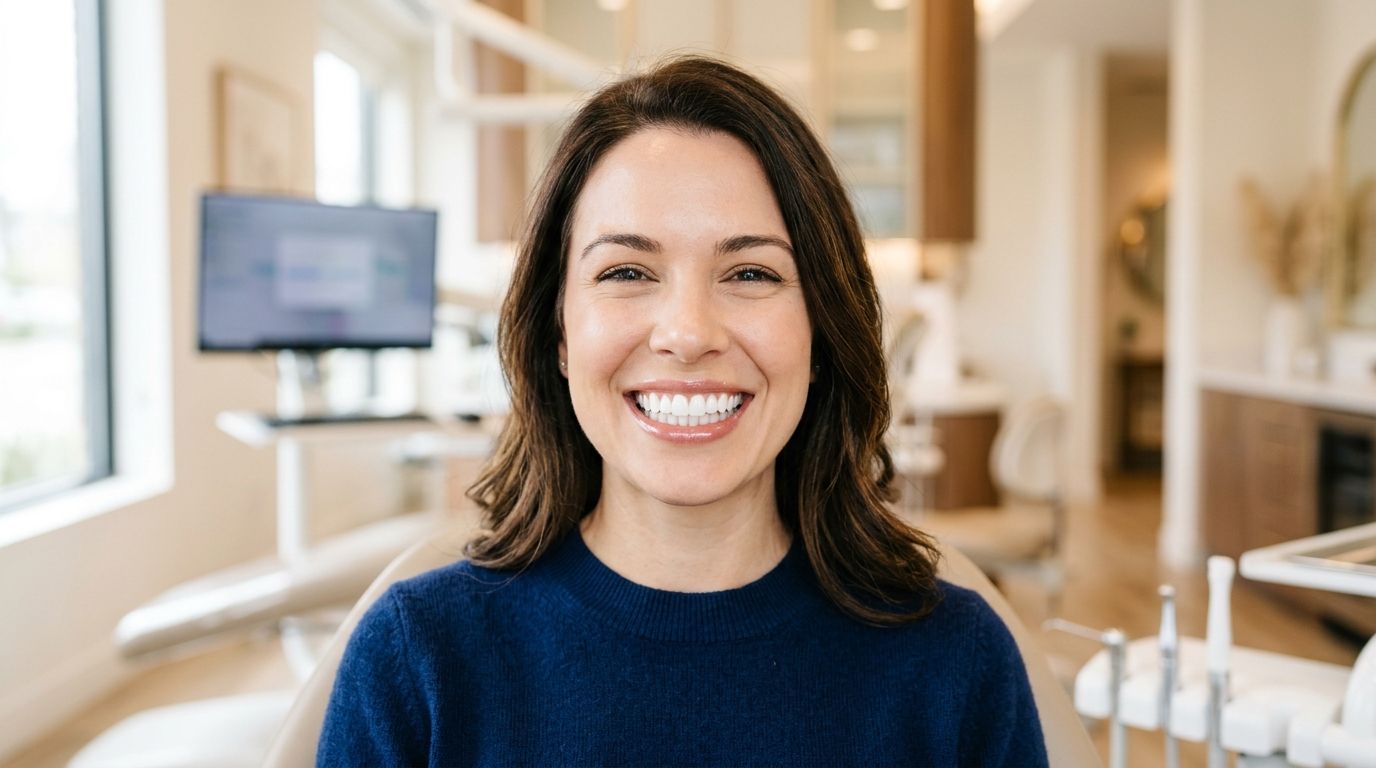
Veneers are thin porcelain coverings bonded to the front of the teeth. They can change visible shape, close small spaces, improve symmetry, and make mildly crooked teeth look straighter without waiting for teeth to shift.
When veneers make sense
Veneers tend to fit best when alignment is only part of the concern. I often recommend discussing veneers when a patient also wants to improve color, repair wear, hide chips, or create a more even smile line at the same time.
That combination matters.
If the teeth are healthy and the bite is stable, veneers can deliver a fast cosmetic change that aligners cannot match on timeline alone. If the teeth are significantly crowded, overlapping, or biting edge-to-edge, covering the front surfaces may not be the smartest first step.
The trade-off patients should understand
Veneers create the appearance of straightness. They do not move roots, widen arches, or correct the way upper and lower teeth come together. For some patients, that is completely appropriate. For others, it means the cosmetic result looks good while the underlying alignment problem remains.
There is also a commitment involved. Veneers usually require removing a small amount of enamel, and they will need maintenance or replacement over time. Porcelain holds up well, but it is still a long-term restoration, not a temporary shortcut.
The best way to decide is to match the treatment to your goal. If your priority is a visual upgrade and you want several cosmetic issues addressed at once, veneers may be a strong fit. If your priority is correcting tooth position as conservatively as possible, another option may make more sense to start with.
If you want to compare materials, coverage, and who each option suits best, this guide to the different types of veneers is a useful next read.
Veneers are often the better conversation when the goal is to improve how the smile looks. Tooth movement is the better conversation when the goal is to change where the teeth actually sit.
Dental Bonding and Contouring A Quick and Simple Fix
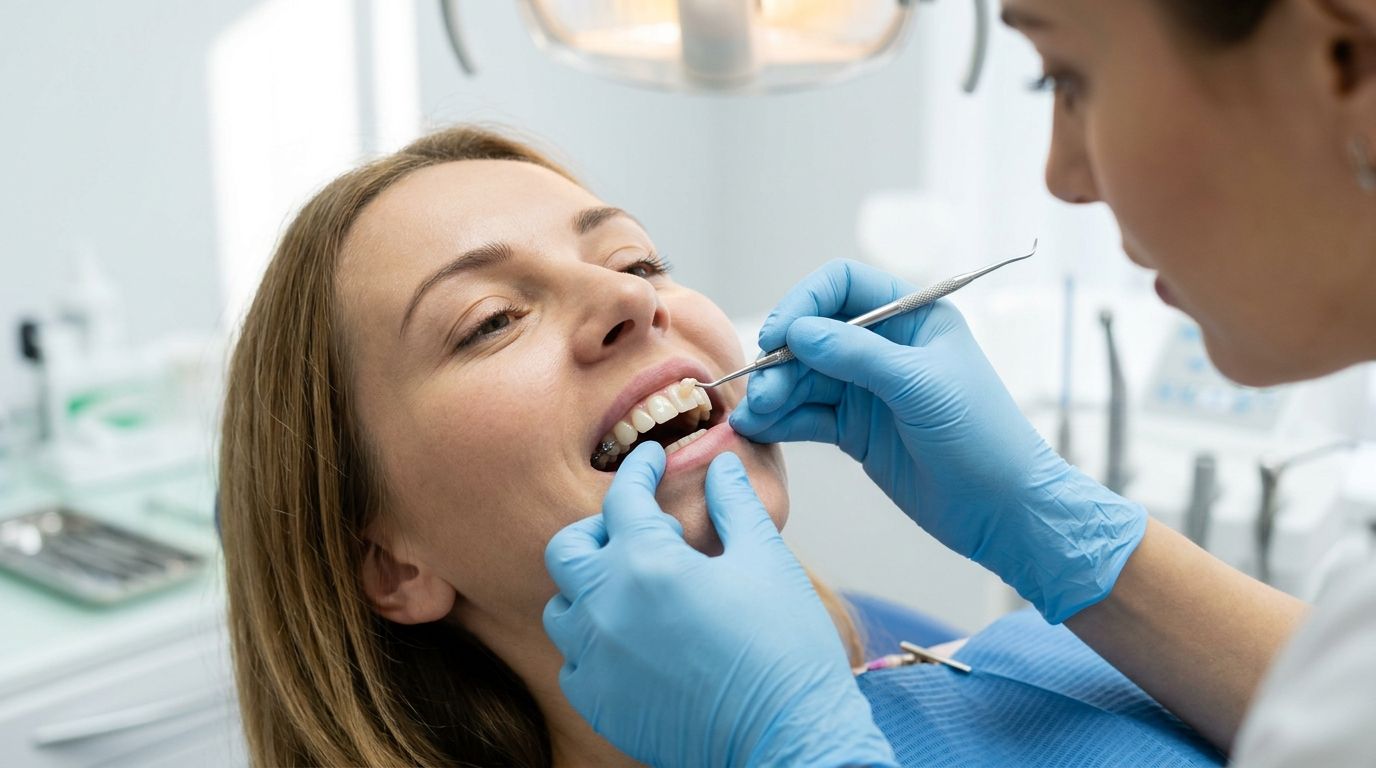
Bonding is the most conservative cosmetic fix in this group. It uses tooth-colored resin to reshape the visible outline of a tooth, close a small gap, or soften a minor irregularity that makes the smile look uneven.
For the right case, it can make a noticeable difference in a single visit. Contouring may also help when a tooth edge is slightly uneven and needs gentle reshaping.
What bonding is good at
Bonding works best for small, targeted changes:
- Closing a minor space
- Repairing a chip
- Making one tooth look less twisted
- Improving symmetry
- Blending a tooth into the smile line
It’s often a practical option when someone doesn’t need a full smile redesign and doesn’t want to commit to veneers.
Where bonding falls short
Bonding is less durable than porcelain, and it can stain or wear over time. If you grind your teeth, bite hard foods frequently, or want a major cosmetic transformation, bonding may not hold up the way you’d like.
That doesn’t mean it isn’t useful. It means it’s better for small corrections than for carrying the whole smile.
Considering Longevity Cost and Maintenance
Choosing between these options isn’t just about what looks best on day one. It’s also about what you’re willing to maintain, how you use your teeth, and whether you want a cosmetic change or a structural one.
Bonding deserves the most honest maintenance conversation. A 2023 Journal of Esthetic and Restorative Dentistry summary cited here reported that 25-40% of bonding fails within 5-7 years because of occlusal wear and habits like teeth grinding. That’s why regular checkups matter, especially if you clench, grind, or tend to chip restorations.
Comparing your options for a straighter smile
| Factor | Clear Aligners | Porcelain Veneers | Dental Bonding |
|---|---|---|---|
| Main goal | Move teeth into better position | Make teeth look straighter | Improve small cosmetic flaws |
| Best for | Mild to moderate crowding, gaps, minor rotation | Mild visible crookedness plus shape or color concerns | Small gaps, chips, uneven edges, one or two problem teeth |
| Timeline | Usually months | Usually one to two visits | Usually one visit |
| Look during treatment | Very discreet | Immediate cosmetic result once placed | Immediate cosmetic result once finished |
| Durability | Depends on retention and wear habits | Long-lasting | More maintenance over time |
| Maintenance | Requires consistent wear and retainer use | Requires normal care and caution with chips | May need touch-ups or replacement sooner |
| General investment level | $$ to $$$ | $$$ | $ to $$ |
Lifestyle matters more than people expect
A treatment can look perfect on paper and still be wrong for your routine. If you know you won’t wear trays as instructed, aligners may not be the right fit. If you drink a lot of coffee and want the lowest-maintenance cosmetic material, porcelain usually holds appearance better than bonding.
If you grind your teeth, any cosmetic work deserves extra planning. That habit changes how materials wear.
The right treatment is the one you’ll actually maintain, not the one that sounds ideal during a consultation.
What to ask before you decide
Bring these questions to your appointment:
- Do my teeth need to move, or can they be reshaped cosmetically?
- Is my bite part of the problem?
- How much maintenance should I expect over time?
- Will this option still make sense if I grind my teeth?
- What am I trading for speed?
If veneers are part of the discussion and you want a clearer cost conversation before coming in, this guide on how much veneers cost for Huntington Beach patients can help you frame the right questions. Exact pricing depends on the number of teeth involved, the material, and the kind of result you’re trying to achieve.
In a general dental office like Kali Dental, the starting point is usually a diagnostic exam with digital imaging and a straightforward conversation about what will work, what won’t, and what would be over-treating the problem.
Your Questions About Straightening Teeth Answered
Can crooked teeth really be fixed without braces?
Yes, in many cases they can. Clear aligners can move teeth, while veneers and bonding can improve how crooked teeth appear. The key is matching the treatment to the actual problem.
Will clear aligners, veneers, or bonding hurt?
Most patients do well with all three options. Aligners can create pressure when you switch to a new tray, and veneers or bonding may involve some temporary sensitivity depending on the tooth and the amount of reshaping needed. We talk through that before starting so there aren’t surprises.
How do I know which option is right for me?
Start with your goal. If you want teeth to physically move, aligners are usually the better conversation. If you want a faster cosmetic result for mild irregularities, veneers or bonding may make more sense.
Is the result permanent?
No dental treatment is “set and forget.” Teeth can shift after aligners if retainers aren’t worn, veneers can chip, and bonding can wear or stain. Long-term success depends on maintenance and regular exams.
Will my insurance help pay for treatment?
That depends on your plan and the reason for treatment. Some plans may help when there’s a functional component, while cosmetic treatment is often handled differently. The most useful next step is to let the office review your benefits before you decide.
How much should I budget for fixing crooked teeth without braces?
The cost varies based on the treatment and how many teeth are involved. Rather than guessing from online ranges, it’s better to get a personalized exam and written plan so you know what applies to your case. If hidden fees are a concern, ask for the full scope of treatment upfront.
Do I need to be worried about oral health during cosmetic treatment?
Your teeth and gums need to be healthy before cosmetic work goes forward. If you’re interested in the broader connection between oral habits and overall wellness, this article on dental wellness for biohackers is an interesting read, especially for patients who like to take a prevention-focused approach.
Ready to Explore Your Options in Huntington Beach
If you’ve been wondering how to fix crooked teeth without braces, you do have options. The important part is choosing the option that fits your teeth, your bite, your schedule, and the kind of result you want.
A consultation should feel like a conversation, not a sales pitch. Dr. Kalvin takes a comfort-first approach and helps patients sort through trade-offs, so you can decide with clarity. If you’re in Huntington Beach or nearby Orange County communities, we’re here to help you take that next step at a pace that feels comfortable.
If you’d like to talk through your options with Kali Dental, call (657) 800-5254 or visit 19201 Brookhurst Street, Suite 103, Huntington Beach, CA. Office hours are Monday–Friday 9:00 AM–6:00 PM and Saturday 8:00 AM–2:00 PM. You can also learn more or request a visit at kalidental.com.