
Millions of Americans delay dental work due to cost. If you’ve been told your treatment will run into the thousands—and you don’t have insurance—it’s natural to wonder: is there a smarter, cheaper way?
The answer is simpler than you think: getting proactive care is always cheaper than waiting. The biggest financial mistake is putting off a visit to the dentist, as small problems often become painful, expensive emergencies.
The True Cost of Waiting and Smarter Ways to Pay

Hearing that your dental work will cost thousands of dollars without insurance can feel overwhelming. You’re not alone. Nearly 1 in 3 adults have no dental benefits, a reality that pushes many to seek risky solutions.
Many turn to "dental tourism" or Reddit for tips, but skipping professional care or traveling abroad can backfire. People also try DIY fixes to save money, but this common misstep usually leads to bigger, more expensive problems like infections or extractions.
The result is often higher costs and more pain later. A tiny cavity that needs a simple filling can quickly become an infected tooth requiring a full-blown root canal and crown.
Finding Affordable Local Solutions
Instead of taking a gamble, the smarter, safer move is to find a local dentist who offers transparent pricing and flexible options. Practices with in-house membership plans offer real savings—without the risk.
The best way to control dental costs is to stop reacting to problems and start preventing them. A small, steady investment in cleanings and checkups will drastically lower your chances of getting hit with a massive, unexpected dental bill.
Here are strategies that make professional dental care fit your budget:
- In-house Membership Plans: Many practices offer savings plans. For a low fee, these plans cover routine care and provide discounts on other treatments. See how our in-house dental savings plan makes care affordable.
- Flexible Payment Options: A good dentist partners with financing companies to break up costs into manageable monthly payments, making it easier to fit necessary care into your budget.
- Prioritized Care Plans: Ask for a prioritized plan that spreads out procedures based on urgency and your budget. This lets you space out treatments over time, paying as you go.
If you're in Huntington Beach, Oak View, or Bolsa Chica-Heil, skip the overseas travel. Kali Dental is your neighborhood alternative, offering honest care, fair rates, and flexible support.
Your First Step: Assessing Your Dental Needs at Home
Before searching for the cheapest way to fix a dental problem, you need to understand what’s wrong. Assessing the situation at home can lower your anxiety and help you discuss costs with a dental office.
Once you understand the urgency, you can focus your budget and find the right kind of help.
Categorizing Your Dental Issue
Most dental problems fit into one of three categories. Knowing which one you’re dealing with is key to managing the cost and getting timely treatment.
- Dental Emergencies: These issues need immediate attention to stop bleeding, save a tooth, or treat a dangerous infection. Signs include uncontrollable bleeding, a knocked-out tooth, a jaw injury, or swelling that makes it hard to breathe.
- Urgent Problems: These aren't life-threatening but can't wait long. Ignoring them will only get worse and more expensive. This includes a lost filling, a chipped tooth, a dull toothache, or a lost crown.
- Routine Concerns: These are non-urgent issues needing a professional opinion. This might be a suspected cavity, new tooth sensitivity, or questions about cosmetic fixes like whitening.
Taking a few minutes to pinpoint your symptoms helps you communicate clearly with a dental team. There's a world of difference between saying "I have a sharp, constant pain and my cheek is swollen" and "I have a small chip that doesn't hurt."
Learning what to do for a toothache can provide temporary relief while you prepare for a visit. This simple self-check turns a vague problem into something manageable, helping you have a practical conversation about a plan that works for your health and budget.
Finding Affordable Dental Care Without an Insurance Card
So, how do you get care fixed without dental insurance? Many people think their only choices are risky at-home fixes or traveling abroad, but there are almost always safe, affordable solutions right here in our community.
Your search can start with local community resources like dental schools or public health clinics. At a dental school, students supervised by licensed dentists perform work at a fraction of the cost. Community health centers often operate on a sliding scale based on your income.
While these are solid choices, they can have long waitlists or may not offer the procedure you need. This is where a more direct approach can be a lifesaver.
The Smart Alternative: In-House Membership Plans
Think of an in-house plan as a subscription to your dentist. Instead of paying a high premium to an insurance company, you pay a small fee directly to the dental office, cutting out the middleman.
Here at Kali Dental, our membership plan was designed for patients in Huntington Beach without insurance. For less than $1/day, the plan covers preventive care—checkups, cleanings, and X-rays.
It also gives you a big discount (usually 15-20% or more) on other treatments. This makes costs predictable and encourages the preventive care that stops small issues from becoming expensive emergencies. Our guide on finding a Huntington Beach affordable dentist explains how these plans work.
This visual can help you quickly classify where your dental issue falls.
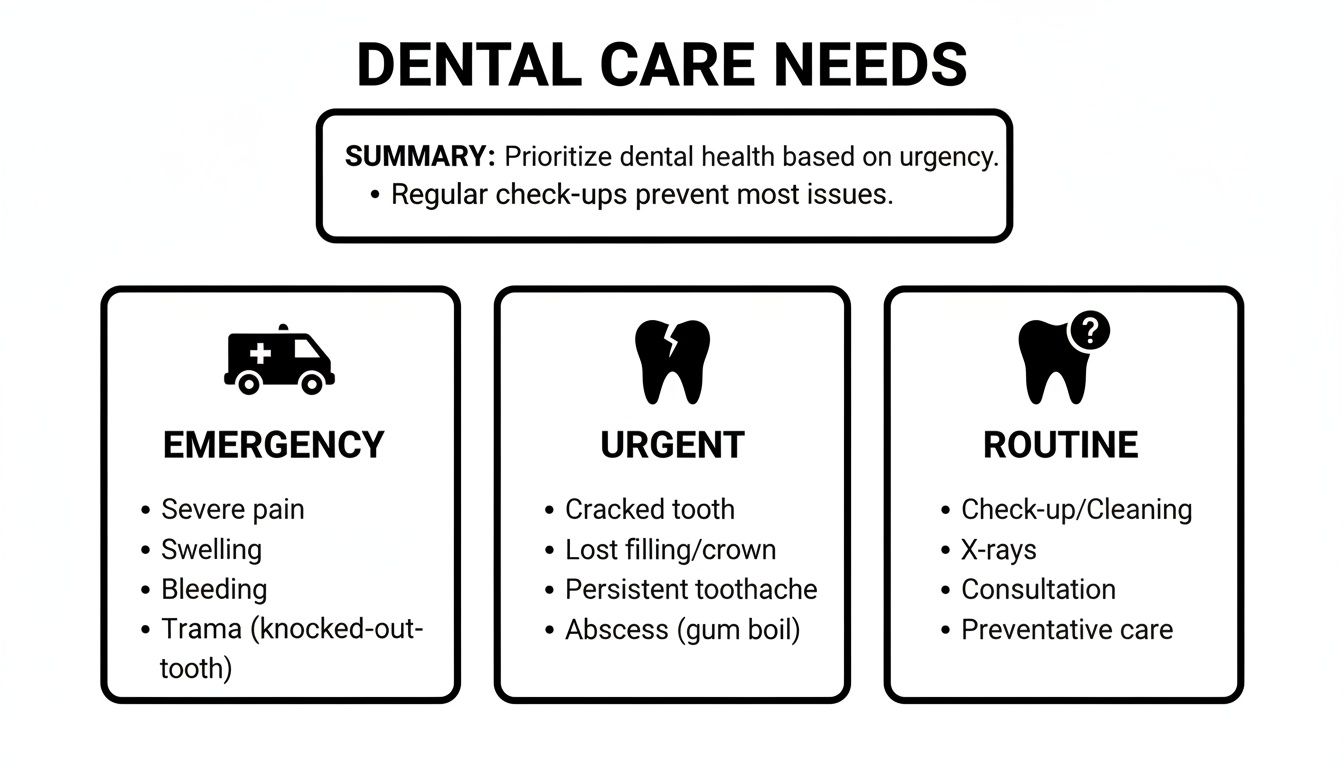
Knowing whether your problem is an emergency, urgent, or routine helps you have a more productive conversation about payment solutions.
Other Financial Tools to Get You Smiling
Membership plans are great, but they aren't the only tool available. Always feel comfortable having an open conversation with the office staff about affordability.
Here are a few other common options:
- Third-Party Financing: Companies like CareCredit work like a credit card for health expenses. Many offer interest-free promotional periods, letting you get treated now and pay it off in manageable chunks.
- Upfront Payment Discounts: If you can pay for your entire treatment plan at the start, many offices offer a discount of around 5-10%. It’s a simple question that can save you money.
You can find many practical strategies for doctor visits without insurance that look similar to these dental financing options. By combining these tools, you can build a financial roadmap to get quality care.
Comparing Your Affordable Dental Care Options
Here’s a quick side-by-side look at common low-cost dental care options to help you decide.
| Care Option | Best For | Average Cost | Key Benefit |
|---|---|---|---|
| Community Clinics | Basic preventive care, fillings, and extractions on a budget. | $ (Sliding scale based on income) | The most affordable option for basic services. |
| Dental Schools | Complex procedures (crowns, root canals) at a steep discount. | $$ (Often 50% less than private practice) | High-quality care and big savings. |
| In-House Membership | Patients seeking consistent preventive care and major savings. | $$ (Low monthly fee + 15-20% off treatments) | Predictable costs and relationship with a dentist. |
| Third-Party Financing | Spreading the cost of urgent or expensive treatment over time. | $$$ (Can include interest if not paid on time) | Get care now, pay later in installments. |
The best option for you depends on the urgency of your needs, your budget, and what services are available in your area.
Preventive Care: The Ultimate Way to Protect Your Smile and Wallet
If you’re asking, “what’s the cheapest way to fix my teeth without insurance?” the most honest answer is this: don't let them break in the first place. This is a practical, wallet-friendly strategy.
Think of it like your car. You get regular oil changes to avoid a massive, unexpected engine repair. Your dental health works the exact same way.
Prevention isn't just better than a cure; it's infinitely cheaper. A simple filling costs a fraction of a root canal, and a root canal costs a fraction of a dental implant. Each preventive step saves you from the next, more expensive stage of treatment.
The Power of Routine Cleanings
A professional cleaning is your first and best line of defense against plaque buildup. Without insurance, a standard cleaning typically costs between $75 and $250, a tiny fraction of the $1,500+ you could face for a deep cleaning to treat advanced gum disease.
Small Investments with Huge Returns
Beyond cleanings, a few other low-cost treatments can save you a fortune.
- Fluoride Treatments: This quick application strengthens tooth enamel, making it tougher against the acid attacks that cause cavities.
- Dental Sealants: A thin, protective coating is painted onto the chewing surfaces of back teeth, sealing out food and plaque from the deep grooves where cavities love to hide.
- Simple Fillings: Catching a cavity when it’s small is everything. A minor filling is a straightforward and relatively inexpensive procedure, while waiting can lead to expensive crowns or extractions.
Adopting this proactive mindset helps you maintain your health. Our guide on what preventive dentistry is dives deeper into these services.
Talking About Money: Creating a Treatment Plan That Fits Your Budget
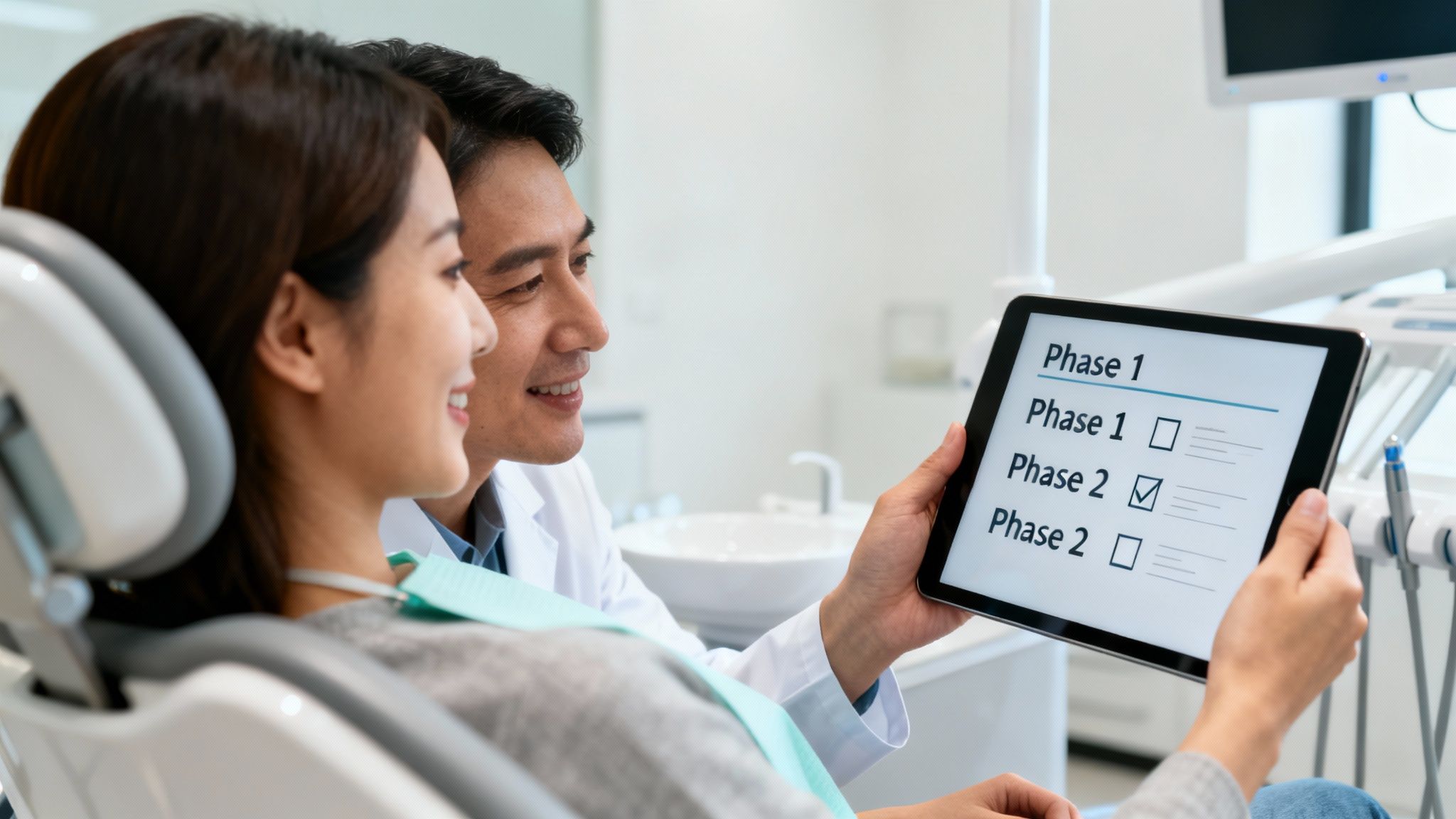
Talking about money can be uncomfortable, but it's the most important conversation you can have with your dentist. A compassionate dental team welcomes these questions.
The goal is a partnership. You are a collaborator in your own health journey, and that begins with asking the right questions.
Knowing What to Ask
Walking into a consultation prepared with a few key questions can completely change the dynamic. It shows you're serious about finding a solution that works for you.
Here are a few questions I encourage my patients to ask:
- "Can we create a prioritized treatment plan? What has to be done now, and what can wait?"
- "What are all the payment options you offer, including in-house plans?"
- "Is there a discount if I pay for treatment in cash upfront?"
- "Could you walk me through a detailed cost breakdown?"
A great dental office will never make you feel pressured. They'll show you the ideal path to perfect health and then work with you to break it down into manageable phases that respect your budget.
Phasing Your Care: A Real-World Example
Imagine you're a busy parent in Huntington Beach with no dental insurance and a nagging toothache. An exam reveals you need a filling, a crown replaced, and a deep cleaning. The total cost feels like a gut punch.
This is where phasing your treatment comes in. The painful cavity is the top priority. A standard composite resin filling averages around $226 nationwide, according to data from insurance providers like Guardian Life.
We’d tackle that filling right away. Next, we would schedule your deep cleaning. Finally, we’d plan to replace the old crown in a few months, giving you time to budget for it.
Your Questions About Affordable Dental Care Answered
Trying to figure out dental care without insurance can be overwhelming. Here are some of the most common concerns we hear from our patients in Huntington Beach.
What is an in-house dental savings plan?
An in-house dental plan is a membership program offered directly by a dental practice. For a monthly or annual fee, it covers preventive care like cleanings and exams and offers significant discounts on other procedures. It's a simple, transparent way to make dental costs predictable and affordable without dealing with a traditional insurance company.
Is it cheaper to pull a tooth than to fix it?
While pulling a tooth may seem cheaper upfront, it often leads to more expensive problems later. A missing tooth can cause surrounding teeth to shift, affecting your bite and leading to jaw pain or further decay. Replacing a missing tooth with an implant or bridge costs far more than saving your natural tooth with a filling or root canal today.
What should I do in a dental emergency with no money?
If you're in severe pain, have swelling, or have a broken tooth, your priority is to be seen immediately. Most dental offices, including Kali Dental, will see emergency patients right away and address payment options after getting you out of pain. We can then discuss financing, payment plans, or phased treatment to manage the costs.
Are dental financing options like CareCredit a good idea?
Yes, for many patients, financing is a great tool. It allows you to get necessary treatment now and pay for it over time in manageable installments. Many plans offer interest-free promotional periods, which can make them very affordable if you pay the balance within the specified time.
How can I find a trustworthy but affordable dentist in Huntington Beach?
Look for a local practice that values transparency and provides clear, itemized cost estimates before any work begins. Check online reviews to see what other patients say about their communication and pricing. A trustworthy dentist will listen to your financial concerns and work with you to create a realistic plan for a healthy smile.
Ready to find a dental care solution that fits your budget? At Kali Dental, we believe everyone in our Huntington Beach community deserves a healthy smile. Call us at 657-800-5254 to ask about our membership plan and flexible payment options.
Visit kalidental.com to schedule your no-pressure consultation today.