
When a toothache strikes, it rarely waits for a convenient time. That sudden, throbbing pain can derail your day, making it hard to eat, sleep, or focus. Your first thought is getting relief—and fast.
While the only permanent solution is seeing a dentist, knowing what to do for toothache pain at home can make a huge difference. These tips can help you manage the discomfort until your appointment.
Your First Steps for Immediate Toothache Relief

Think of these first steps as dental first aid. They are safe, effective ways to get temporary relief and take back some control when your tooth is screaming for attention.
Soothe With a Saltwater Rinse
One of the oldest tricks in the book is also one of the best. A warm saltwater rinse is a natural disinfectant that can work wonders for an aching mouth.
A saltwater rinse helps by:
- Cleansing the area around the sore tooth, flushing out food or bacteria.
- Reducing inflammation in the gum tissue, a common source of throbbing pain.
- Drawing out fluids from swollen tissues, which can relieve pressure.
To make it, dissolve half a teaspoon of salt in eight ounces of warm water. Swish for 30 seconds, then spit. You can repeat this every few hours.
Numb the Pain With a Cold Compress
If your toothache comes with facial swelling, a cold compress is your best friend. The cold temperature constricts blood vessels, reducing inflammation and creating a welcome numbing sensation.
Pro-Tip from Dr. Nguyen: Never put ice directly on your skin, as it can cause an ice burn. Always wrap the cold pack in a thin towel first. Hold it against your cheek for 20 minutes on, then 20 minutes off.
Choose the Right Pain Reliever
For dental pain, nonsteroidal anti-inflammatory drugs (NSAIDs) are often the best choice, according to the American Dental Association.
Medications like ibuprofen target both the pain and the inflammation causing it. For many of our Huntington Beach patients, combining these at-home steps provides significant relief while they wait for their appointment.
Quick Toothache Relief Checklist
This table summarizes the immediate steps you can take to manage tooth pain at home.
| Action Step | How It Helps | Kali Dental Pro-Tip |
|---|---|---|
| Warm Saltwater Rinse | Cleanses the area, reduces inflammation, and draws out fluid from swollen gums. | Use warm (not hot) water to avoid irritating the sensitive tooth. Repeat every 2-3 hours. |
| Cold Compress | Narrows blood vessels to reduce swelling and provides a temporary numbing effect. | Apply for 20-minute intervals. Never place ice directly on the skin; always use a towel. |
| Over-the-Counter NSAIDs | Fights both pain and the underlying inflammation causing the discomfort. | Ibuprofen is often a great first choice. Always follow the dosage instructions on the package. |
| Elevate Your Head | Prevents blood from pooling in your head, which can reduce throbbing pain, especially at night. | Try sleeping with an extra pillow to keep your head propped up higher than your body. |
Following these steps can make a painful situation much more manageable until you can get the professional care you need.
Uncovering the Root Cause of Your Tooth Pain

A toothache is your body’s red flag, telling you something is wrong. Understanding the potential source helps you describe your symptoms clearly when you visit our Huntington Beach office.
The discomfort you feel can stem from several issues, some simple and others more complex. Our goal is to find the culprit to create a treatment plan that gets you out of pain for good.
Common Dental Culprits
Most often, a toothache points to a problem with the tooth, gums, or surrounding bone. The type of pain you feel can give us clues about what’s going on.
Here are the most frequent causes we see at Kali Dental:
- Tooth Decay (Cavities): This is the #1 cause of tooth pain. Bacteria create acids that eat through enamel, exposing sensitive inner layers and causing sharp pain with sweet, hot, or cold items.
- Cracked or Damaged Tooth: A tiny crack from an injury or grinding can expose the nerve. This often leads to sharp, intermittent pain when you bite down.
- Gum Disease: Inflamed or infected gums (gingivitis or periodontitis) can pull away from teeth, exposing sensitive roots. This typically causes a dull, persistent ache.
- Dental Abscess: A serious infection that creates a pocket of pus at the tooth's root. An abscess causes severe, throbbing pain and is a dental emergency. It could be a sign of a deeper infection, like an abscess after root canal.
When the Problem Isn't Your Tooth
Sometimes, the source of tooth pain has nothing to do with your teeth. This is "referred pain," where your brain misinterprets a pain signal as coming from a tooth.
Other issues that can feel like a toothache include:
- Sinus Infection (Sinusitis): The roots of your upper back teeth sit right below your sinuses. When sinuses get inflamed, the pressure can cause a dull ache in your top teeth.
- Teeth Grinding (Bruxism): Clenching or grinding your teeth, especially during sleep, can wear down enamel and strain jaw muscles, leading to tooth sensitivity and pain.
- TMJ Disorders: Your temporomandibular joint (TMJ) connects your jaw to your skull. A problem with this joint can cause pain that radiates to your face, ears, and teeth.
Safe and Effective At-Home Toothache Remedies

While the only long-term fix is a visit to the dentist, you need something to get you through until then. The good news is that several dentist-approved home remedies can safely manage the pain.
These methods are not a replacement for professional care, but a temporary bridge to get you to your appointment.
Simple and Proven Pain Management Tips
These science-backed remedies can make a huge difference. They work by cleaning the area, calming inflammation, or numbing pain signals.
- Warm Saltwater Rinse: A classic for a reason. Dissolve half a teaspoon of salt in warm water for a natural disinfectant that flushes debris and soothes irritated gums.
- Cold Compress: An ice pack wrapped in a towel, held against your cheek for 20-minute intervals, is perfect for swelling. It constricts blood vessels, numbing the area.
- Peppermint Tea Bags: Let a used peppermint tea bag cool down, then place the damp bag against the sore tooth. Peppermint has natural numbing properties that offer gentle, temporary relief.
What to Absolutely Avoid
Knowing what not to do is just as important as knowing what helps. Many old wives' tales and internet "hacks" can cause more harm than good.
A Critical Warning from Dr. Nguyen: Please, never place an aspirin tablet directly on your tooth or gum. Aspirin is acidic and can cause a painful chemical injury known as an aspirin burn. The last thing you need is another problem on top of your toothache.
You should also avoid harsh substances like undiluted hydrogen peroxide. While exploring various methods for natural chronic pain relief can be useful for general wellness, acute dental pain requires a specific, safe approach.
When to Call an Emergency Dentist in Huntington Beach
Most toothaches can wait for a regular appointment, but sometimes a toothache is a bright-red emergency signal. Knowing the difference is crucial for protecting your health.
At Kali Dental, we want our Huntington Beach community to feel confident deciding if they need immediate care. If you have severe, persistent pain that over-the-counter medication doesn't help, it’s time to call us.
Signs Your Toothache Is a True Emergency
A minor ache that comes and goes is one thing. A relentless, throbbing pain that takes over your life is something else entirely.
Keep an eye out for these critical warning signs:
- Severe, Throbbing Pain: A deep, relentless pain that disrupts your ability to eat, sleep, or think straight.
- Swelling of the Face, Jaw, or Gums: Swelling is a classic sign of infection and could mean a dangerous abscess is forming.
- Fever or Chills: A fever is a major red flag that an infection may be spreading beyond the tooth.
- Trouble Breathing or Swallowing: This is the most serious sign. Swelling from a dental infection can obstruct your airway and requires immediate medical attention at the nearest ER.
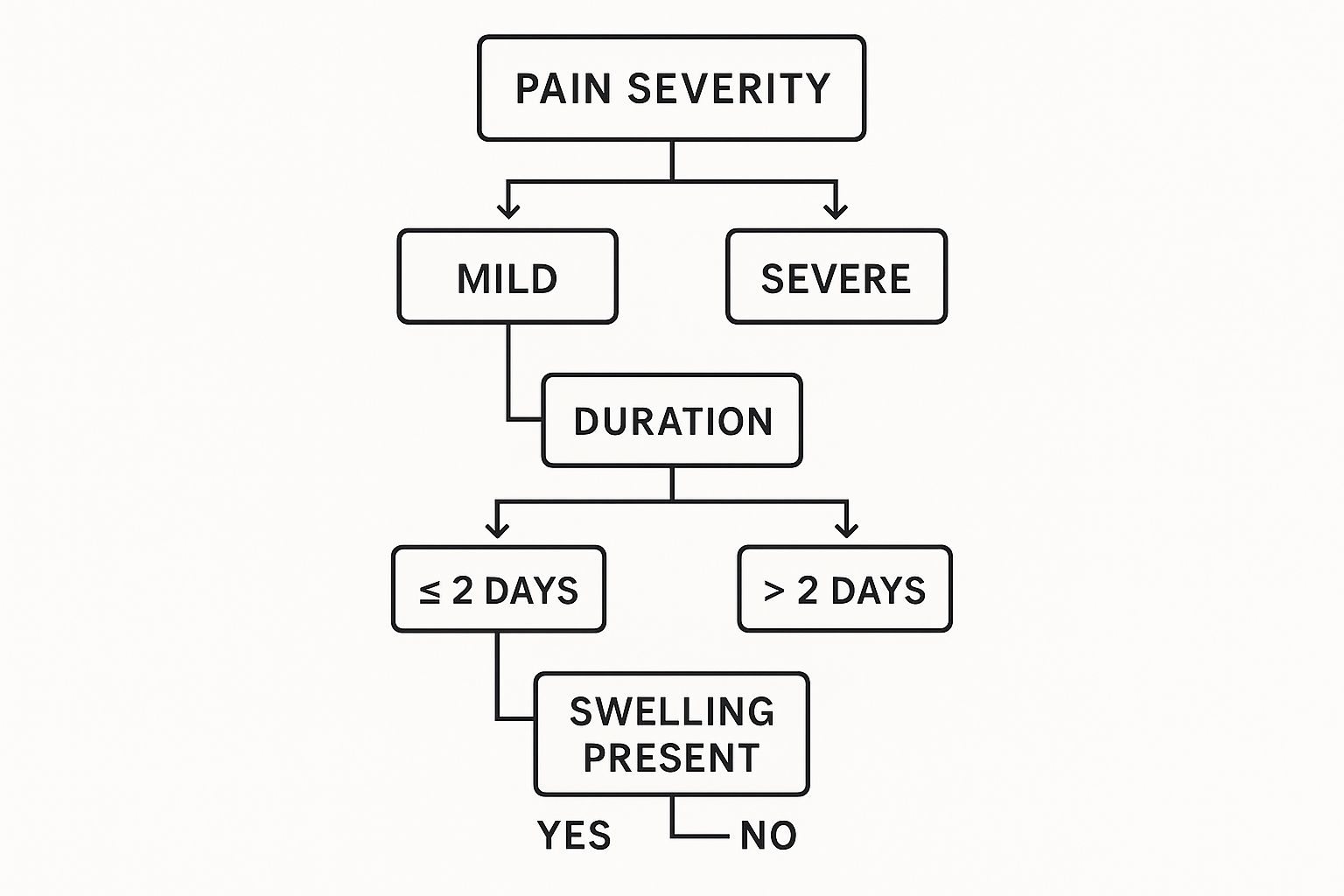
This table breaks down symptoms to help you decide your next move.
Toothache Symptoms: When to Call the Dentist
| Symptom | Manage at Home (Call for Appointment) | Call Emergency Dentist Immediately |
|---|---|---|
| Pain Level | Dull, aching, or comes and goes. Responds to OTC pain relievers. | Severe, constant, throbbing pain that disrupts sleep/daily life. |
| Swelling | No visible swelling of the face, jaw, or gums. | Noticeable swelling in the jaw, cheek, or a pimple-like bump on the gum. |
| Other Symptoms | Sensitivity to hot or cold that fades quickly. | Fever, chills, or a foul taste in your mouth. |
| Breathing | No issues with breathing or swallowing. | Any difficulty breathing or swallowing. Go to the ER. |
If a symptom feels severe, it's always best to err on the side of caution and get professional advice.
Don't Wait for It to Get Worse
Ignoring emergency symptoms can allow a localized infection to spread. You can learn more about what's considered a severe dental emergency on our blog.
Dr. Nguyen's Insight: A dental abscess, if left untreated, can allow bacteria to spread into your jawbone or even your bloodstream. Acting quickly gives us the best chance to save your tooth and prevent a dental issue from becoming a major medical one.
What to Expect at Your Dental Visit
Walking into a dental office in pain can feel stressful, especially for those with dental anxiety. At Kali Dental, our first job is to make you feel comfortable and heard.
Knowing what will happen can take away much of that fear. We want you to feel informed and in control from the moment you step inside our Huntington Beach practice.
Your Compassionate Consultation
The first thing we'll do is talk. We want to hear about your pain in your own words. This conversation gives us the context we need to start connecting the dots.
After we chat, we'll perform a gentle but thorough exam of the tooth and surrounding gums, checking for obvious signs like swelling, redness, or cracks.
Dr. Nguyen’s Approach: "My job isn't just to fix teeth; it's to listen to my patients. Your story about the pain is just as important as what I see in an X-ray. It's about connecting the dots to find the right solution for you."
Getting a Clearer Picture
To see what's happening under the surface, a digital X-ray is almost always the next step. It’s a quick, painless, and essential tool for an accurate diagnosis.
An X-ray can reveal:
- How deep a cavity goes.
- An infection brewing at the tooth's root (an abscess).
- Bone loss around the tooth, indicating gum disease.
- Fractures or cracks below the gumline.
With this complete picture, we can pinpoint the real cause of your toothache.
Discussing Your Treatment Options
Once we have a diagnosis, we'll explain everything in plain English. We’ll lay out all treatment options, discussing the pros and cons so you can make a decision you feel good about.
The solution could be a simple filling or something more involved, like root canal therapy in Huntington Beach to save an infected tooth. We'll answer every question until you feel completely comfortable.
How to Prevent Future Toothaches
The best way to deal with a toothache is to prevent one from happening in the first place. Shifting your focus from treating pain to active prevention is the most powerful thing you can do for your oral health.
It all starts with a rock-solid daily routine. Brushing for two minutes, twice a day, and flossing daily are your non-negotiable first lines of defense.
Building Stronger Dental Habits
Your lifestyle choices also play a massive role in keeping your smile pain-free. A few small tweaks can dramatically lower your risk of developing painful dental issues.
- Cut Back on Sugar and Acidic Foods: Mouth bacteria feast on sugar and produce enamel-eroding acids. Reducing soda, candy, and starchy snacks makes a huge difference. You can find effective strategies for cutting back on sugar to help.
- Make Water Your Best Friend: Sipping water throughout the day rinses away food particles and neutralizes harmful acids, supporting your saliva’s natural cleaning power.
- Protect Your Teeth with a Mouthguard: If you grind your teeth at night or play contact sports, a custom mouthguard is essential for protecting your teeth from chips and cracks.
Why Regular Check-Ups are a Game-Changer
Even with perfect home care, you can’t see everything. That's why professional dental visits are critical for heading off toothaches before they start.
At Kali Dental, we see preventative care as a partnership. Your daily habits are your part, and our thorough check-ups are ours. Together, we can catch small issues before they ever become painful problems.
Routine dental cleanings and exams in Huntington Beach allow us to remove hardened tartar and screen for early signs of trouble. This proactive approach is the surest way to maintain a healthy, pain-free smile.
Frequently Asked Questions About Toothaches
We hear many questions from our patients in Huntington Beach. Here are clear, straightforward answers to the most common ones.
Will a toothache go away on its own?
While minor gum irritation might resolve in a day or two, a true toothache from a cavity or infection will not. The pain may fade temporarily, but the underlying problem will only worsen without treatment. It's your tooth’s way of signaling it needs professional attention.
Is it safe to take painkillers for tooth pain?
Yes, over-the-counter pain relievers like ibuprofen can provide temporary relief while you wait for your appointment. Always follow the package instructions. However, never place an aspirin pill directly against your tooth or gum, as it can cause a painful chemical burn.
What should I do if my child has a toothache?
Have your child rinse gently with warm salt water to clean and soothe the area. If their cheek is swollen, a cold compress can help. Avoid giving aspirin to children and call your family dentist in Huntington Beach to have them seen as soon as possible.
Does a severe toothache always mean I need a root canal?
Not necessarily. While a root canal is needed to treat an infected tooth nerve, many other issues can cause severe pain. A deep cavity or gum inflammation can often be resolved with a simpler treatment like a filling. An exam and X-ray are needed to know for sure.
Should I use a hydrogen peroxide rinse for my toothache?
A hydrogen peroxide rinse can reduce bacteria, but you must be very careful. If you try it, you must dilute it properly by mixing one part 3% hydrogen peroxide with two parts water. Swish, but be absolutely certain you spit it all out and never swallow it.
Get Toothache Relief in Huntington Beach
If you're in pain, don't wait and hope it goes away. The compassionate team at Kali Dental is here to provide the relief and expert care you deserve. Contact our Huntington Beach office today to schedule your appointment and get back to feeling like yourself.