
Direct Answer: A toothache that wakes you up, comes with swelling, or involves a fever cannot wait. Mild soreness with no swelling or fever usually can wait until morning.
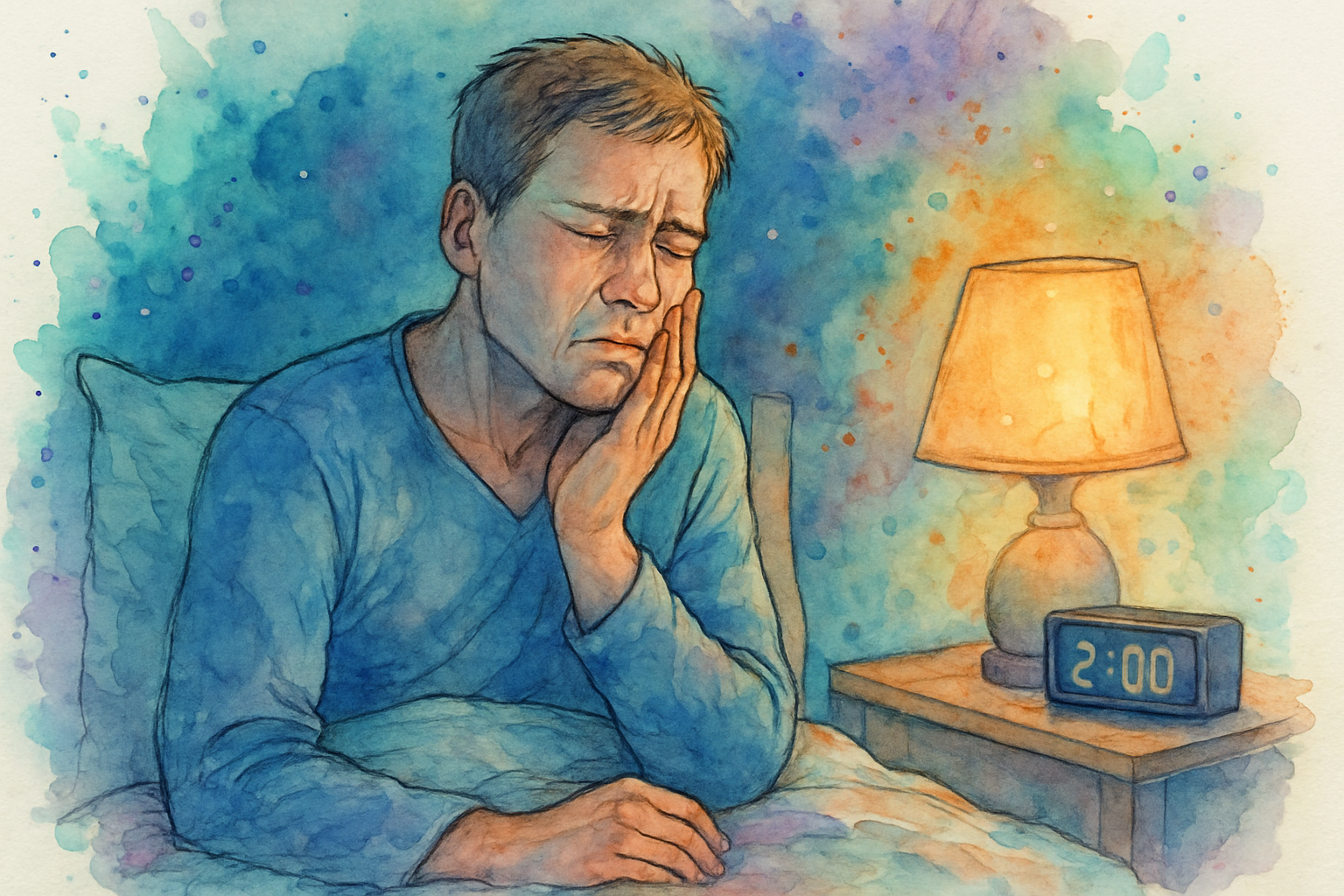
It’s 11pm on a Tuesday. You’re getting ready for bed and your tooth starts throbbing. Now you’re lying there wondering — is this something I can sleep off, or do I need to do something right now?
That question keeps a lot of Huntington Beach families up at night. And the answer isn’t always obvious, because not every toothache means the same thing. Some are minor irritations that can wait a day or two. Others are signs that something serious is happening inside the tooth or surrounding tissue — and waiting actually makes it worse.
This article will walk you through the real differences. What the pain feels like, what’s likely causing it, and when a dentist needs to see you today versus tomorrow.
What the Pain Tells You — and What It Doesn’t
Pain is your body’s signal that something needs attention. But the character of dental pain — how it feels, when it comes, how long it lasts — gives a lot of useful information about how serious the problem is.
A brief, sharp twinge when you eat something cold or sweet is common and usually not an emergency. It often points to a small area of enamel wear or early tooth sensitivity. If the sensation passes within a few seconds and doesn’t come back on its own, you can get it checked at your next regular appointment.
But if the pain:
– Comes on without any trigger (you’re just sitting there)
– Throbs continuously and doesn’t let up
– Wakes you up from sleep
– Gets worse when you lie down
– Radiates into your jaw, ear, or neck
…that’s a different situation. That kind of pain usually means the nerve inside the tooth is irritated or infected. It doesn’t go away on its own, and waiting often means the infection spreads.
You can read more about what causes sudden or intense sensitivity in this guide on what causes tooth sensitivity to cold — it breaks down the difference between surface-level issues and deeper nerve involvement.
The Symptoms That Mean You Cannot Wait
Some toothache symptoms are genuinely urgent. If you have any of the following, same-day or next-morning dental care is not optional — it’s necessary.
Swelling in your face, jaw, or neck. This is the most serious warning sign on the list. Dental infections can spread into the soft tissue of the jaw and neck, and in rare cases they can become life-threatening. Swelling that is expanding, firm, or making it hard to swallow or breathe is a medical emergency — go to an ER, not just a dental office.
Fever alongside tooth pain. A fever means your body is fighting an active infection. Combined with tooth pain, it almost always means the infection has gone beyond the tooth itself.
Pain so severe you can’t function. If you cannot eat, sleep, or think clearly because of the pain — and over-the-counter medication isn’t putting a dent in it — that’s not something to sleep off.
A tooth that was knocked loose or cracked. Trauma to a tooth, whether from a fall, a sports collision on the fields near Central Park in Huntington Beach, or biting something hard, can cause damage that’s not always visible but needs to be assessed quickly to save the tooth.
For a fuller breakdown of urgent warning signs, this article on what symptoms mean you need an emergency dentist right away goes into detail worth reading before you decide to wait.
Can Your Toothache Wait? A Quick Reference
Use this as a rough guide when you’re trying to decide at 10pm whether to call a dentist first thing tomorrow or seek care tonight.
| Symptom | Likely Cause | Can It Wait? |
|---|---|---|
| Brief cold/sweet sensitivity, fades fast | Enamel wear or minor cavity | Yes — schedule within 1-2 weeks |
| Dull ache that comes and goes | Early decay or cracked tooth | Yes — call next business day |
| Constant throbbing, no trigger needed | Nerve involvement or abscess | No — call first thing in the morning |
| Pain wakes you from sleep | Advanced nerve irritation | No — call when the office opens |
| Swelling in jaw or face | Spreading dental infection | No — seek care tonight if worsening |
| Fever with tooth pain | Active infection beyond the tooth | No — same-day or ER if high fever |
| Knocked or cracked tooth | Trauma injury | No — same-day care to save the tooth |
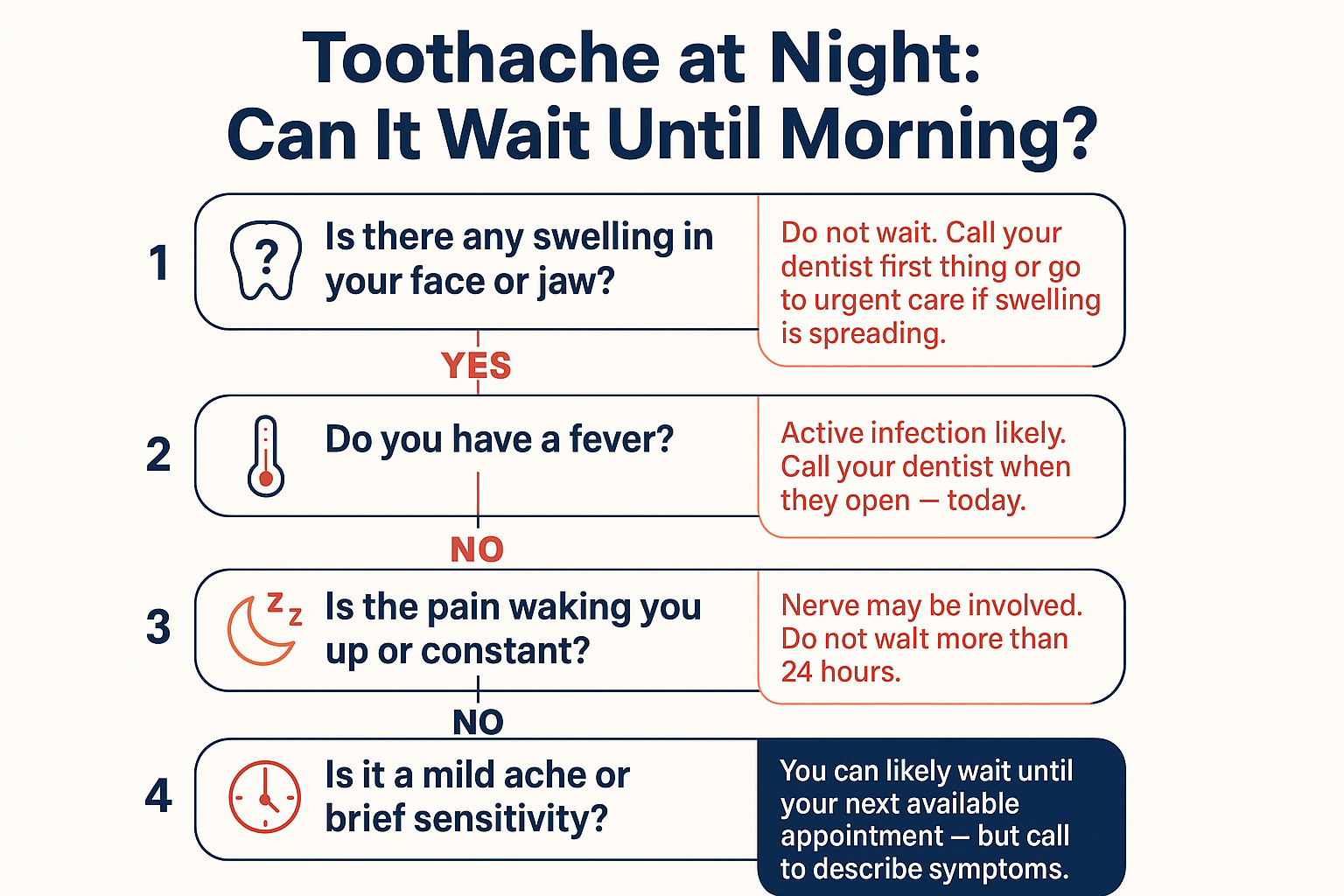
Toothache at Night: Your Decision Guide
This visual walks through the key questions to ask yourself when a toothache starts after hours — so you can make the right call quickly.
What’s Actually Going On When a Tooth Hurts at Night
Toothaches often feel worse at night, and that’s not your imagination. When you lie down, blood pressure in your head increases slightly, which can intensify the throbbing sensation in an already-inflamed tooth. There’s also no daytime distraction to take your mind off it.
The most common culprits behind nighttime tooth pain are:
– A cavity that has reached the inner layer of the tooth (dentin or pulp)
– A cracked tooth that flexes slightly when you bite
– Gum recession exposing a sensitive root surface
– An abscess — a pocket of infection at the root tip or between the tooth and gum
– Grinding or clenching during sleep, which can make existing soreness spike overnight
Of these, an abscess is the one that needs the fastest response. An abscess doesn’t resolve on its own. The infection can spread into surrounding bone and tissue, and that process can move quickly — sometimes within 24 to 48 hours.
If you’ve already had a root canal on the painful tooth and the crown is in place, it’s still possible (though less common) for re-infection to occur. A root canal with temporary crown situation — where the final crown hasn’t been seated yet — can also leave the tooth vulnerable to new problems if care isn’t completed.
And if you suspect grinding is making things worse at night, it’s worth understanding what causes teeth grinding — it’s a common and often overlooked contributor to unexplained tooth pain.
What You Can Do Right Now While You Wait
If you’ve decided the pain can hold until morning, there are a few things that can help you get through the night without making the situation worse.
Over-the-counter pain relief like ibuprofen (Advil) or acetaminophen (Tylenol) can take the edge off. Ibuprofen is often more effective for dental pain because it also reduces inflammation. Follow the standard dosing on the label — taking more than directed won’t help faster and can cause other problems.
A cold compress on the outside of your jaw (never direct heat — heat can make swelling worse and draw more blood to an infected area) can reduce inflammation and numb the area a bit.
Avoid hot foods and drinks. Heat tends to aggravate an irritated nerve. Room temperature or cool water is fine.
Don’t poke at it. It’s tempting to keep pressing on the tooth with your tongue or finger, but that can worsen irritation and give you no useful information.
For more temporary relief options, this guide on home remedies for cavity pain covers what works, what doesn’t, and how long you can realistically use these before seeing a dentist.
Frequently Asked Questions About Toothaches and When to Seek Care
Can a toothache go away on its own?
Sometimes the discomfort fades, but the underlying problem almost never resolves without treatment. If a toothache disappears suddenly after being severe, that can actually mean the nerve has died — which sounds like good news but usually means the infection is still present and spreading silently. A tooth that stops hurting on its own still needs to be evaluated.
Is it okay to take ibuprofen every night just to manage tooth pain?
For a day or two, yes — ibuprofen is safe at standard doses for short-term pain management. But if you’re relying on it nightly to sleep, that’s a clear sign the underlying problem is serious enough that it won’t wait. Using pain medication to postpone a dental visit for more than 2-3 days typically means the problem is getting harder and more expensive to fix.
I don’t have dental insurance. Does that change whether I should go in?
It shouldn’t change the decision — but we understand it affects it for a lot of people. At Kali Dental, we have an in-house savings plan specifically for uninsured patients. A same-day exam for a painful tooth is far less costly than treating an infection that’s had another week to spread. If cost is the hesitation, call us and we’ll walk you through what the visit will actually cost before you come in.
My child has a toothache. Is it different for kids?
The same general rules apply — swelling, fever, and severe constant pain are urgent regardless of age. One thing worth knowing with younger kids is that baby teeth can abscess just like adult teeth, and the infection can affect the developing permanent tooth underneath. Don’t assume a baby tooth problem is minor just because the tooth will eventually fall out anyway.
What if the tooth has already been extracted but the area still hurts?
Pain in the days following a tooth extraction is expected. But if pain worsens after day 3 or 4 rather than improving, or if you develop a foul taste or smell from the site, that’s a sign of dry socket or early infection — both of which need a follow-up visit. You can read more about the normal healing timeline in this article on what recovery from a tooth extraction actually looks like.
How quickly can a dental infection get serious?
Faster than most people expect. A localized abscess can progress to spreading facial swelling within 24 to 72 hours in some cases, particularly if the immune system is already under stress. We’re not saying this to scare anyone — most toothaches don’t escalate that quickly. But swelling that is visibly growing, spreading toward the neck, or making it hard to open your mouth or swallow is an emergency, full stop.
Not Sure If Your Toothache Can Wait? We Can Help You Figure That Out
If you’re lying awake in Huntington Beach tonight wondering whether that tooth pain is serious, the simplest thing you can do is call us in the morning and describe what you’re feeling. Our team at Kali Dental will ask you the right questions and get you in the same day if it sounds urgent. Call us at (657) 800-5254 or book online at kalidental.com — we’ll help you figure out what’s actually going on and what it will take to fix it.