
Quick Answer
Tooth sensitivity to cold usually happens when the protective outer layer of the tooth is no longer fully shielding the inner layer. That can happen from enamel wear, gum recession, a cavity, a crack, or recent dental work. Cold reaches the sensitive part of the tooth and triggers a short, sharp pain.
If you've ever taken a sip of ice water and felt a quick electric jolt in one tooth, you're not imagining it. What causes tooth sensitivity to cold is usually a change in the tooth's protective barrier, and the good news is that the cause can often be identified and treated.
That pain is your tooth's way of telling you something has changed. Sometimes it's mild enamel wear. Sometimes it's a small cavity or a cracked filling. If you're trying to figure out whether it's something temporary or something that needs attention, this guide should help. For short-term comfort tips, you can also look at these ways to relieve tooth pain.
That Sudden Jolt of Pain From a Cold Drink
Cold sensitivity tends to feel very specific. You sip cold water, bite into ice cream, or breathe in chilly air, and one tooth answers with a fast, sharp sting.
That kind of pain usually doesn't happen at random. It often means the tooth's outer protection has thinned, shifted, or been interrupted in one spot. Once you understand the path cold takes into the tooth, the causes make a lot more sense.
A short, sharp response to cold is often a sensitivity problem. A lingering ache can suggest a deeper issue and deserves a closer look.
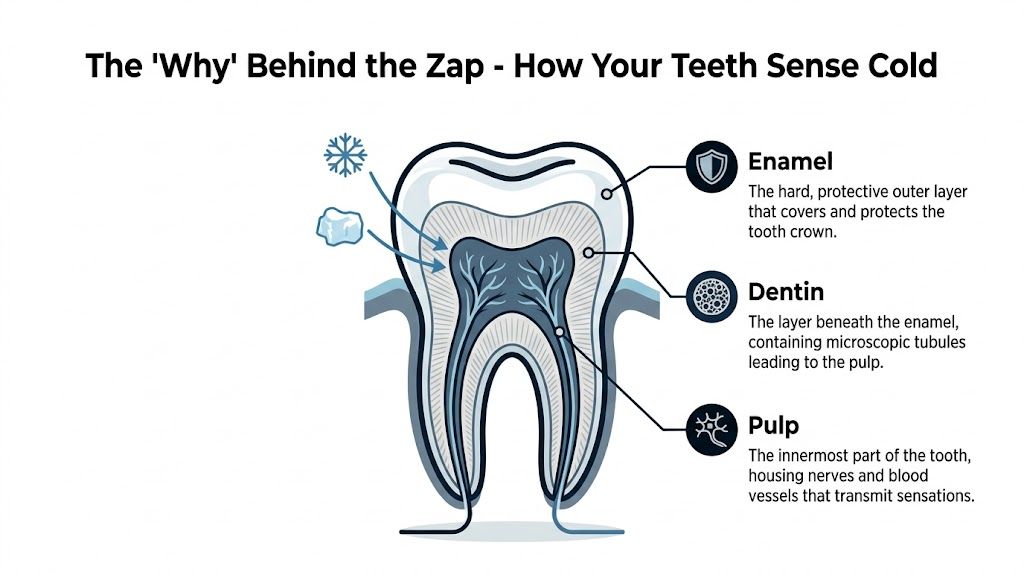
The 'Why' Behind the Zap – How Your Teeth Sense Cold
A tooth has layers, and each one matters. The outer layer is enamel, which is the hard shell covering the visible part of the tooth. Under that is dentin, and in the center is the pulp, where the nerve and blood supply live.
What dentin does
Dentin isn't solid like a brick wall. It contains microscopic tubules, which are tiny channels that lead toward the nerve inside the tooth. When enamel wears down or gums recede, dentin becomes exposed.
Researchers describe this as dentin hypersensitivity, and up to 57 million Americans experience it, according to the review published at PMC on dentin hypersensitivity. Cold can cause fluid movement inside those tubules, which activates nerve fibers and creates that sharp, brief pain.
Why cold feels so fast and sharp
Patients often ask why cold sensitivity feels immediate. The answer is that the tooth doesn't need a large injury to react. If dentin is exposed, cold can trigger the tubules almost instantly, and the nerve responds with a quick warning signal.
You can think of enamel as a winter jacket for the tooth. When that jacket gets thin, or when the root becomes uncovered, cold gets through much more easily.
Why gum recession matters so much
The root surface doesn't have the same enamel protection as the crown of the tooth. So when gums pull back, the exposed area can become sensitive very quickly. That's one reason gum health plays such a big role in sensitivity, and it's also why prevention matters. If you'd like more background on that process, this page on how to prevent gum recession is a helpful next read.
Practical rule: Cold sensitivity usually starts when the protective layer is no longer doing its full job.
What Causes Tooth Sensitivity to Cold?
The situation often becomes quite personal. Two people can have the same cold sensitivity for completely different reasons, even though the pain feels similar.
Enamel wear from brushing or acids
Enamel can gradually wear down from brushing too hard, using abrasive products, or repeated exposure to acidic foods and drinks. When that happens, the dentin underneath has less protection, so cold reaches the sensitive layer more easily.
This kind of sensitivity often shows up in more than one tooth. People sometimes notice it along the edges of the teeth or near the gumline.
Gum recession and exposed roots
When the gums pull away from the teeth, the root surface becomes exposed. Since roots don't have the same enamel covering, cold can reach sensitive areas faster.
This is one of the most common reasons people feel sensitivity near the gumline. It can happen gradually, so patients are often surprised by how suddenly the pain seems to appear.
Cavities and tooth decay
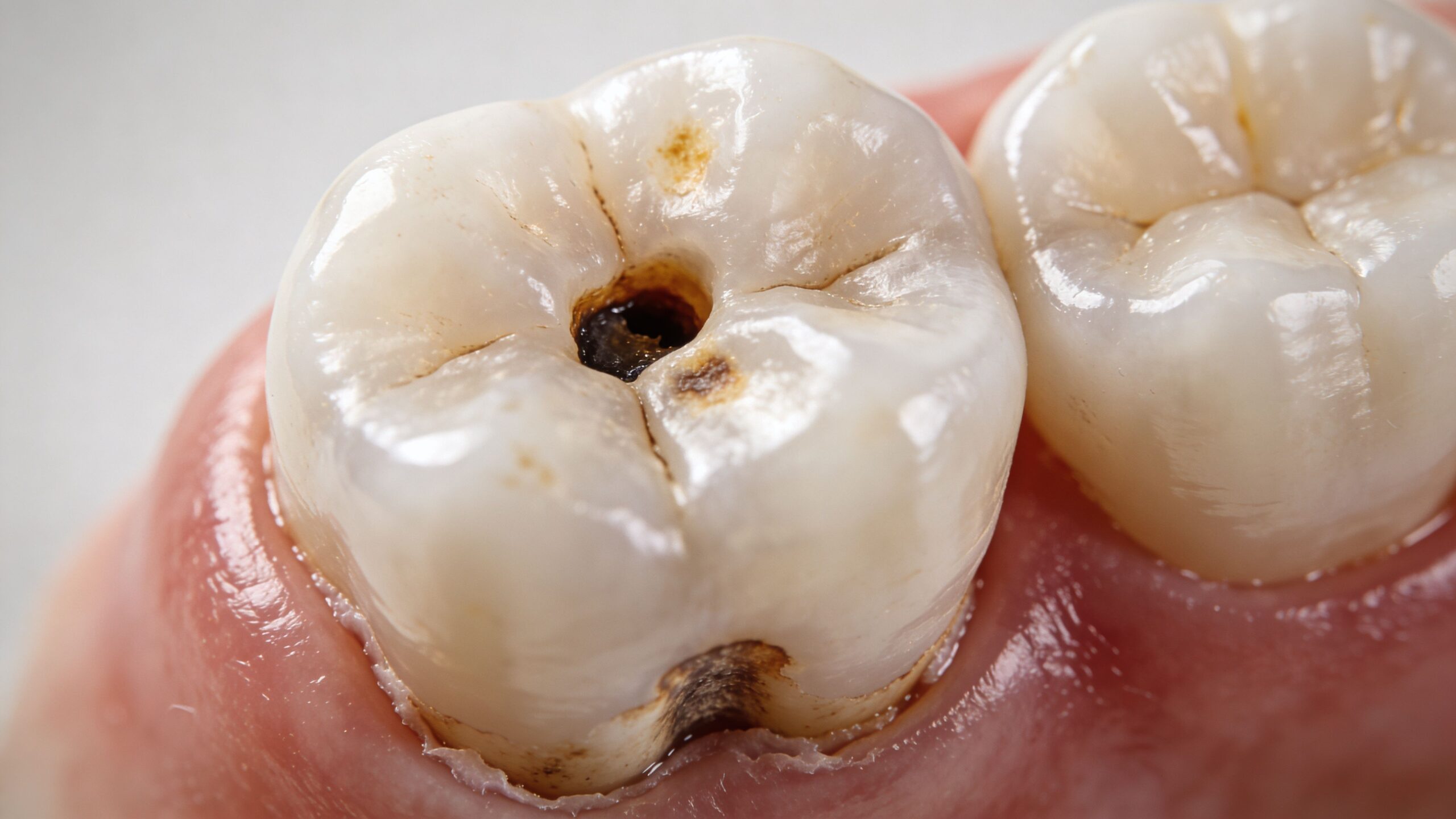
A cavity creates a weak point in the tooth. As decay moves through the outer layer, it opens a path for temperature changes to reach the inner structures.
If a tooth is sensitive in one exact spot, especially when drinking something cold, decay is one possibility worth checking. If that problem has progressed, patients sometimes start wondering whether they need more involved treatment, which is why questions like do I need a root canal in Huntington Beach CA often come up.
Cracked teeth or cracked fillings
A crack can act like a doorway for cold. Even a small crack may let temperature changes travel deeper into the tooth and irritate the nerve.
This can be tricky because the tooth may look mostly normal from the outside. You may only notice pain when chewing, releasing pressure, or drinking something cold.
Recent dental work
Some people notice temporary sensitivity after a filling, crown preparation, cleaning, or whitening. That doesn't always mean something is wrong. It can happen because the tooth has been irritated or because dentin was briefly more exposed during treatment.
The key question is whether the sensitivity is improving. If it's fading, that's reassuring. If it's getting stronger, lasting longer, or becoming very localized, it should be checked.
Inflammation inside the tooth
There is also a deeper level to cold pain. Researchers at Massachusetts General Hospital found that cells called odontoblasts sense cold through a protein channel called TRPC5, which helps explain why inflamed or exposed teeth can react so strongly to low temperatures. When that signaling is amplified, cold can feel much more intense than you'd expect from the trigger itself.
A cold-sensitive tooth doesn't always mean a major problem, but it does mean the tooth is reacting to something real.
How We Find the Source of Your Tooth Pain
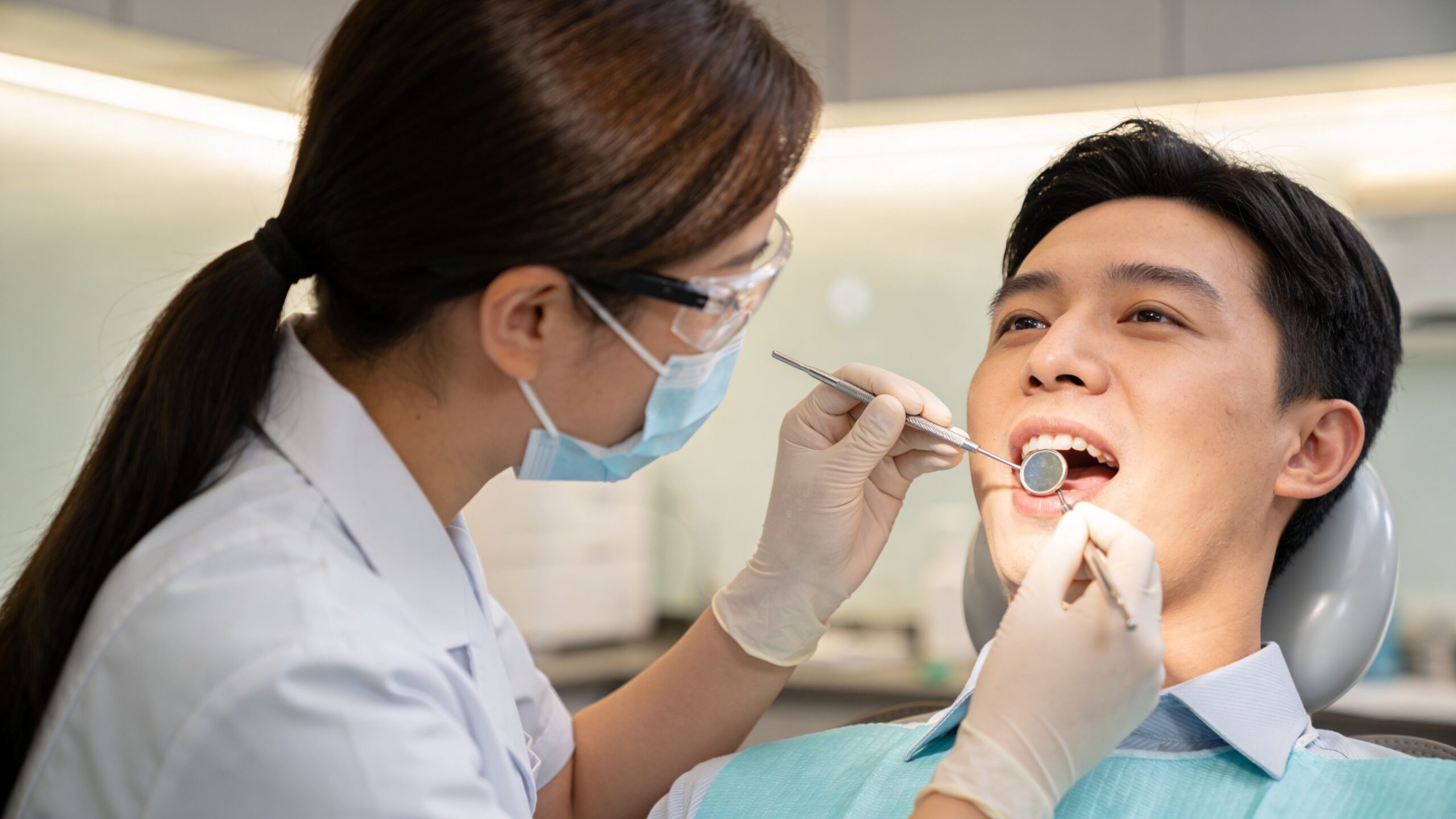
When a patient comes in with sensitivity, the first step is usually a conversation. I want to know whether the pain is in one tooth or several, whether it started suddenly, whether it lingers, and whether it happens with cold only or also with sweets and chewing.
When one tooth is the problem
A single tooth sensitive to cold often points to a localized issue like a cavity, cracked filling, or cracked tooth, as noted in this article on one tooth sensitive to cold. That same source notes that delaying evaluation can allow decay or a fracture to progress, and recent dental analyses cited there report localized cracks increasing by up to 15% in adults aged 25 to 45.
That matters because one sore tooth usually needs a focused diagnosis, not guesswork. Stress-related clenching and grinding can also target one area more than others.
What the exam usually includes
The exam itself is usually straightforward and gentle. We look for worn enamel, exposed roots, leaking or damaged fillings, visible cracks, bite stress, and areas where the gum tissue has pulled back.
Digital X-rays help us see what isn't obvious on the surface. If gum recession or buildup may be part of the picture, patients sometimes ask whether they may need more than a routine cleaning, and this page on how can I tell if I actually need a deep dental cleaning can help explain that concern.
Why diagnosis matters
Cold sensitivity is one symptom, not one diagnosis. The right fix for a worn root surface is different from the right fix for a cracked tooth.
That's why a stress-free visit matters. When patients understand what we're seeing and why it hurts, treatment decisions become much less intimidating.
Your Path to Relief from Sensitive Teeth
Relief usually starts with matching the solution to the cause. Some cases respond well to home care. Others need a specific repair so the tooth can be protected again.
At-Home Strategies
Small changes at home can calm sensitivity, especially when the issue is mild or early.
- Use a desensitizing toothpaste: These products are designed to reduce how strongly the tooth reacts to temperature.
- Switch to a soft-bristled brush: Gentle brushing helps avoid more enamel wear and reduces irritation near the gumline.
- Watch acidic triggers: Frequent soda, citrus, or sour foods can keep sensitive areas irritated.
- Avoid extreme temperatures for a bit: Very cold drinks and ice can keep re-triggering the same spot while it's healing.
- Consider clove-based soothing products carefully: Researchers found that oil of cloves can inhibit the TRPC5 channel involved in cold pain signaling, which helps explain why it has long been used for toothache relief, according to the Massachusetts General Hospital press release on cold-induced tooth pain.
If you're also trying to sort out when cold helps pain and when warmth makes more sense for sore muscles or general discomfort, this guide on understanding heat and cold therapy for pain gives useful context. Teeth are different from muscles, but people often mix those ideas together.
If sensitivity is getting worse instead of better, home care is usually not enough.
Professional Solutions
Professional treatment depends on what's causing the pain.
| Quick Guide: At-Home vs. Professional Sensitivity Solutions | Best For | Examples |
|---|---|---|
| At-home care | Mild, generalized sensitivity | Desensitizing toothpaste, gentler brushing, reducing acidic exposure |
| Professional treatment | Localized, persistent, or worsening sensitivity | Fluoride treatments, sealants, tooth-colored fillings, gum care, crowns |
For exposed root surfaces or early enamel weakness, a dentist may recommend fluoride treatments or sealants to help protect the area. For a cavity, a tooth-colored filling can close the path that lets cold reach the inner tooth.
If a crack is the problem, a same-day crown may be the better option because it covers and supports the tooth more completely. If gum recession or periodontal irritation is contributing, gum care and periodontal services can reduce ongoing exposure and inflammation.
At Kali Dental, Dr. Kalvin uses digital diagnostics to match the treatment to the exact cause rather than treating every sensitive tooth the same way. If you're dealing with active discomfort, this page on what to do for toothache may also help you decide when it's time to come in.
Frequently Asked Questions About Tooth Sensitivity
Why does only one tooth hurt when I drink something cold?
That often points to a localized issue instead of general sensitivity. Common examples include a cavity, a cracked filling, a cracked tooth, or an exposed root surface in that one area.
Will tooth sensitivity to cold go away on its own?
Sometimes it can, especially after recent dental work or short-term irritation. If the pain keeps returning, becomes stronger, or stays focused on one tooth, it's safer to have it checked.
Is treatment for sensitive teeth painful?
Most sensitivity care is very manageable. Comfort-first care usually means a gentle exam first, then a targeted treatment based on the cause, such as fluoride, a filling, or covering a cracked tooth.
How do you figure out what's causing the sensitivity?
We usually combine your symptoms, a visual exam, and digital X-rays. That helps us tell the difference between enamel wear, recession, decay, bite stress, or a crack that may not be obvious at home.
Can whitening make my teeth more sensitive to cold?
It can for some people, at least temporarily. If your teeth are already sensitive, it's smart to address that first before doing any whitening.
Should I worry if cold pain lasts after dental work?
A short period of sensitivity can happen after some procedures. If it doesn't seem to be improving, or if the pain feels stronger than expected, your dentist should evaluate it.
Will insurance cover treatment for tooth sensitivity?
Coverage depends on the cause and the treatment needed. The clearest way to get an answer is to have the tooth examined first, then review treatment options and benefits with the office before moving forward.
How much does it cost to fix a cold-sensitive tooth?
That depends on why the tooth is sensitive. A simple fluoride treatment is different from a filling or crown, so the best next step is an exam and a clear discussion of options, fees, and any insurance details.
Can I just use sensitive toothpaste and wait?
You can try that if the sensitivity is mild and spread across several teeth. If it's sharp, new, or limited to one tooth, waiting can allow a cavity or crack to worsen.
How soon can I get seen for this?
That depends on the schedule and how urgent the symptoms are. If the pain is sudden, sharp, or interfering with eating and drinking, it's worth calling and explaining what's happening so the team can guide you.
If you're dealing with what causes tooth sensitivity to cold and want a clear answer without the guesswork, Kali Dental offers family-friendly dental care in Huntington Beach with a comfort-first approach. You can call (657) 800-5254, visit 19201 Brookhurst Street, Suite 103, Huntington Beach, CA, or learn more at kalidental.com. Office hours are Monday to Friday 9:00 AM to 6:00 PM and Saturday 8:00 AM to 2:00 PM.