
Your dentist recommends a "deep cleaning," but you feel fine. Is it really necessary, or is it an upsell? It’s a fair question many patients ask. The truth is, a deep cleaning is only needed if you have clear signs of gum disease, which a dentist confirms with specific measurements and X-rays.
You can tell if you might need a deep dental cleaning if your gums bleed, look red and swollen, or if you have persistent bad breath. The definitive sign, however, is when a dentist measures the pocket depths between your teeth and gums and finds measurements of 4mm or deeper, indicating active gum disease.
Why a Deep Cleaning Might Be Recommended (and When It’s Not)
It’s a common scenario: you’re at a routine check-up, and suddenly the conversation shifts from a standard cleaning to a "deep cleaning." Your mind races with questions about cost, necessity, and whether your insurance will cover it. This skepticism is completely normal.
Many patients wonder if this recommendation is legitimate or just a way to charge more. Let's clarify the "why" behind this important procedure and empower you to ask the right questions.
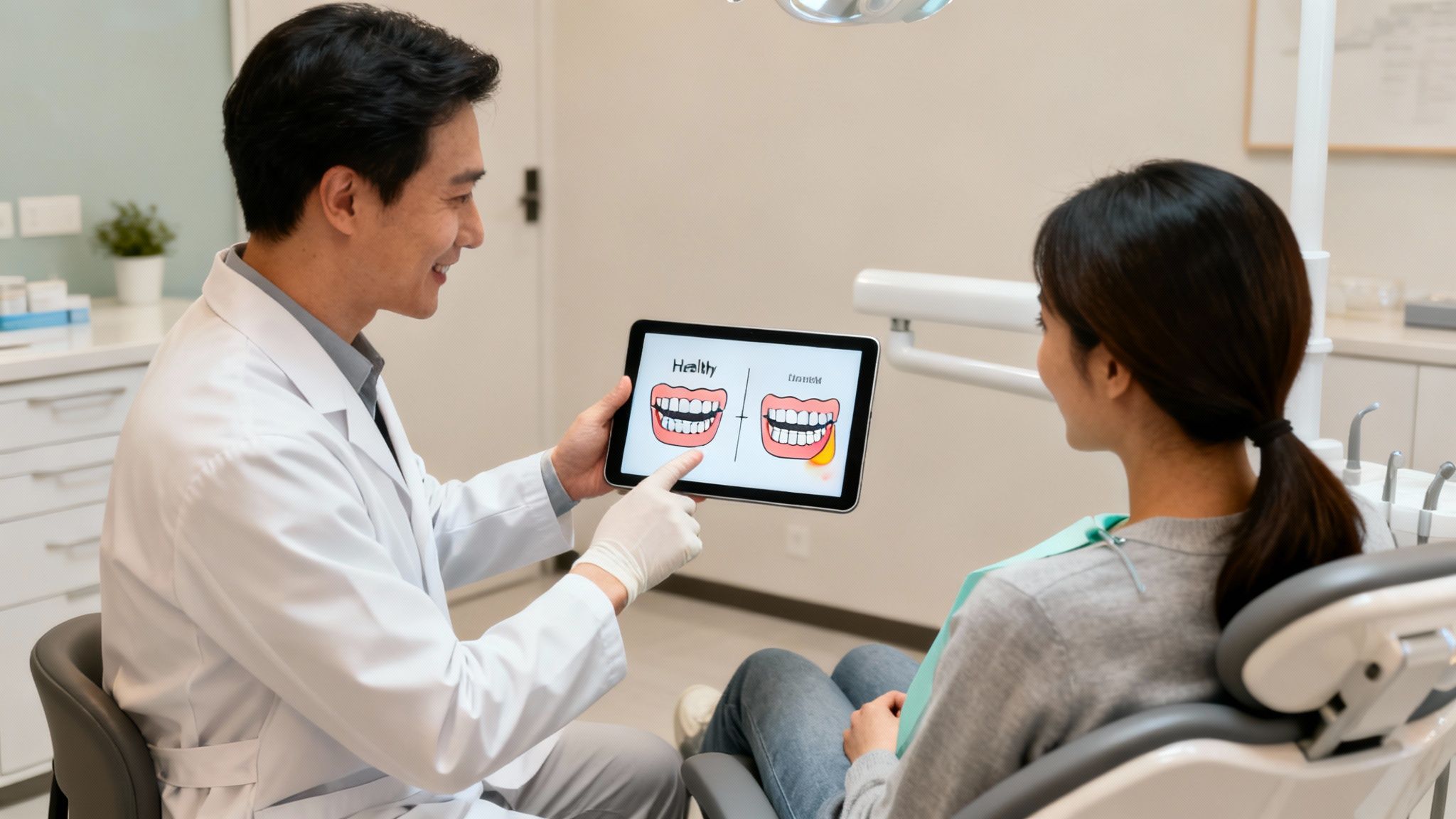
Standard Cleaning vs. Deep Cleaning: What's the Difference?
First, a deep cleaning isn't just a more intense version of a regular cleaning. They are two different procedures for two distinct dental health situations.
A standard cleaning (prophylaxis) is preventive. It removes plaque and tartar from the visible parts of your teeth—everything above the gumline. This is a key part of your regular check-ups and essential for [preventive dental care in Huntington Beach, CA](https://kalidental.com/huntington-beach- dentist/preventive-dental-care-in-huntington-beach-ca-your-first-line-of-defense/).
A deep cleaning (scaling and root planing or SRP) is a medical treatment. We only recommend it for active gum disease, or periodontitis. This is when bacteria have moved below the gumline, creating infectious "pockets" that can destroy the bone supporting your teeth.
According to the CDC, nearly half of adults over 30 (47.2%) have some form of periodontal disease. Scaling and root planing is the gold-standard, non-surgical treatment to stop the disease from progressing.
The Diagnosis Is Based on Evidence, Not a Guess
A reputable dentist will never recommend a deep cleaning without showing you the clinical evidence. Unfortunately, some practices may suggest treatment without explaining the diagnosis, leaving patients confused and distrustful—even if the recommendation is valid.
At Kali Dental, we operate with full transparency. Dr. Kalvin Nguyen will always show you the proof. Here’s the data we look for:
- Periodontal Pocket Measurements: We use a tiny ruler to measure the space between your teeth and gums. Healthy pockets are 1-3mm. Pockets of 4mm or more signal a problem.
- Bleeding on Probing: Healthy gums don’t bleed from a gentle touch. Bleeding indicates active inflammation and infection.
- X-ray Evaluation: X-rays reveal if bone loss has occurred around your tooth roots—a definitive sign of advancing gum disease.
Remember, this is about more than just your teeth. Research has shown the hidden link between gum disease and heart health. Our priority for patients in Huntington Beach and the surrounding Bolsa Chica-Heil area is to provide honest, conservative care so you feel confident in your treatment.
Warning Signs of Gum Disease You Can See at Home
Long before you sit in a dental chair, your body often sends signals that something is wrong with your gums. Learning to spot these clues can help you protect your long-term oral health.
Paying attention to these symptoms is the first step. It helps you understand when it's time to talk to your dentist about whether a deep cleaning might be necessary.
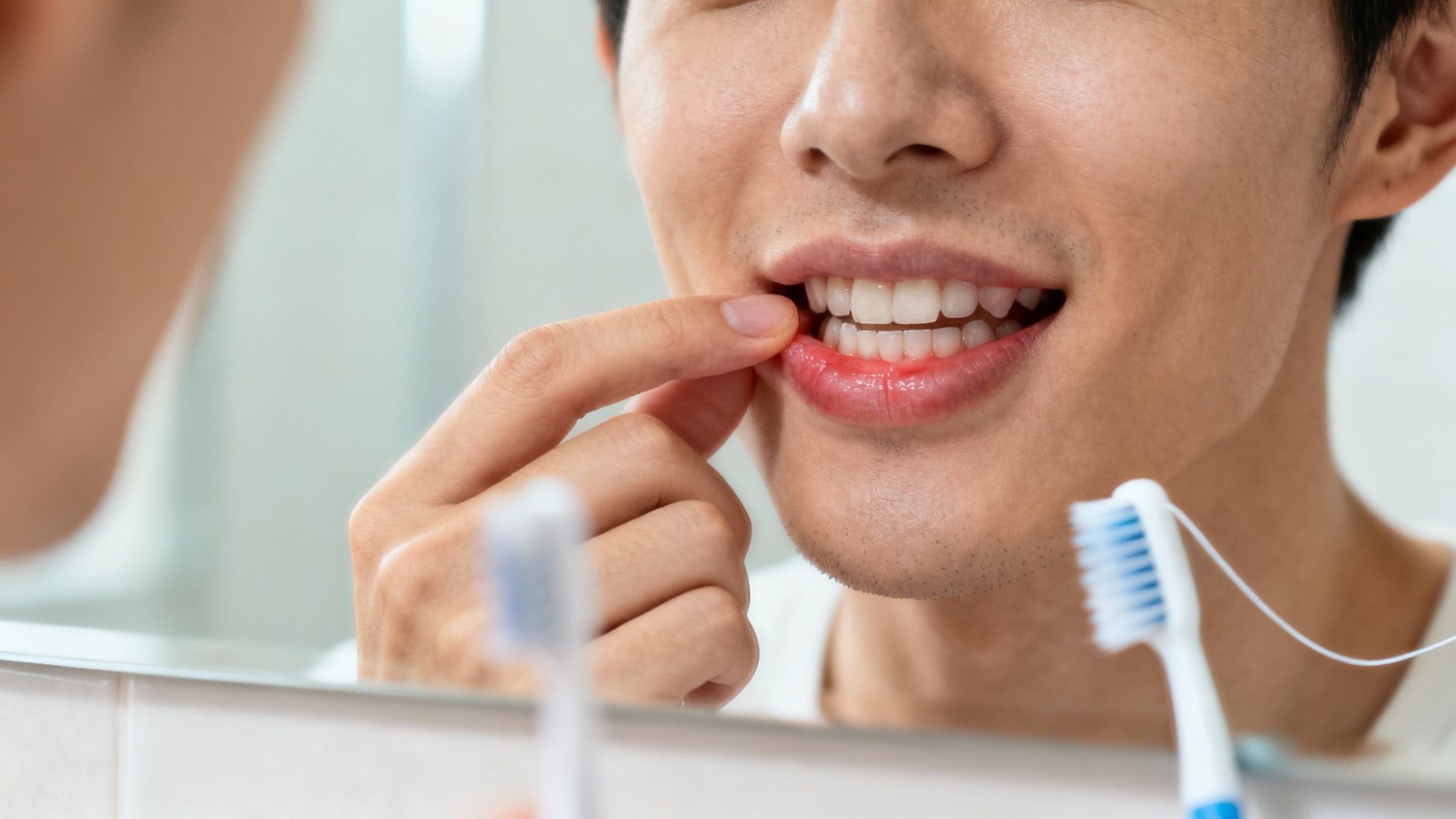
Red, Swollen, or Receding Gums
One of the easiest ways to check your gum health is to look in the mirror. Healthy gums are firm, pale pink, and fit snugly around your teeth.
Look for these visual changes:
- Color Changes: Gums that are bright red, dark red, or purplish are inflamed.
- Puffiness: Swollen or puffy gums are a classic sign of gingivitis, the earliest stage of gum disease.
- Gum Recession: If your teeth appear longer than they used to, your gums may be pulling away. This exposes the tooth root and is a direct result of bone loss from gum disease.
Bleeding and Persistent Bad Breath
Bleeding is one of the most common—and most ignored—symptoms of gum problems. Many people think it's normal for gums to bleed a little when brushing or flossing, but it’s not.
Healthy gums should never bleed. Think of it this way: if your hands bled every time you washed them, you'd know something was wrong. The same is true for your gums.
Persistent bad breath (halitosis) is another major red flag. This isn't just "garlic breath"—it's a chronic odor caused by bacteria thriving in infected gum pockets. Learn more in our guide on what causes bad breath.
Dr. Nguyen's Insight: "Patients often say, 'My gums only bleed sometimes.' I explain that even occasional bleeding is a distress signal. It’s your body’s earliest warning that bacteria have started an infection that needs professional attention."
Other Subtle Clues to Watch For
Beyond the obvious signs, other subtle changes can point toward the need for a deep cleaning. These symptoms can creep up slowly, making them easy to miss.
Pay close attention if you notice any of these:
- Tender or Sore Gums: If your gums are sensitive or painful to the touch, it indicates underlying inflammation.
- Loose Teeth: Any wiggle in your adult teeth is a serious sign that the supporting bone is being damaged.
- New Gaps Between Teeth: Spaces can form between your teeth when bone loss allows them to shift.
- Pus Between Teeth and Gums: This is a definitive sign of a serious infection requiring immediate care.
If you're in Huntington Beach or nearby areas like Oak View and have noticed these symptoms, the next step is a professional evaluation.
What a Dentist Looks For: The Data Behind the Diagnosis
While spotting warning signs at home is a great first step, only a professional dental exam can determine if you need a deep cleaning. A recommendation for scaling and root planing must be based on clear, measurable evidence gathered during your check-up.
At Kali Dental, Dr. Kalvin Nguyen uses a meticulous, data-driven approach. It’s about carefully gathering the facts from your mouth to build a complete picture of your oral health.
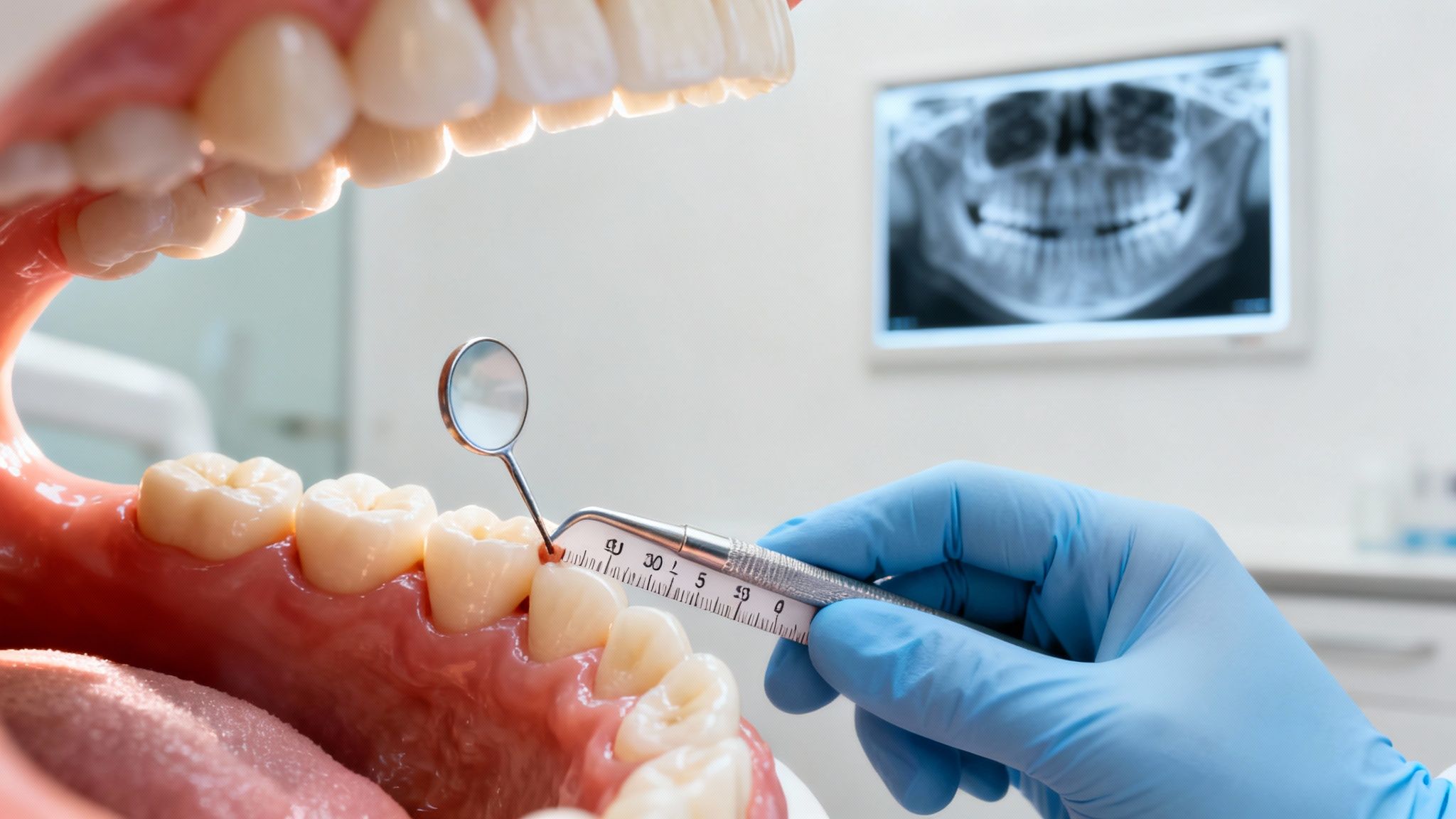
The Most Important Tool: The Periodontal Probe
The most critical diagnostic step is periodontal probing. We use a tiny, specialized ruler to measure the "pocket" between each tooth and the surrounding gum tissue. This process is quick and gentle, but the numbers tell the whole story.
- Healthy Gums (1-3mm): This range means your gum tissue is firm and securely attached to your teeth.
- Early Warning (4mm): A 4mm pocket is the first red flag, indicating inflammation and the beginning of detachment.
- Active Disease (5mm+): Pockets 5mm or deeper are a clear sign of active periodontitis. At this depth, a regular cleaning can’t reach the bacteria, making a deep cleaning medically necessary.
These measurements are the gold standard for diagnosis. According to the American Dental Association (ADA), this treatment should only be recommended when clinical evidence like this is present.
Looking Deeper with Digital X-Rays
Probing tells us what’s happening at the gumline, but X-rays reveal what’s going on at the bone level. Gum disease attacks the jawbone that supports your teeth, often without causing pain in its early stages.
X-rays make this invisible damage visible. In a patient with periodontitis, an X-ray will show that the bone has started to recede. This bone loss is irreversible, which is why early treatment is so critical.
Dr. Nguyen's Insight: "I always show my patients their X-rays on the monitor. When I point out the difference between healthy bone levels and areas where bone has been lost, it clicks. They can see for themselves why we need to intervene."
Putting All the Clues Together
A final diagnosis is never based on just one thing. Dr. Nguyen pieces together all findings from your exam to make an accurate, honest recommendation.
This includes looking at:
- Pocket depth measurements
- Bleeding on probing
- Visible redness, swelling, or recession
- X-ray evidence of bone loss
- Tooth mobility
By combining these observations, we can confidently determine the state of your gums. Find out more about our thorough dental cleaning and exams in Huntington Beach and get the clarity you deserve.
The Deep Cleaning Process From Start to Finish
Hearing you need a dental procedure can cause anxiety, but a deep cleaning is a routine and highly effective treatment. Knowing what to expect can make all the difference.
Your comfort is our top priority at Kali Dental. A deep cleaning involves working below the gumline, so we first administer a local anesthetic. This numbs the area, ensuring you won't feel any pain during the procedure.
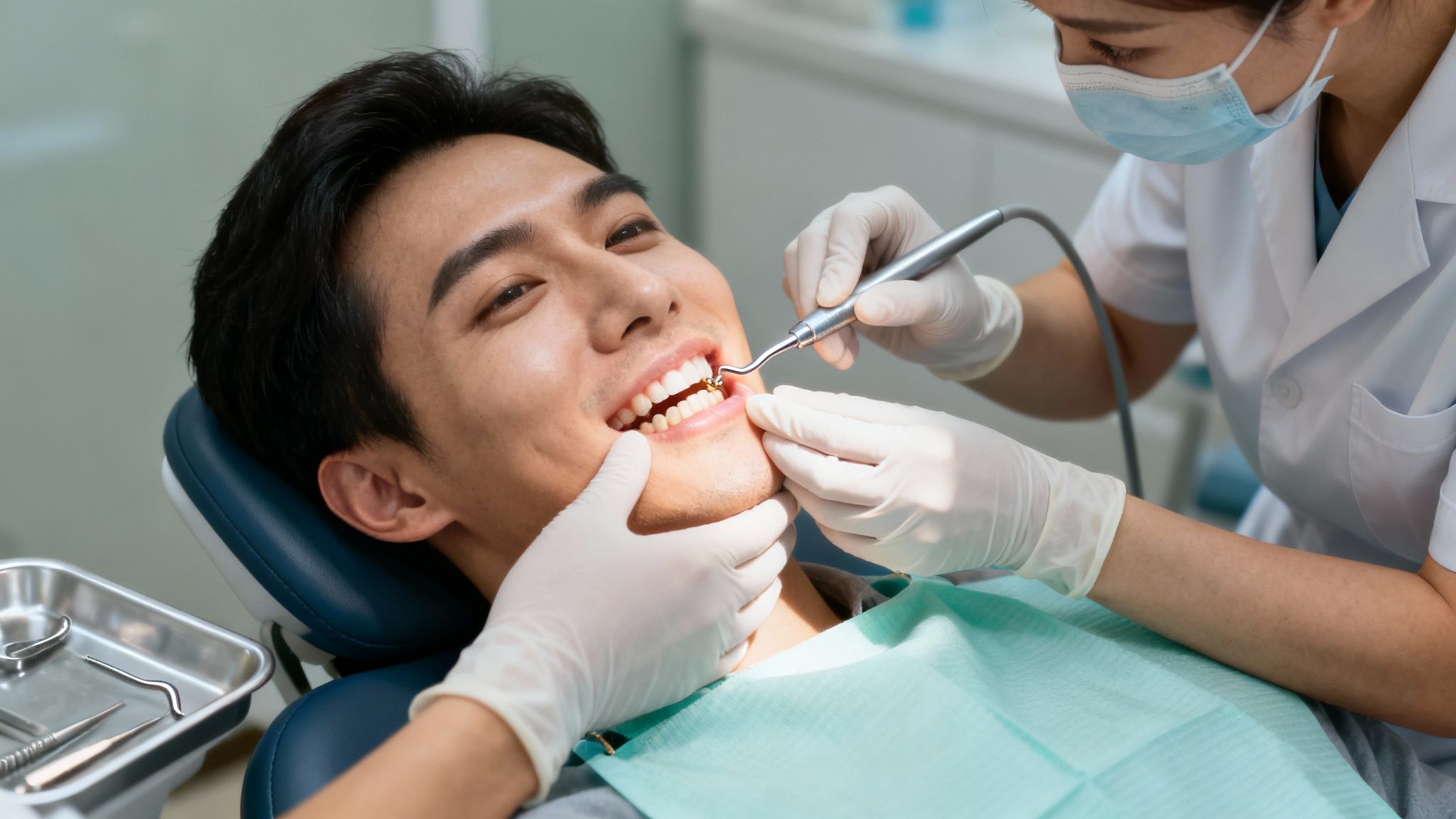
Step One: Scaling to Remove Buildup
Once you’re comfortable, we begin scaling. The goal is to meticulously remove all plaque and hardened tartar (calculus) from your teeth, both above and below the gumline.
Dr. Nguyen uses a combination of advanced tools:
- Ultrasonic Scaler: Uses high-frequency vibrations to break apart stubborn tartar and flushes away debris with a fine water mist.
- Manual Instruments: Specialized hand scalers allow us to feel for any remaining roughness and ensure every bit of buildup is gone.
This process removes the bacterial colonies causing the infection. If you've wondered why your last cleaning hurt and how to avoid it next time, you'll appreciate how proper numbing creates a much more comfortable experience.
Step Two: Root Planing for a Smooth Finish
Next is root planing, which involves smoothing the surfaces of your tooth roots. Bacteria leave behind a rough, toxic film that encourages more plaque to stick.
By planing these root surfaces, we create a clean, smooth finish. This makes it harder for new bacteria to attach and gives your gums a healthy surface to reattach to, helping to shrink deep pockets.
Dr. Nguyen's Insight: "Think of root planing like sanding a surface before you paint. We're creating the ideal surface for your gums to heal and reconnect to your teeth, which is crucial for long-term health."
What to Expect After the Procedure
It’s normal to have some minor soreness and sensitivity for a few days as your gums heal. Most patients find that over-the-counter pain relievers are sufficient.
We will provide specific aftercare instructions, which usually include:
- Eating soft foods for a day or two.
- Brushing gently around the treated areas.
- Rinsing with warm salt water to soothe your gums.
A deep cleaning is the first critical step in managing periodontal disease. The procedure is often broken into one or two visits. We will have you back in 4–6 weeks to check your healing and re-measure your pockets to see the improvement.
When to Ask Questions and Get a Second Opinion
It is always your right as a patient to ask for the evidence behind a diagnosis. If a dentist recommends a deep cleaning but doesn't explain why in a way that makes sense, it’s okay to pause and ask more questions. A trustworthy provider will always take the time to show you the proof.
A reputable dentist will show you your gum measurements, point to bone loss on your X-rays, and explain what’s going on. If you still feel unsure, getting a second opinion is a smart, proactive step. It can either confirm the diagnosis, giving you confidence, or provide a different perspective.
The Kali Dental Approach: Transparency First
At Kali Dental, we often see patients from Huntington Beach, Bolsa Chica-Heil, and Oak View who are looking for a second opinion. Dr. Kalvin Nguyen takes a conservative and honest approach. He performs a full exam and only recommends a deep cleaning when it’s medically necessary.
We believe in building trust through transparency. We are happy to explain your diagnosis—and even offer second opinions if you’re unsure about another provider’s advice. We also know cost is a concern and can explain how Kali Dental helps you save without insurance.
Your Partner for Honest Gum Health in Huntington Beach
Ultimately, determining if you need a deep cleaning comes down to clear evidence from a professional exam. It’s a specific medical treatment to halt active gum disease, and the recommendation should always be backed by data like pocket depths and X-rays.
At Kali Dental, we practice a conservative, patient-first philosophy. Serving Huntington Beach and surrounding areas like Bolsa Chica-Heil and Oak View, we offer honest, personalized care—without pressure.
Don't let uncertainty linger. Schedule a consultation at Kali Dental today for a judgment-free visit and get the answers you deserve.
Frequently Asked Questions About Deep Cleanings
1. Does a deep cleaning hurt?
No, it shouldn't. We use a local anesthetic to completely numb the area we are working on, so you won't feel pain during the procedure. You may experience some mild soreness for a day or two as your gums heal, which is manageable with over-the-counter pain relievers.
2. Why can't I just get a regular cleaning instead?
A regular cleaning is preventive and only cleans above the gumline. A deep cleaning is a medical treatment for active gum disease, designed to remove bacteria and tartar from deep pockets below the gumline that a regular cleaning simply cannot reach.
3. What happens if I ignore the recommendation for a deep cleaning?
Putting off a necessary deep cleaning allows gum disease to progress. This can lead to further bone loss, gum recession, loose teeth, and eventually, tooth loss. The chronic infection can also impact your overall health.
4. Will my gums grow back after a deep cleaning?
A deep cleaning stops the progression of gum disease but does not cause lost gum tissue to grow back. The main goal is to halt further damage and help your existing gums heal and reattach firmly to your teeth, preventing future tooth loss.
5. I don’t feel any pain, so why do I need this?
Gum disease is often painless in its early stages, which is why it's so sneaky. A recommendation for a deep cleaning is based on clinical evidence like deep pocket measurements and bone loss seen on X-rays, not on whether you feel pain.
At Kali Dental, we believe in providing clear, honest answers so you can make informed decisions about your oral health. If you're in the Huntington Beach area and have questions about your gum health or need a second opinion, we're here to help.
Schedule your consultation today by visiting us online at https://kalidental.com.