
Direct Answer: Whether to save a tooth with a root canal or remove it depends on how much healthy tooth structure remains, whether the infection is contained, and the long-term cost of replacing the tooth if it’s pulled.
One of the most common questions I hear from patients, especially after X-rays come back showing something they weren’t expecting, is some version of: “Do I really need to save this tooth, or should we just pull it?” It’s a fair question, and the honest answer is that it depends on more clinical details than most people realize.
Patients in Huntington Beach, from Oak View to Huntington Harbour, are often trying to make this decision with limited information and very real concerns about cost, recovery time, and whether the procedure will hurt. I want to walk through the factors that actually drive this decision, what the full cost picture looks like over time, and what modern root canal therapy actually feels like, because the reputation the procedure carries is badly out of date.
This isn’t about steering you toward one option. It’s about making sure you have enough information to have a real conversation with your dentist and walk away confident in whatever you choose.
What a Dentist Is Actually Looking at When This Comes Up
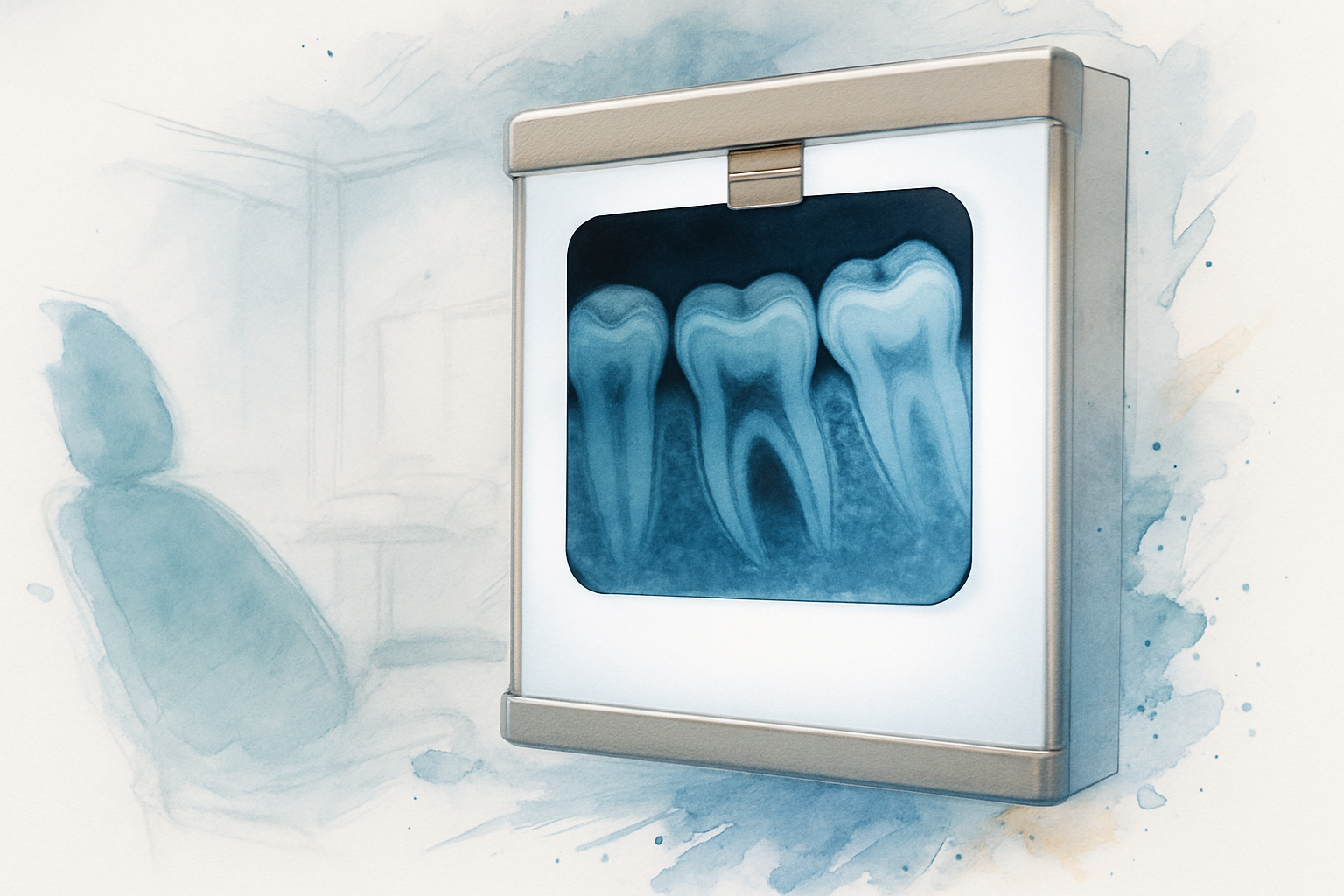
When a tooth is infected or severely damaged, the question of whether to save it or remove it isn’t one we can answer from a photo or a symptom description. It comes down to a few specific clinical factors that only show up on X-rays, and increasingly, on CBCT 3D imaging, which gives a much clearer picture than traditional flat X-rays alone.
Here’s what we’re actually evaluating:
- How much healthy tooth structure remains. A root canal preserves the natural root and gets crowned afterward. But if the tooth is fractured below the gumline, or so decayed that there’s not enough solid structure to anchor a crown, saving it may not be possible.
- Whether the bone around the tooth is intact. Infection that’s been present for a while can begin dissolving the bone that holds the tooth in place. If bone loss is significant, even a successful root canal may not leave the tooth stable enough to function long-term.
- Whether the infection is contained or spreading. An infection localized to the pulp of the tooth is typically treatable with a root canal. An infection that has spread into surrounding bone or tissue changes the calculus significantly.
- The patient’s overall health. Certain conditions affect healing after either procedure, and that factors into which path makes the most sense.
According to the American Association of Endodontists, saving a natural tooth is almost always preferable from a long-term oral health standpoint, but that preference has real limits, and those limits are defined by what the imaging actually shows.
What Root Canal Therapy Actually Involves, and Why It Doesn’t Hurt the Way You Think
The cultural reputation of root canals is a problem. Patients come in bracing for something that, in practice, feels very similar to getting a filling. And I say that not to minimize your concern, but because I’ve seen it proven true dozens of times over.
Here’s what actually happens during the procedure:
1. The tooth and surrounding area are fully numbed before any work begins. This is the part people fear, but the numbing itself is quick, and once it takes effect, you shouldn’t feel pain.
2. Dr. Kalvin removes the infected pulp from inside the tooth, the nerve tissue and blood vessels that are causing the pain.
3. The canals are cleaned, disinfected, and then sealed with a filling material.
4. In most cases, a crown is placed over the tooth to protect what remains.
The procedure itself is typically completed in a single visit. Recovery for most patients is mild, some soreness for a day or two, which over-the-counter pain relievers handle comfortably. One of our patients put it plainly in their review: after their root canal experience here, they were “looking forward to my next cleaning”, which tells you everything about how different the reality was from what they’d feared.
We use digital X-rays and CBCT 3D imaging throughout the process, so there are no guesses about where the infection is or how far it extends. That precision matters, both for the outcome and for your comfort.
What Happens If You Leave It Alone
I want to be direct about this: an infected tooth does not heal on its own. The pulp inside the tooth has no real ability to fight infection, and without treatment, the bacteria keep spreading.
In the early stages, that spreading affects the bone around the tooth. Left longer, it can move into neighboring teeth, into the jaw, and in serious cases, into the soft tissue of the neck. We’ve written at length about when a toothache spreads to your neck, that post covers the progression in detail, and I won’t duplicate it here. But the short version is: waiting is never neutral. It almost always makes the situation harder to treat and more expensive to resolve.
If you’re trying to figure out whether your pain is urgent, this guide on how to tell if a toothache can wait until morning is worth reading before you make that call.
Root Canal vs. Extraction: The Full Decision Picture
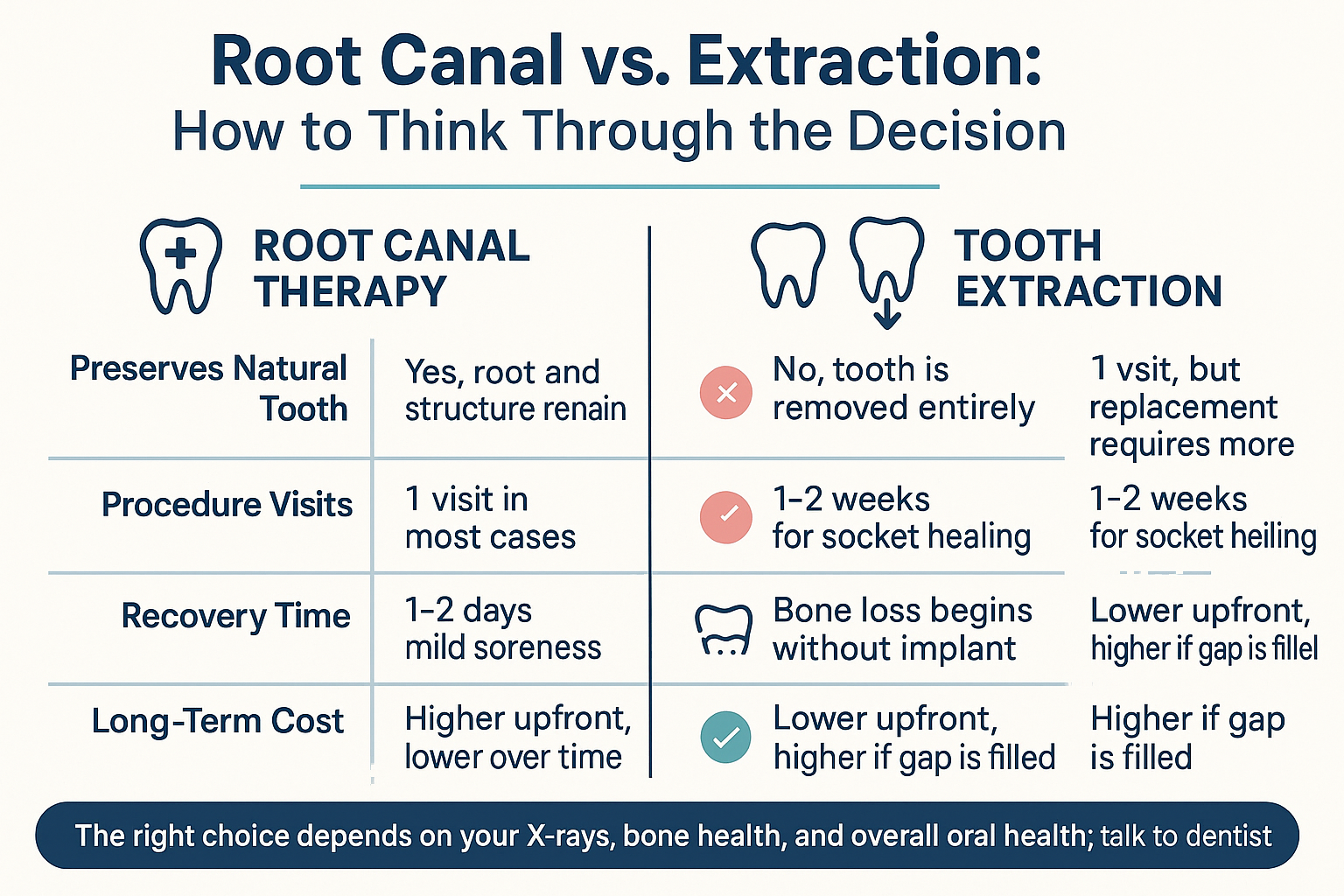
This infographic breaks down the key differences between root canal therapy and extraction across the factors that matter most to patients.
The Full Cost Picture, Not Just the Day-of Number
Cost is one of the most honest reasons patients lean toward extraction. I get it. A root canal followed by a crown is a larger upfront investment than a simple extraction, and when money is tight, that gap feels significant.
But here’s where the math gets complicated. Pulling the tooth solves today’s problem and leaves a gap. And most dentists, including us, will recommend filling that gap, because a missing tooth puts real stress on the teeth on either side and causes the jawbone in that area to gradually shrink. Filling it typically means either a dental implant or a bridge, each of which carries its own cost.
So the honest comparison isn’t root canal versus extraction. It’s root canal plus crown versus extraction plus the replacement you’ll likely need later. When you add those up over time, saving the natural tooth often comes out ahead, not just financially, but in terms of fewer procedures and a more stable long-term outcome.
That said, extraction is genuinely the right call for some teeth. If the tooth can’t be saved, there’s no point in spending money on a root canal that won’t hold. That’s exactly why the X-ray evaluation matters so much before any plan is made.
For patients without insurance, we offer an in-house savings plan that helps bring costs down across most services, and Cherry financing is available for patients who need to spread payments out. We also believe in being upfront about what things cost before any work begins, no surprises.
Root Canal vs. Extraction: At a Glance
This table gives a side-by-side view of the two options across the factors patients most often ask about.
| Factor | Root Canal + Crown | Extraction + Replacement |
|---|---|---|
| Natural tooth preserved? | Yes | No |
| Number of visits (typical) | 1-2 | 2+ (more if implant/bridge follows) |
| Recovery | 1-2 days soreness | 1-2 weeks socket healing |
| Jawbone preserved? | Yes, root stays in place | No, bone loss begins without implant |
| Upfront cost | Higher | Lower (extraction alone) |
| Long-term cost with replacement | Lower overall | Higher when implant or bridge is added |
| Best candidate | Intact root, contained infection, good bone | Tooth too damaged or fractured to save |
What It Looks Like in Practice at Our Office
One of the things that surprises patients most is how much we can accomplish in a single appointment. A patient who came in with tooth pain in spring 2026 is a good example. Dr. Kalvin identified an infection on the X-rays, completed the root canal, and placed a permanent crown the same afternoon, all in one visit. The patient’s review said it plainly: “He was able to identify the infection through my xrays, completed a root canal, and cemented on a permanent crown the same afternoon.”
That’s not magic. It’s the result of having in-office milling technology that fabricates crowns on-site, so there’s no temporary crown and no second appointment weeks later. For patients who’ve been putting off treatment because they can’t take multiple days off work, and I know there are a lot of those in Huntington Beach, that matters.
If the tooth can’t be saved and extraction is the right call, that’s a straightforward procedure too. Most simple extractions take under 30 minutes, and recovery is typically manageable within a week or two. We’ve put together a detailed guide on what the first week of extraction recovery actually looks like for patients who want to know what to expect afterward.
Frequently Asked Questions About Root Canals and Extractions in Huntington Beach
How do I know if my tooth can be saved with a root canal?
The honest answer is that you can’t know without imaging. What a dentist looks for is whether the root structure is intact, whether there’s enough healthy tooth to anchor a crown, and whether the bone around the tooth is in reasonable shape. CBCT 3D imaging gives a much clearer picture than standard X-rays alone. If you’re in pain and wondering, get seen sooner rather than later, the more contained the infection, the more options you have.
Does a root canal actually hurt?
Not the way people expect. The tooth is fully numbed before any instrument touches it, so the procedure itself shouldn’t be painful. Most patients describe it as feeling similar to a filling. The soreness that follows, usually 1 to 2 days, is manageable with standard over-the-counter pain relief. The pain people fear is usually the infection itself, which the root canal resolves.
If I just pull the tooth, do I have to replace it?
Technically, no, but most dentists will recommend it. A gap left by a missing tooth causes the neighboring teeth to slowly shift toward the open space, and the jawbone in that area begins to shrink without a root to stimulate it. Whether you fill it with an implant, a bridge, or a partial denture depends on your situation, but it’s a cost worth factoring in before you decide extraction is the cheaper path.
Can a root canal fail?
It can, though it’s not common when the tooth is a good candidate and the procedure is done thoroughly. If reinfection occurs years later, retreatment or extraction at that point becomes the next decision. A crown placed over the treated tooth helps protect it and extends its lifespan significantly.
What if I’m nervous about the procedure?
That’s more common than you’d think, and it’s something we take seriously. Dental anxiety around root canals specifically tends to be tied to the reputation the procedure has, not the reality of what modern treatment feels like. We go at your pace, explain what’s happening at each step, and make sure you’re comfortable before we move forward. We also have comfort amenities like neck pillows and blankets for patients who need to feel a little more at ease in the chair.
What does it cost, and does insurance cover it?
Root canal therapy followed by a crown is a larger investment than extraction alone, but the full picture changes when you factor in tooth replacement after extraction. Most PPO dental insurance plans cover a portion of root canal therapy, though coverage percentages vary. For patients without insurance, our in-house savings plan reduces costs across most services, and Cherry financing lets you break payments into manageable monthly amounts. We’re always upfront about what things will cost before any work begins, no surprises.
Still Weighing Your Options?
If you’re sitting with tooth pain or a dental concern and not sure which direction to go, the best next step is a real conversation with someone who can look at your X-rays and give you a straight answer. Our team at Kali Dental sees patients across Huntington Beach, from Central HB to Bolsa Chica-Heil, and we’re here to walk through the options with you honestly, without pressure. Call us at (657) 800-5254 or book directly at kalidental.com, Saturday appointments are available for patients who can’t get in during the week.