
Direct Answer: Tooth extraction recovery takes about one to two weeks for most patients. The first three days are the most intense, after that, discomfort fades steadily as the socket heals.
Most patients leave an extraction appointment feeling okay, the numbing is still working and they have their discharge sheet in hand. Then they get home, the numbness fades, and they start wondering: is this amount of bleeding normal? Why does my jaw hurt more today than yesterday? Is something wrong?
Those questions come up constantly. And honestly, they make sense, nobody prepares you for how different each day of the first week looks and feels. The recovery arc after a tooth extraction is pretty predictable if you know what to expect, but it’s alarming if you don’t.
This guide walks through the first week day by day: what’s happening inside the socket at each stage, what to watch for, and the decisions that can make the difference between a smooth recovery and a painful complication.
What’s Actually Happening in the First 24 Hours
The first day is about one thing: blood clot formation. When a tooth is removed, the socket needs to fill with a clot, that clot is the foundation for all the healing that follows. Protecting it in the first 24 hours is the most important job you have.
Some oozing and light bleeding during the first few hours is completely normal. You’ll bite down on gauze to apply pressure, and in most cases the bleeding slows significantly within 30 to 60 minutes. If it’s still actively bleeding after a couple of hours, biting down on a moist tea bag can help, the tannic acid in black tea supports clotting.
You might also notice swelling starting to develop toward the end of day one. That’s normal too. The swelling is part of your body’s inflammatory response, and it typically peaks around day two or three, not on the day of the procedure. A lot of patients are caught off guard by that timing, thinking they’re getting worse when they’re actually just hitting the expected high point.
Ice applied to the outside of your face for 20 minutes on, 20 minutes off during the first 24 hours helps manage that swelling before it peaks. After 24 hours, switch to warm compresses if swelling continues.
Days Two Through Five: The Window Where Dry Socket Can Hit
This is the stretch of recovery that patients most often call us about, and with good reason. Days two through five are when the blood clot is still vulnerable, the swelling is at or near its peak, and the complication patients fear most can show up.
Dry socket happens when the blood clot dislodges or dissolves before the socket has healed enough to protect itself. Without that clot, the underlying nerve and bone are exposed to air and food, and the pain is sharp, radiating, and often worse than the original toothache. It typically shows up three to five days after the extraction, not the day after.
The things that cause it are worth knowing in advance:
- Smoking or using tobacco in any form
- Drinking through a straw (the suction is the problem)
- Vigorous rinsing or spitting in the first 48 hours
- Dislodging the clot while eating hard or crunchy food
If you’re experiencing a sharp, throbbing pain that seems to radiate toward your ear or temple three to five days out, and it feels worse than the day-one discomfort did, that’s the red flag. Is it normal for your mouth to still hurt days after a tooth removal? has more on what distinguishes normal soreness from something that needs attention. Dry socket is treatable, but it does require a follow-up appointment, it won’t resolve on its own.
For most straightforward single-tooth extractions, discomfort starts easing noticeably by day four or five, even if the area is still tender to touch.
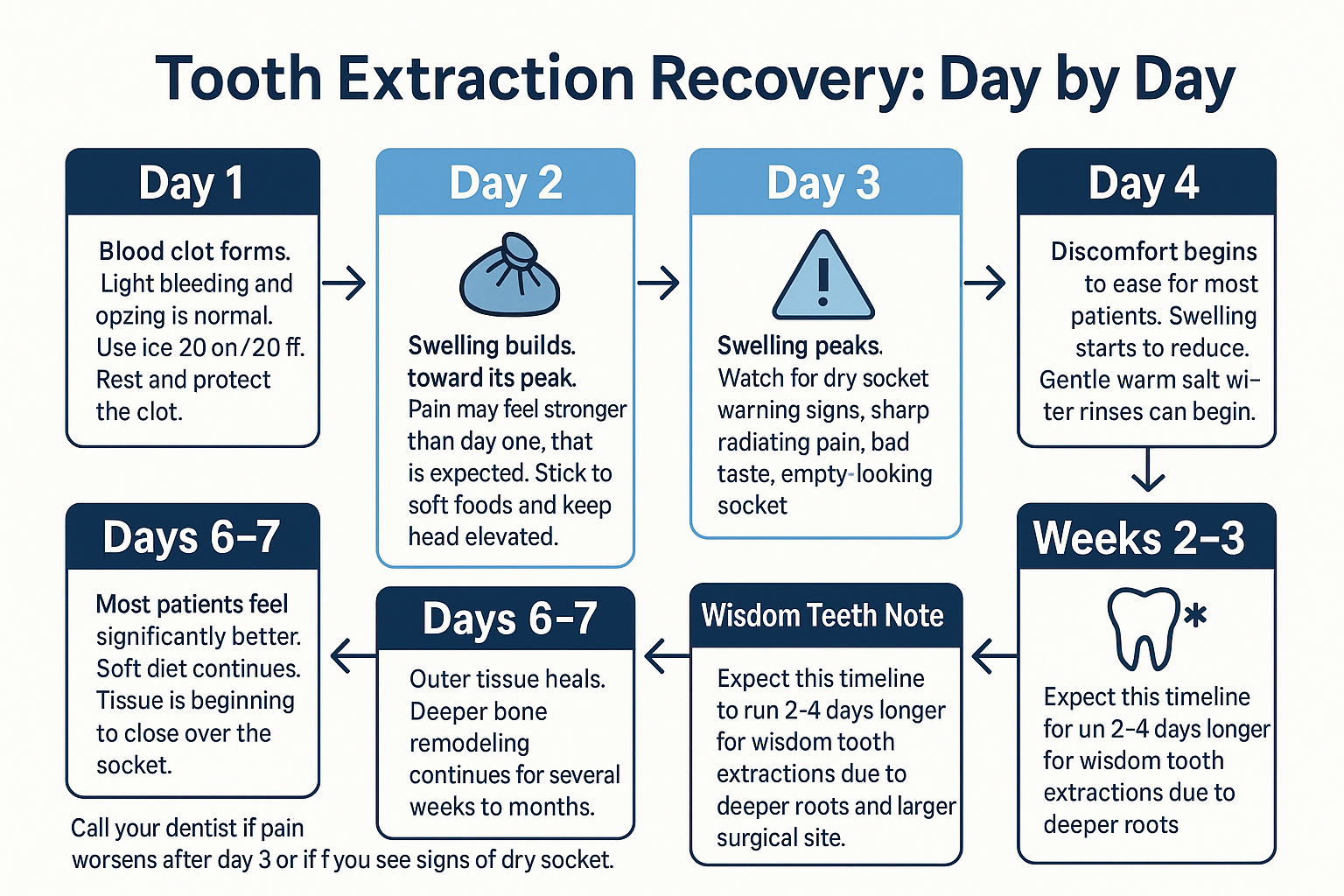
Your Tooth Extraction Recovery Timeline at a Glance
Here’s what a typical first week looks like, day by day, so you have something real to compare your own recovery against.
What to Eat (and What to Skip) in the First Few Days
Food choices in the first 72 hours matter more than most patients expect. The wrong bite at the wrong time can pull out the clot and set off exactly the complications we just talked about.
For the first two to three days, stick to foods that don’t require any biting or significant chewing:
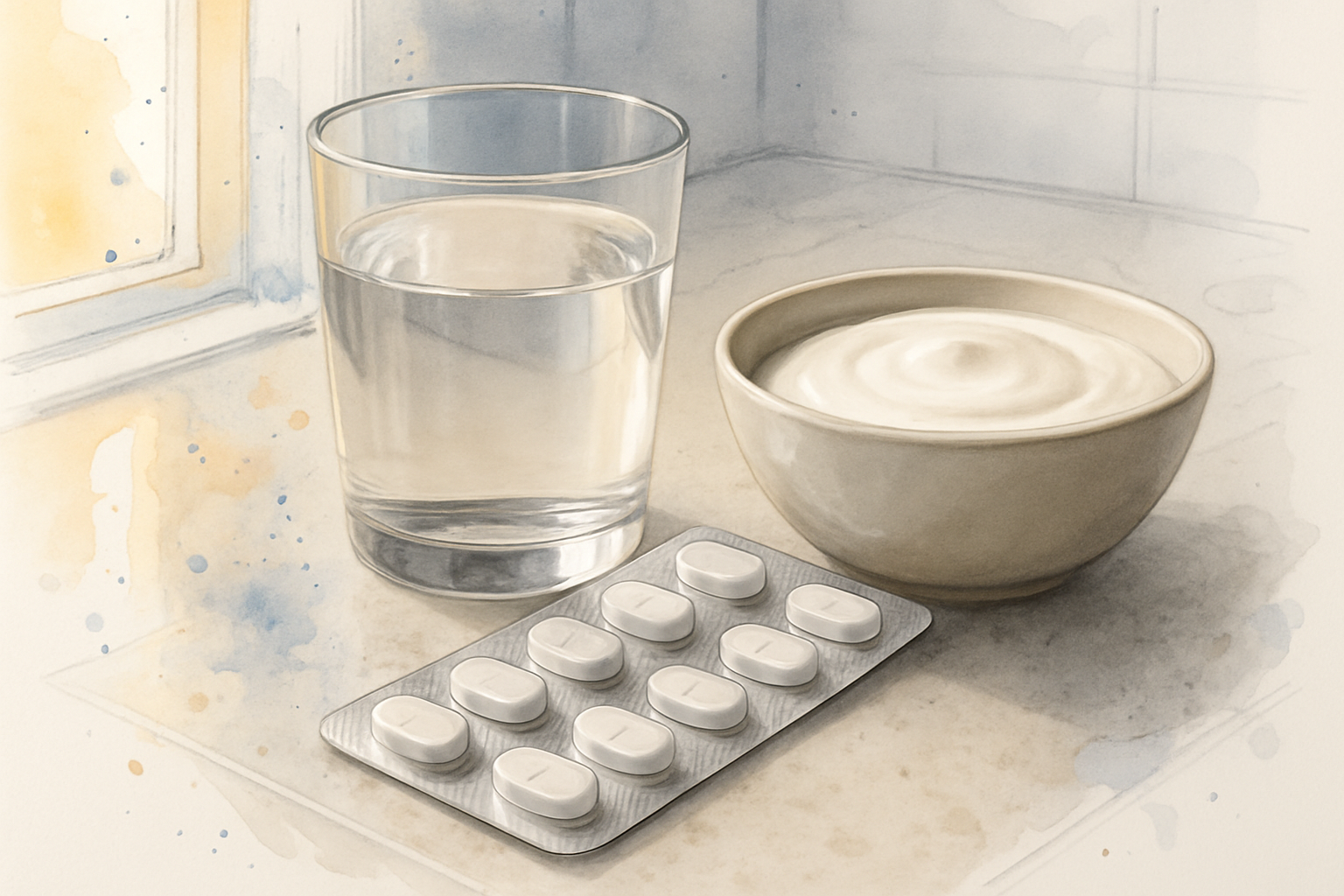
- Yogurt, applesauce, and pudding
- Scrambled eggs or soft-cooked eggs
- Mashed potatoes or mashed sweet potatoes
- Smoothies, but drink them with a spoon, not a straw
- Soft fish or tender shredded chicken
- Oatmeal (not too hot)
Temperature matters too. Avoid very hot foods and drinks in the first 24 to 48 hours, heat increases blood flow to the area and can interfere with clotting. Cold and room-temperature foods are your best options early on.
What to leave out of your diet for at least the first few days:
- Hard foods, chips, nuts, raw carrots, crusty bread
- Crunchy foods that produce small fragments that can lodge in the socket
- Chewy foods that require sustained jaw pressure
- Spicy foods, which can irritate the tissue
- Alcohol, which can interfere with healing and interact with pain medication
For most simple extractions, patients can begin reintroducing softer normal foods around day five or six and return to a full regular diet somewhere in the seven to ten day range, depending on how they’re healing. If it still hurts to bite, that’s your body telling you it’s not ready.
For a deeper look at recovery stages and what to expect at each one, what recovery from a tooth extraction actually looks like covers the process in more detail.
Simple vs. Wisdom Tooth Extraction Recovery: Key Differences
Wisdom tooth extractions follow the same general recovery arc as any other extraction, but a few factors make them feel more intense and typically push the timeline out by a few days.
| Factor | Simple Extraction | Wisdom Tooth Extraction |
|---|---|---|
| Procedure time | Often under 30 minutes | Varies, can run 60 to 90 minutes depending on tooth position |
| Swelling peak | Day 2-3 | Day 3-4, often more pronounced |
| Pain intensity | Moderate, manageable with OTC medication | Can be stronger, especially for impacted teeth |
| Return to soft diet | Around day 5-6 for most patients | Often day 6-8 depending on healing |
| Full recovery estimate | 1-2 weeks typical | 1-2 weeks, sometimes running a few days longer |
| Dry socket risk | Present for all extractions | Slightly higher for lower wisdom teeth |
A Question Most Patients Don’t Think to Ask: What About a Future Implant?
Here’s something we bring up at every extraction appointment, and it’s almost always news to the patient: removing a tooth now can affect your ability to get a dental implant later, unless a step is taken at the time of the extraction.
After a tooth is removed, the jawbone in that area begins to shrink over time. Without a tooth root to stimulate it, the bone has no reason to maintain its volume. The technical term is bone resorption, and it can happen faster than most people expect, often within the first few months after extraction.
This matters because dental implants require a certain amount of healthy bone volume to be placed successfully. If you wait a year or two to consider an implant after an extraction and significant bone loss has occurred, the implant process becomes more complex and may require bone grafting before placement can even begin.
Socket preservation, also called ridge preservation, is a bone grafting procedure done at the same appointment as the extraction. Material is placed into the socket to encourage the bone to maintain its shape and volume while the site heals. It’s a much simpler step when done proactively than as a repair measure months later.
Not everyone who has a tooth pulled will want or need an implant eventually. But if there’s any chance you might, asking about socket preservation at the time of extraction is far easier than addressing bone loss later. The American Academy of Implant Dentistry has solid background on why bone preservation matters in implant planning, if you want to read more on the subject.
Frequently Asked Questions About Tooth Extraction Recovery
How much bleeding is normal after a tooth extraction?
Light oozing for the first few hours is normal. You’ll bite on gauze to apply pressure, and bleeding should slow to a minimal amount within 30 to 60 minutes. If blood is actively pooling or flowing after a couple of hours, call the office. A small amount of pink-tinged saliva can persist for the rest of the first day, that’s not the same as active bleeding.
How do I know if I have dry socket?
Dry socket has a pretty recognizable pattern. It shows up three to five days after the extraction, not the next morning. The pain is sharp and radiating, often extending toward the ear or jaw, and it’s typically worse than the pain you had on day one. You may also notice a bad taste or an empty-looking socket where the clot should be. If that describes what you’re feeling, don’t wait it out, call the office, because dry socket needs treatment to resolve.
When can I brush my teeth after an extraction?
You can brush your other teeth carefully the night of the procedure, but avoid the extraction site for the first 24 hours. After that, gentle brushing around the area is okay. For rinsing, wait at least 24 hours before using any mouthwash or salt water, and when you do start rinsing, let the water fall out of your mouth rather than spitting forcefully. Vigorous spitting is one of the more common ways patients accidentally dislodge a clot.
Wisdom tooth extraction feels worse than my other extractions, is that normal?
Yes, and there are real anatomical reasons for it. Wisdom teeth have deeper roots, sit in a harder-to-access area of the jaw, and are often larger than other molars. The surgical access required can mean more tissue disturbance, and impacted wisdom teeth add another layer of complexity. Most patients find the recovery runs a few days longer than a simple single-root extraction, but the arc is the same. One of our patients described their wisdom tooth removal as being in and out within 90 minutes with minimal pain afterward, which reflects both the skill involved and the value of knowing what to expect going in. You can read more about what wisdom tooth removal costs in Huntington Beach if you’re also weighing the financial side of it.
Should I ask about socket preservation at my extraction appointment?
If there’s any possibility you might want a dental implant in that space someday, even a distant someday, yes. Socket preservation is a bone grafting step done at the time of extraction that helps maintain bone volume while the site heals. It’s significantly simpler to do it then than to address bone loss after the fact. Ask before the procedure, not months later.
I had a tooth pulled and now my jaw and neck hurt. Is that from the extraction?
Soreness in the jaw, temples, and even the neck is common after extractions, especially for back teeth that required significant pressure to remove. It’s usually muscle-related, your jaw was held open for a period and the surrounding muscles are fatigued. That typically eases within a few days. However, if you’re experiencing pain that radiates to the neck with swelling or fever, that’s a different situation and warrants a call to the office promptly. When a toothache spreads to your neck explains more about when that kind of pain is a warning sign.
Questions About Your Recovery? We’re Here.
We hear from patients all the time who had an extraction days ago and aren’t sure whether what they’re feeling is normal. That’s exactly the kind of call we want you to make rather than waiting and worrying. Our team serves patients across Huntington Beach, Fountain Valley, and the surrounding Orange County area, and we’re happy to walk you through what you’re experiencing. Give us a call at (657) 800-5254 or book online at kalidental.com, we’d rather you check in early than sit with a concern that has an easy answer.