
Direct Answer: Brushing removes soft plaque, but it can’t touch hardened tartar or reach every surface in your mouth. Professional cleanings catch what your toothbrush misses — before it turns into a costly problem.
Most people who skip their dental cleanings aren’t lazy — they’re logical. They brush twice a day, maybe floss, maybe use a rinse. So when a reminder card shows up saying it’s time to come back in, it’s easy to think: do I really need this? It’s a fair question, and it deserves a straight answer.
The short version is that brushing and professional cleanings do two completely different jobs. One maintains. The other catches what maintenance can’t reach. Skipping cleanings doesn’t mean nothing is happening in your mouth — it means problems are developing without anyone checking on them.
For families in Huntington Beach — whether you’re in Huntington Harbour, Oak View, or closer to Central HB — a twice-yearly cleaning is usually the first place a dentist spots something before it gets expensive. This article explains exactly why, without any of the scare tactics.
What Your Toothbrush Actually Does — and Doesn’t Do
A toothbrush is genuinely good at one thing: removing soft plaque from the surfaces you can reach. Soft plaque is the filmy layer of bacteria that forms on your teeth throughout the day. Brush it off consistently, and you’re doing your part.
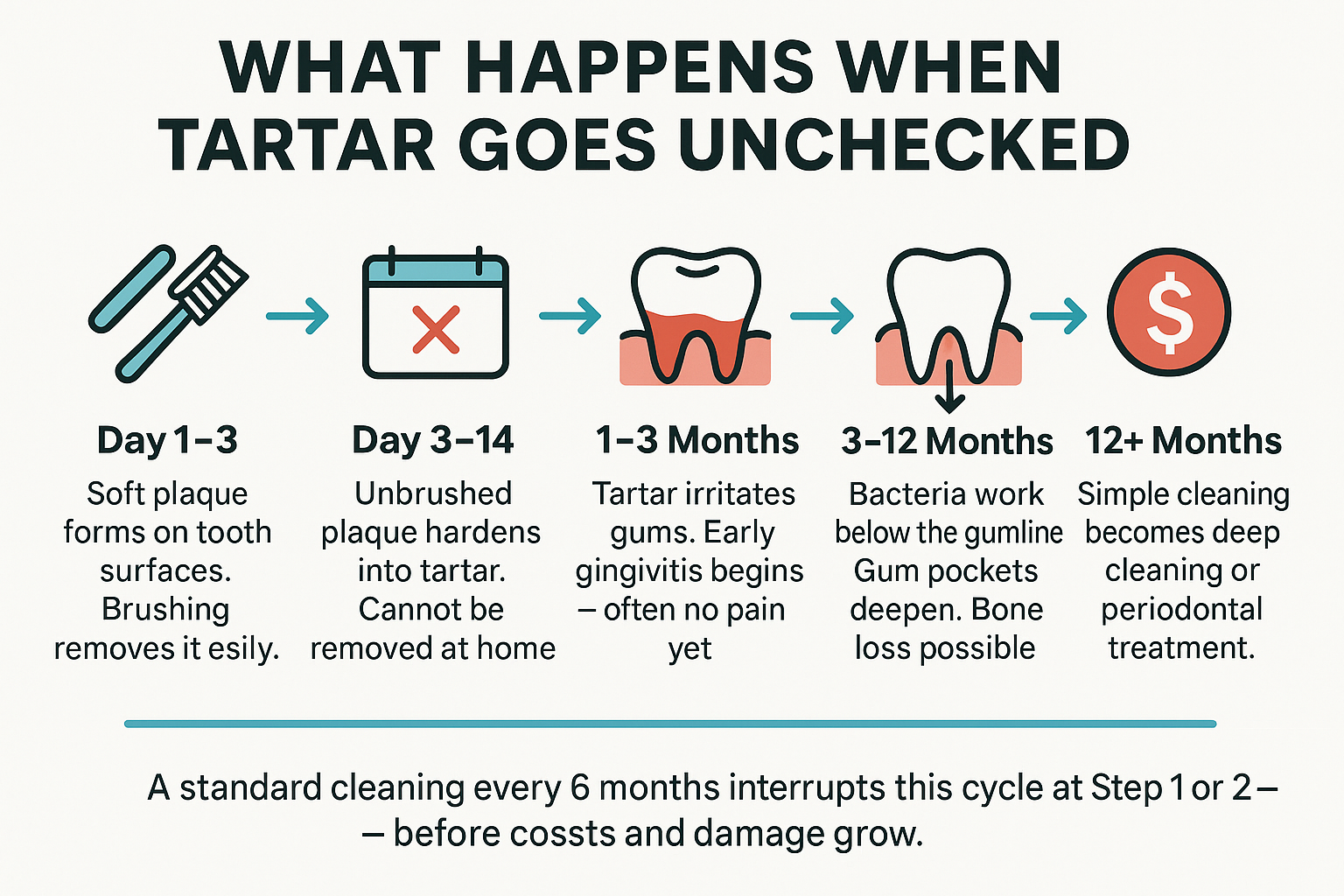
But plaque that stays in place for even 24 to 72 hours starts to harden into something called tartar — also called calculus. Once it hardens, no amount of brushing will move it. It bonds to the tooth surface and can only be removed with specialized dental instruments.
And tartar doesn’t just sit there harmlessly. It creates a rough surface where more bacteria collect. Over time, that buildup irritates the gums and works its way below the gumline — which is how gum disease quietly starts in people who thought they were taking good care of their teeth.
There’s also a geometry problem. Your mouth has a lot of surfaces a toothbrush simply can’t reach well:
- Between teeth, especially tight contacts
- Along the gumline, where the bristles have to be angled just right
- Behind the last molars
- Any spot where your teeth are crowded or overlapping
Flossing helps — a lot. But even daily flossers accumulate tartar in the spots that are hardest to reach. A hygienist with the right tools gets into those areas in ways that just aren’t physically possible with a toothbrush at home.
What a Cleaning Actually Does in the Chair
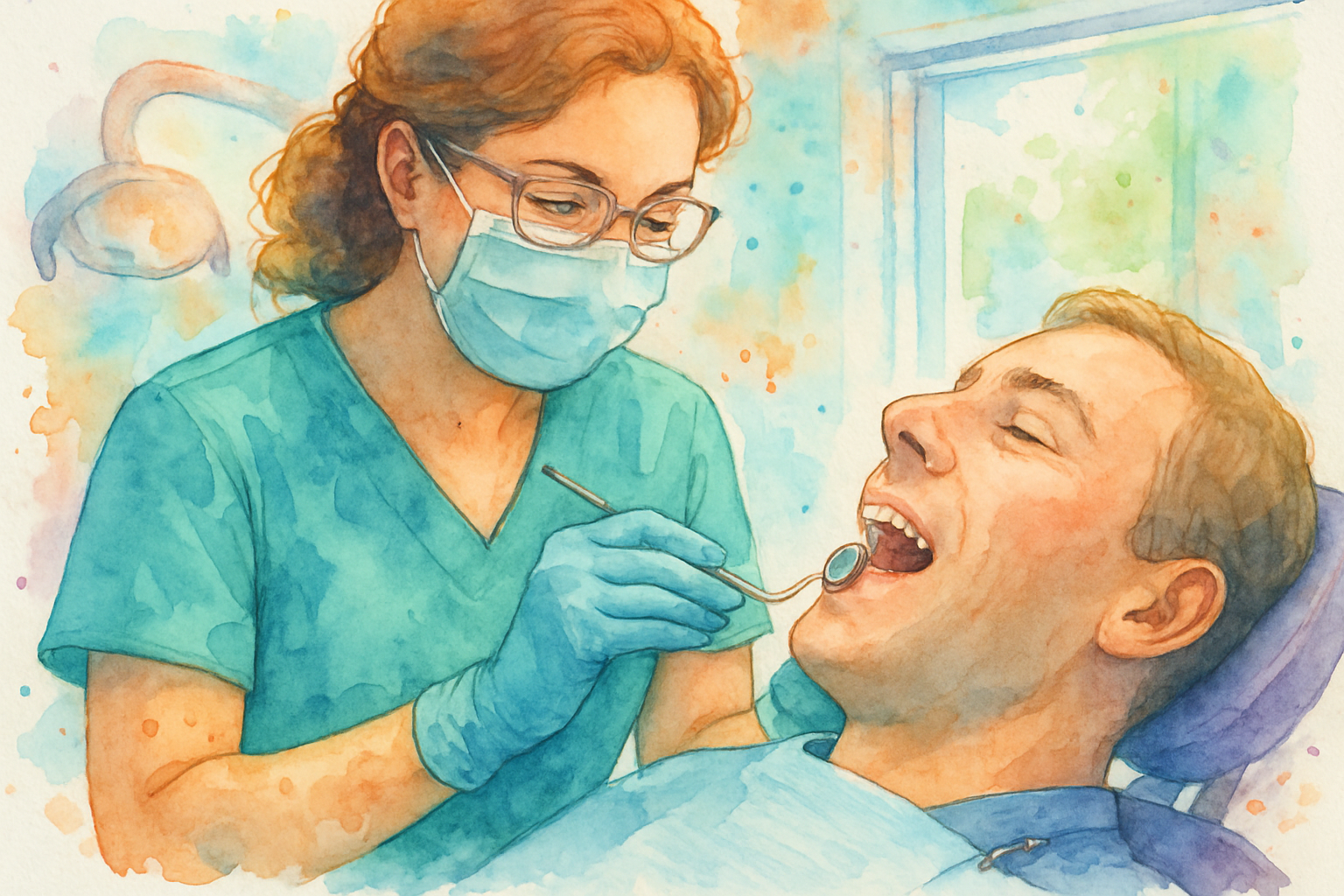
Most patients picture a cleaning as someone polishing their teeth and calling it a day. The actual process is more involved than that — and it’s the reason a cleaning does something brushing at home genuinely cannot.
A standard prophylaxis cleaning — the kind most adults get every six months — involves a few distinct steps:
- Scaling: The hygienist uses hand instruments or an ultrasonic scaler to break up and remove tartar from above and just below the gumline. This is the part that gets what your brush can’t.
- Root planing (when needed): If there’s buildup below the gumline or early signs of gum disease, the hygienist smooths the root surfaces so bacteria have fewer places to cling.
- Polishing: A mildly abrasive paste removes surface stains and leaves teeth feeling smooth — that clean feeling you notice for the first day or two after a cleaning.
- Exam: Dr. Kalvin checks for cavities, gum pockets, anything unusual in the soft tissue, and reviews your X-rays if updated imaging is needed.
That last part — the exam — is often what catches something early. A small cavity spotted at a cleaning visit might be a $150–$250 filling. The same cavity left another year could become a $1,200–$1,800 crown or worse. Many Huntington Beach patients have told us they skipped a year or two “because nothing felt wrong” — and something was.
Pain is almost never the first sign of a dental problem. By the time a tooth hurts, the problem has usually been developing for months.
What Happens When Tartar Builds Up Over Time
This timeline shows what happens in a mouth between cleaning visits when tartar is left unchecked — and why the six-month window exists.
The Cost Difference Between Staying Consistent and Catching Up
One of the most practical reasons to keep cleaning appointments is purely financial. Preventive care is almost always the least expensive option — and in Orange County, where dental costs run higher than many parts of California, that gap adds up fast.
Here’s a rough comparison of what consistent cleanings prevent versus what they cost:
A standard prophylaxis cleaning in Huntington Beach typically runs $100–$175 without insurance, or is fully covered by most PPO plans twice a year. With Kali Dental’s in-house savings plan, uninsured patients can access cleanings at a predictable, discounted rate without the guesswork of navigating insurance.
Skip two or three years, and a few things tend to happen. Tartar buildup gets significant enough that a standard cleaning isn’t enough — patients often need a deep cleaning (scaling and root planing), which runs $700–$1,500 depending on how many quadrants of the mouth need treatment. That’s before any fillings, crowns, or other work that turns up during the delayed exam.
For families with kids in Huntington Beach — especially heading into back-to-school season — the timing matters too. Kids who come in regularly for preventive cleanings and fluoride treatments are far less likely to need emergency appointments during the school year when everyone’s schedule is already stretched.
Consistency doesn’t just protect teeth. It protects your budget.
Preventive vs. Reactive Dental Care: A Cost Comparison
These are typical cost ranges for Orange County dental care in 2024. Actual costs vary by provider, severity, and insurance coverage.
| Procedure | When Caught Early | When Delayed |
|---|---|---|
| Cavity (small) | $150–$250 filling | $1,200–$1,800 crown or root canal |
| Gum disease (early gingivitis) | $100–$175 cleaning | $700–$1,500 deep cleaning |
| Tartar buildup (light) | Included in standard cleaning | Separate scaling session needed |
| Preventive cleaning (twice/year) | $100–$175 per visit | N/A — this is the prevention |
| Pediatric sealants | $30–$60 per tooth | Prevention of $150–$250 filling per tooth |
Why Every Six Months — and Not Just Once a Year?
The twice-yearly recommendation isn’t arbitrary. It’s based on how long it typically takes for tartar to accumulate to the point where it starts doing real damage to gum tissue.
For most healthy adults, six months is about the window where a hygienist can remove buildup before it progresses below the gumline. Some patients — those with a history of gum disease, dry mouth, or certain health conditions like diabetes — actually need to come in every three to four months to stay ahead of it.
On the other end, some patients with very little buildup and excellent home care can sometimes go to annual cleanings. But that determination should come from an exam, not from assuming everything is fine.
For Huntington Beach families with active kids — running around Bolsa Chica-Heil fields in the summer, playing water polo, eating stadium snacks — the six-month window also means two chances per year for Dr. Kalvin to spot anything related to sports impact, diet changes, or orthodontic progress with clear aligners.
And for adults who haven’t been in for a while, the first step is just a cleaning and exam — no judgment, no lecture. We see this constantly, and getting back on track is always simpler than people expect.
Frequently Asked Questions About Dental Cleanings
Does a cleaning hurt?
For most patients with healthy gums and regular appointments, a cleaning is mildly uncomfortable at worst — mostly just the sensation of pressure and scraping. If your gums are inflamed or you haven’t been in for a while, there can be some sensitivity, especially near the gumline. Letting your hygienist know beforehand helps — we can adjust our approach, and numbing gel is available for sensitive patients.
I haven’t been to the dentist in a few years. Is it too late to start again?
Not at all. We see patients who haven’t been in for five or even ten years, and the first step is the same: a cleaning and a look at where things stand. Whatever’s happening, knowing is always better than not knowing. You won’t be judged — we’ve genuinely heard it all, and our job is just to help you move forward.
What if I don’t have insurance?
Our in-house savings plan is designed for exactly this situation. It gives uninsured patients access to cleanings, exams, and X-rays at a flat annual rate — no monthly premiums, no claim forms, no surprises. Ask our front desk about current membership rates when you call or book online.
My teeth feel fine. Do I really need an exam too?
Yes — and this is important. Cavities and early gum disease almost never cause pain until they’re well along. The exam that happens alongside your cleaning is the part that catches problems before they reach the painful stage. Feeling fine is great, but it’s not the same as being fine.
How long does a cleaning appointment take?
For a standard adult cleaning with X-rays, plan on about 60–75 minutes. If you’re a returning patient with no major buildup and recent X-rays on file, it’s often closer to 45 minutes. We do our best to run on schedule, especially for patients coming in on a lunch break or picking kids up afterward.
Are kids’ cleanings different from adult cleanings?
The process is similar, but the approach is different. Our hygienists are used to working with kids of all ages — including ones who are nervous or wiggly — and we take extra time to explain what’s happening so nothing feels like a surprise. For younger kids, cleanings also include a conversation about brushing habits and diet that makes a real difference in the years ahead. You can read more about what to expect at a pediatric cleaning visit if your child is coming in for the first time.
Ready to Get Back on Track?
If it’s been a while since your last cleaning — or you’re not sure when your family is due — Kali Dental is accepting new patients at 19201 Brookhurst Street in Huntington Beach. Whether you’re insured, uninsured, anxious about the chair, or just overdue, our team keeps it simple and judgment-free. Call us at (657) 800-5254 or book directly at kalidental.com — we’d love to be your family’s dental home.