
Direct Answer: Brushing removes soft plaque, but it can’t remove hardened tartar or clean below the gumline — only a professional cleaning can do that, which is why regular visits still matter even with a solid home routine.
You brush in the morning. You brush before bed. Maybe you even floss a few times a week. So when your dentist says it’s time for a cleaning, it’s fair to wonder — what exactly are they doing that you’re not already doing at home?
This is one of the most common questions we hear from patients in Huntington Beach, whether they’re coming in from Goldenwest, Oak View, or Central HB. And the honest answer isn’t what most people expect.
Brushing is genuinely important — but it was never designed to do what a professional cleaning does. Understanding the difference can save you from a much bigger (and more expensive) dental problem down the road.
What Your Toothbrush Actually Does — and Where It Stops
Your toothbrush is excellent at removing soft plaque — the filmy bacterial layer that builds up on your teeth throughout the day. When you brush consistently, you’re disrupting that film before it has a chance to cause damage. That genuinely matters.
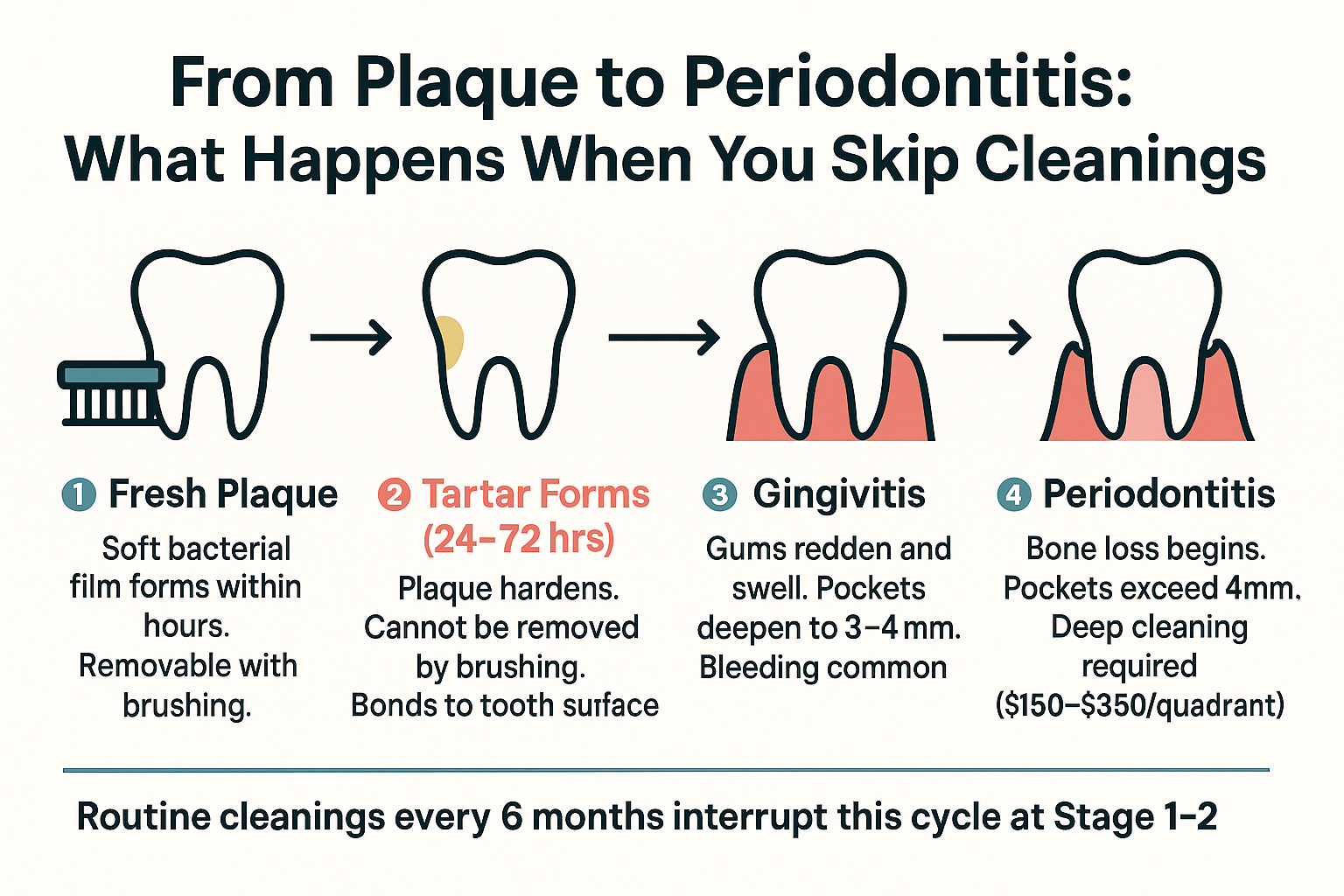
But here’s where it gets complicated. If soft plaque isn’t fully removed — and it never is, completely, even with great brushing — it starts to harden within 24 to 72 hours. Once it mineralizes into tartar (also called calculus), your toothbrush can no longer touch it. It’s essentially bonded to the tooth surface.
Tartar isn’t just cosmetic. It creates a rough, porous surface that bacteria cling to, and it tends to form in the spots your brush already struggles with:
- Along the gumline, where bristles skim rather than scrub
- Between teeth, especially in tight contact points
- On the back surfaces of lower front teeth, where saliva ducts deposit minerals
- In the small pocket of tissue where your gum meets each tooth
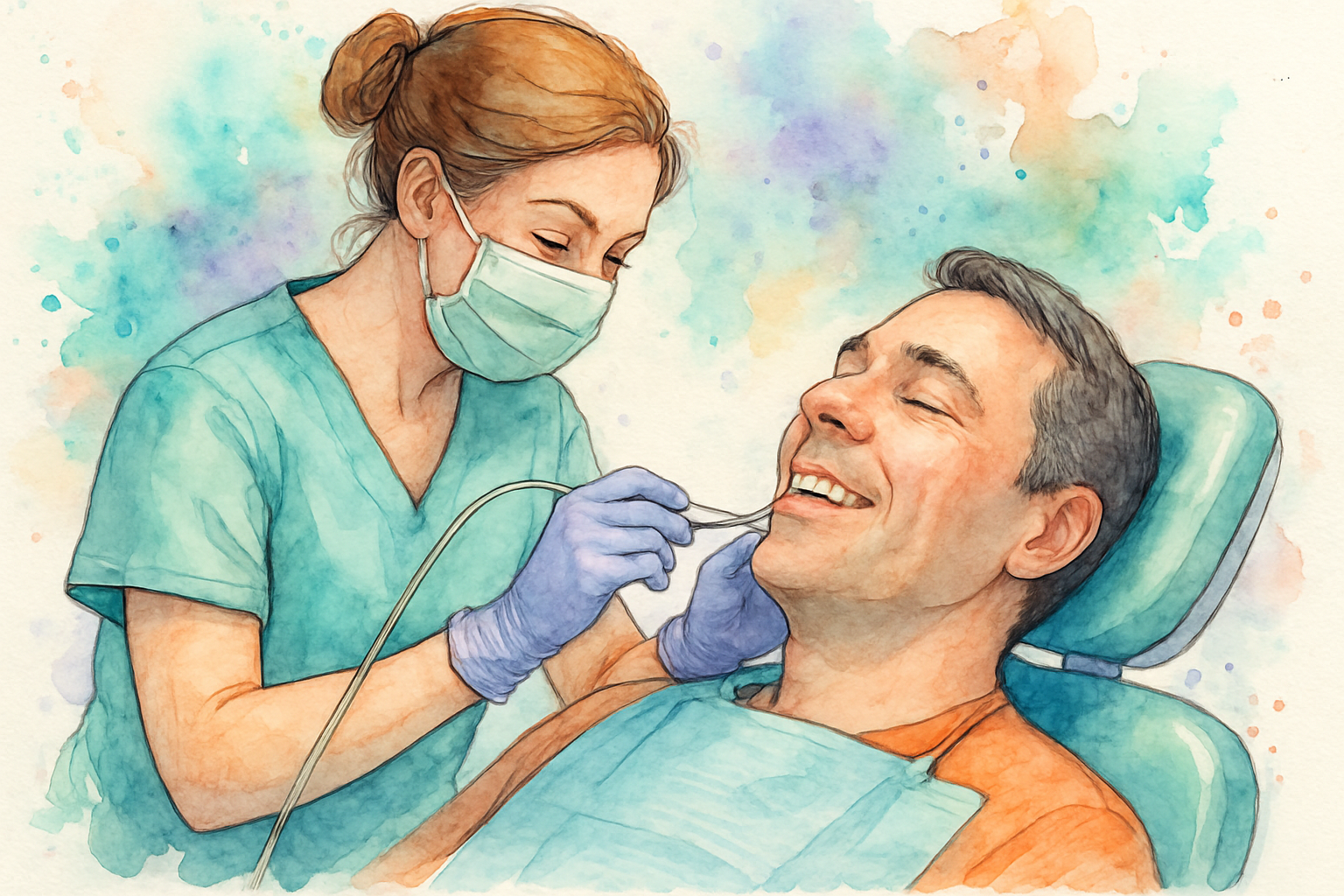
Once tartar is present, the only way to remove it is with specialized dental instruments. A hygienist uses hand scalers and an ultrasonic scaler to break it up — tools that simply aren’t available over the counter. No water flosser, no whitening toothpaste, and no electric toothbrush can substitute for that.
The Part Below the Gumline That Most People Don’t Know About
Even patients with excellent brushing habits can develop gum disease — and the reason is almost always what’s happening below the gumline, where no toothbrush reaches.
Each tooth sits in a small pocket of gum tissue. In a healthy mouth, that pocket is 1 to 3 millimeters deep. When bacteria and tartar accumulate at the base of that pocket, the gum tissue becomes inflamed and starts to pull away from the tooth. The pocket deepens. Bone can start to recede.
This is how gingivitis becomes periodontitis — and it happens quietly. Most patients don’t feel it until the damage is already significant. If you’ve ever wondered why your gums bleed during a cleaning, inflammation from early gum disease is usually the answer.
Dr. Kalvin measures these pocket depths at every cleaning appointment. A jump from 2mm to 4mm in one spot can signal a problem that needs attention — one that a patient would have no way of catching on their own. That measurement takes about 30 seconds per tooth. And it’s the kind of early catch that keeps a routine cleaning from turning into a deep cleaning later.
A standard professional cleaning addresses everything above the gumline and slightly below. But if pockets have deepened past 4mm, a regular cleaning isn’t enough — a deeper procedure called scaling and root planing becomes necessary, typically at $150–$350 per quadrant in the Orange County area. Staying current on routine cleanings is genuinely the most direct way to avoid that cost.
What Happens at Each Stage of Plaque and Tartar Buildup
This infographic walks through the four stages of what happens when plaque is left to progress — from fresh bacteria to serious gum disease.
The Real Cost Math on Skipping Cleanings
A lot of patients skip cleanings because of cost — and that’s a completely understandable decision, especially for families in Huntington Beach without dental insurance. But it’s worth understanding what the numbers actually look like over time.
A routine cleaning and exam in the Huntington Beach area typically runs $100–$180 out of pocket for uninsured patients, depending on the practice. That’s the ceiling for a visit where nothing is wrong.
Skip that appointment for two or three years, and the math changes:
- A deep cleaning (scaling and root planing) runs $150–$350 per quadrant — meaning $600–$1,400 total for a full mouth
- A filling for a cavity caught late typically costs $150–$300 per tooth
- A crown needed because a cavity was left untreated runs $1,000–$1,500 per tooth in Orange County
- Tooth extraction plus an implant to replace it can reach $3,500–$5,000 for a single tooth
None of these outcomes are inevitable. Most of them are preventable with a $100–$180 appointment twice a year. We know that still feels like real money — which is why our in-house savings plan exists specifically for patients who don’t carry insurance. It brings cleaning and exam costs down significantly, and it covers most preventive services at a flat annual rate. You can ask about it when you call.
If you’re trying to understand whether the value of dental care is worth the cost, the honest answer is that preventive care is almost always the cheapest version of any dental problem.
Routine Cleaning vs. Skipping: What the Costs Look Like
This table compares what patients typically pay when they stay current on cleanings versus when they wait until a problem is obvious.
| Scenario | Typical Procedure Needed | Estimated Cost (Orange County) |
|---|---|---|
| Current on cleanings, no issues | Cleaning + exam | $100–$180 per visit |
| Mild tartar buildup, early gingivitis | Cleaning + possible fluoride treatment | $130–$220 |
| Skipped 2+ years, pockets deepened | Deep cleaning (scaling & root planing) | $600–$1,400 full mouth |
| Cavity caught early at routine visit | Composite filling | $150–$300 per tooth |
| Cavity left untreated until painful | Crown or root canal + crown | $1,000–$2,500 per tooth |
| Tooth lost due to advanced decay or gum disease | Extraction + implant | $3,500–$5,000 per tooth |
Why Families With Kids Should Think About This Differently
For parents in neighborhoods like Bolsa Chica-Heil or Huntington Harbour managing school schedules, sports, and everything else — dental appointments are easy to push to the bottom of the list. Especially for kids who aren’t complaining about their teeth.
But children’s cleanings serve a slightly different purpose than adult cleanings. Kids accumulate tartar faster in some areas, and their permanent teeth are still erupting through their mid-teens. A cleaning appointment is also when Dr. Kalvin checks whether incoming teeth are positioned correctly, whether sealants on back molars are holding, and whether any early signs of crowding are developing.
These are things that can be addressed affordably in early stages — and become significantly more involved (and expensive) if caught late. If you want to understand how a family dental practice handles patients of every age, the short version is that one trusted provider seeing your whole family is the most practical setup for catching these patterns over time.
Summer is actually the easiest time to bring kids in, when school isn’t dictating the schedule. Back-to-school season in August and September tends to fill up our appointment calendar quickly — so families in Central Huntington Beach and Oak View who want to get everyone seen before fall should plan a few weeks ahead.
Frequently Asked Questions About Professional Dental Cleanings
How often do I actually need a cleaning if my teeth feel fine?
For most adults, every 6 months is the standard recommendation — and it holds even when your teeth feel perfectly normal. The problems a cleaning prevents (tartar buildup, early gum pockets, small cavities) typically don’t cause pain or discomfort until they’ve already progressed. If you’ve had gum disease in the past, your dentist may recommend cleaning every 3 to 4 months instead.
My gums bleed when I floss or get a cleaning — is that a problem?
Bleeding gums are usually a sign of inflammation, which is almost always caused by bacteria around the gumline. It doesn’t mean something is seriously wrong, but it does mean the tissue is irritated. Consistent brushing, flossing, and a cleaning to remove tartar usually resolves it within a few weeks. If it persists after your home care improves, that’s worth mentioning to Dr. Kalvin at your next visit.
I don’t have dental insurance — is a cleaning worth the cost?
Yes, and here’s the direct reason: a $100–$180 cleaning is almost always cheaper than whatever it would cost to treat the problem you’d be leaving untreated. A single filling runs $150–$300. A crown runs $1,000–$1,500. We also offer an in-house savings plan for patients without insurance that reduces the cost of preventive visits significantly — ask about it when you call.
What actually happens during a professional cleaning?
A hygienist removes tartar from all surfaces of your teeth using hand instruments and an ultrasonic scaler, then polishes the teeth with a gritty paste to remove surface staining. Dr. Kalvin does a full exam, checks gum pocket depths, and reviews any X-rays taken that visit. The whole appointment typically runs 45 to 60 minutes for a routine cleaning.
Can I just skip one cleaning if I brush and floss really well?
Brushing and flossing well absolutely reduces tartar buildup — but it doesn’t eliminate it. Even patients with excellent home care develop tartar in areas the brush can’t fully reach, particularly along the gumline and between tight teeth. Skipping one appointment occasionally isn’t catastrophic, but making it a habit is where patients run into trouble.
My dentist mentioned I might need a ‘deep cleaning’ — is that different from a regular cleaning?
Yes, significantly. A regular cleaning addresses the tooth surfaces above and just below the gumline. A deep cleaning (scaling and root planing) goes further into the gum pockets — typically those measuring 4mm or deeper — to remove tartar and bacteria from the root surface. It’s done in sections under local anesthetic and usually requires multiple appointments. Understanding whether you actually need one starts with a pocket depth measurement at your next exam.
Ready to Get Back on Track With Your Cleanings?
Whether you’re in Goldenwest, Oak View, or anywhere else in Huntington Beach, our team at Kali Dental is here to make your cleaning appointment comfortable, straightforward, and worth the time. We see patients without insurance through our in-house savings plan, and our 4.99-star rating across 190+ Google reviews reflects the kind of care we aim to give every single patient. Call us at (657) 800-5254 or book online at kalidental.com — we’d be glad to see you.