
When you're told you need restorative dental work, the options can feel confusing. The simplest way to understand the difference is this: a crown saves a damaged tooth, while a bridge replaces a missing tooth.
First, we need to figure out if your tooth is still structurally sound or if it’s already gone. That one fact points us directly to the right solution for your smile.
Is Your Tooth Savable or Is It Already Gone?
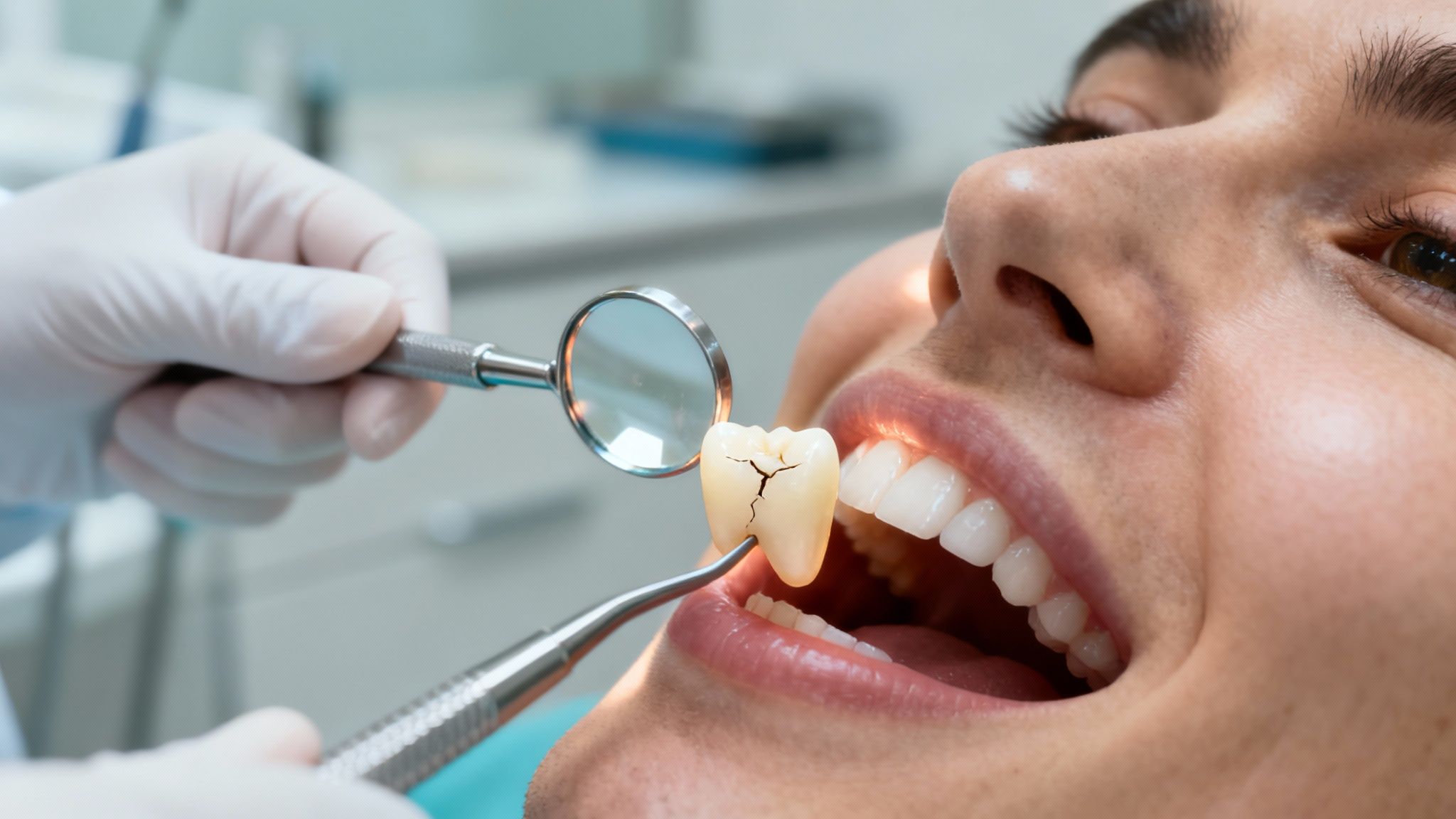
Many patients in Huntington Beach believe dentists recommend bridges simply because they cost more. This skepticism often comes from past experiences where treatment felt rushed or unexplained, leading to the assumption that a cheaper option isn't being offered.
However, insights show that most cost-driven dental frustration comes from delayed care, not overtreatment. According to a report from the CDC, patients who postpone restorative work often need more complex—and more expensive—procedures later. Preventive Dental Care can save between $8 to $50 for every $1 spent.
Crowns Save Teeth, Bridges Replace Them
The choice between a crown and a bridge isn't about cost; it’s about solving different problems to make your smile functional and healthy again.
A crown protects a damaged tooth that can still be saved. It’s like a custom-made helmet for a tooth weakened by a large cavity, crack, or root canal.
A bridge replaces a tooth that’s already missing. It prevents surrounding teeth from shifting and causing bite problems. Choosing the “cheaper” option when it’s not appropriate often leads to higher long-term costs, not savings.
Crown vs. Bridge: The Fundamental Difference
This table provides a quick, clear summary to help you instantly grasp the primary purpose of each treatment.
| Treatment | Core Purpose | Best Use Case |
|---|---|---|
| Dental Crown | To save and protect an existing, damaged tooth. | A large cavity, a cracked tooth, or after a root canal. |
| Dental Bridge | To replace a completely missing tooth. | An empty space between two healthy teeth. |
This clear distinction is why getting the right diagnosis is so important.
Before deciding, ask one clear question: “Is this tooth still structurally sound, or is it already gone?” That single answer usually determines whether a crown or bridge is the right solution.
If you’re unsure whether a crown or bridge is truly necessary—and want an explanation that makes sense—Dr. Kalvin and the Kali Dental team are happy to walk you through your options clearly, without pressure.
How a Dental Crown Acts as a Protective Shield for Your Tooth
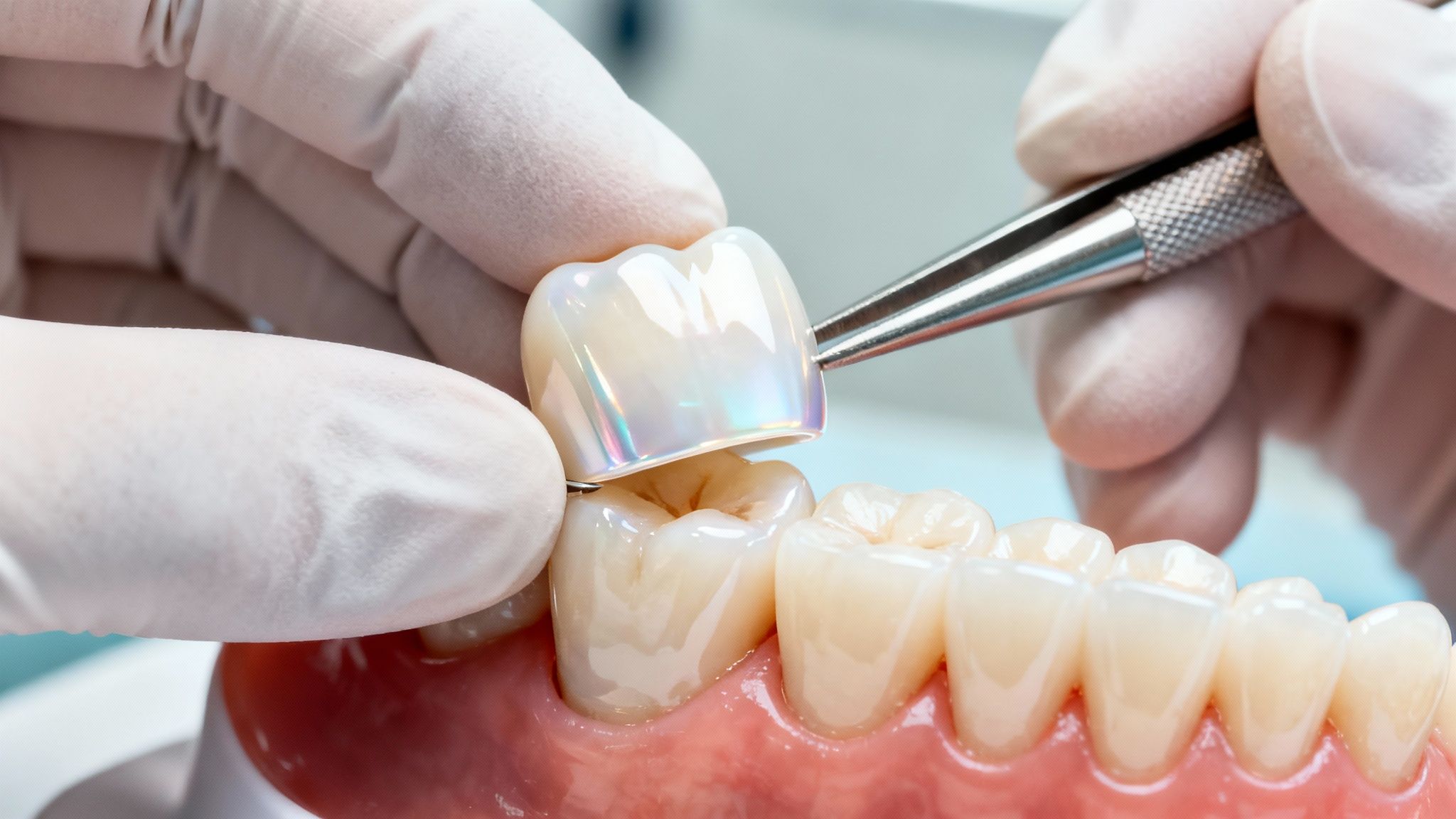
Think of a dental crown as a custom-made helmet for a tooth that's been weakened but is definitely still worth saving. The crown's main job is to completely encase the visible part of the tooth, restoring its original shape, size, strength, and appearance.
We turn to this protective shield when a tooth is too compromised for a simple filling. A crown is often the best solution in a few common scenarios.
When Is a Crown the Right Choice?
Deciding if a crown is enough really comes down to one thing: the health of that existing tooth. Dr. Kalvin Nguyen will typically recommend a crown when your tooth is:
- Structurally Compromised: If a tooth has a significant crack or a history of large fillings, it's vulnerable. A crown covers these weak points and helps distribute bite forces evenly.
- Post-Root Canal: After a root canal, the tooth is hollow and fragile. A crown is essential for protecting it from fracturing under normal chewing pressure.
- Severely Worn or Broken: Clenching or grinding your teeth (bruxism) can wear them down. A crown rebuilds the tooth back to its original form and function.
- Aesthetically Displeasing: Sometimes a tooth is just badly discolored or misshapen. A well-made porcelain crown can completely transform its look.
Our goal is always to save the natural tooth whenever possible. A crown is one of the best tools we have for that, giving it a durable, long-lasting outer shell.
The Crown Placement Process at Kali Dental
Here at our Huntington Beach office, we've made the crown process as straightforward as possible. It generally involves preparing the tooth, taking a highly accurate digital impression, and then crafting a custom crown that fits with precision.
The Key Takeaway: A dental crown is a restorative treatment designed to save a natural tooth. If the tooth has a healthy root and enough structure to hold a restoration, a crown is almost always the preferred option.
We work with advanced materials like zirconia and porcelain, which are strong and mimic the look of natural enamel. You can read more about how our technology makes one-day crowns possible and what that means for your visit.
How a Dental Bridge Fills the Gap From a Missing Tooth
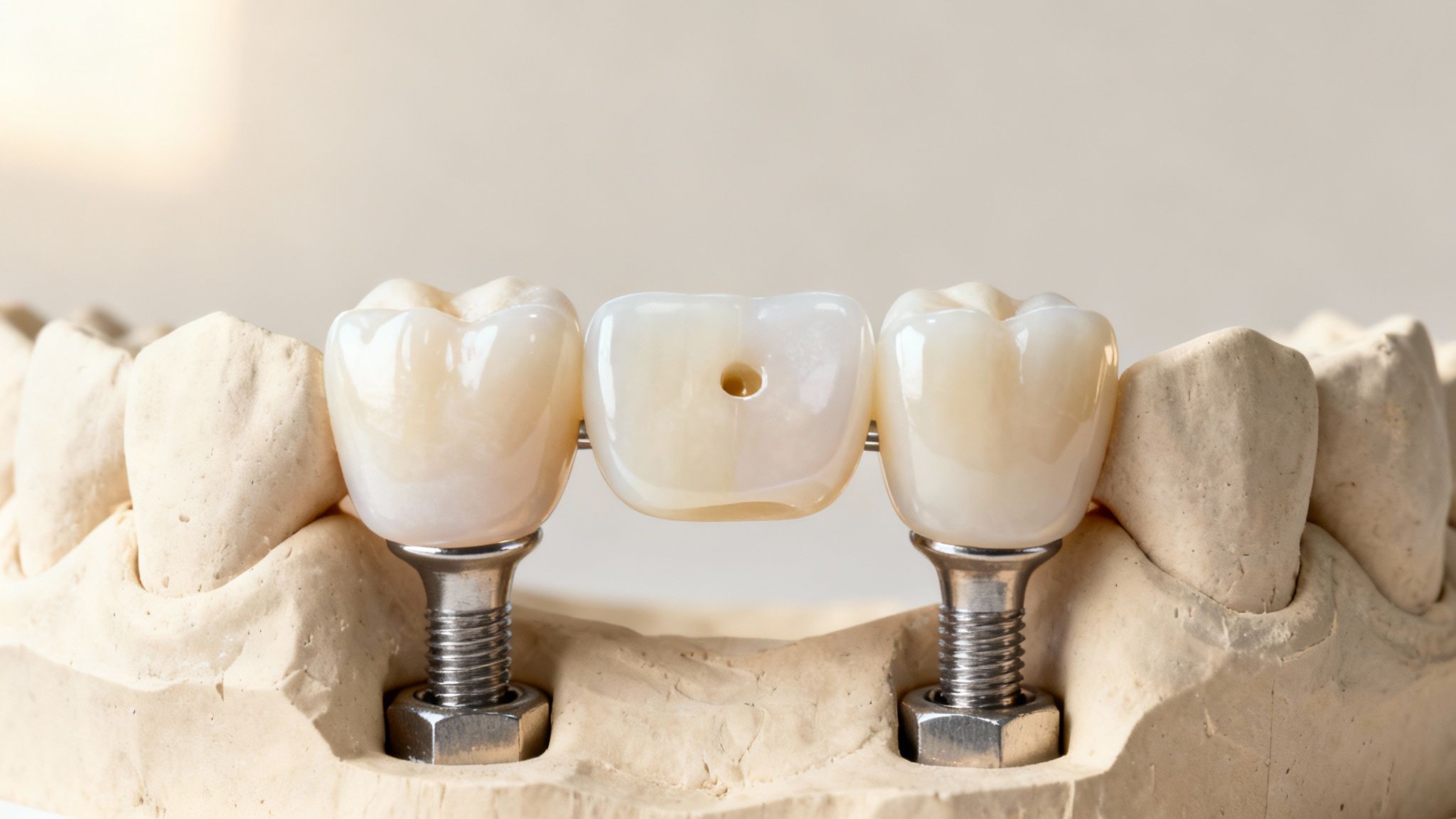
When a tooth is completely gone, the focus shifts from saving it to replacing it. This is where a dental bridge steps in. A bridge is a fixed prosthetic designed to replace one or more missing teeth by anchoring to the teeth on either side of the space.
As the name suggests, it literally "bridges" the gap. The two neighboring teeth, known as abutment teeth, are carefully prepared to be fitted with crowns. These crowns serve as strong anchors, holding a false tooth (called a pontic) securely in the empty spot.
A bridge does more than just fill a space; it’s essential for your long-term oral health. When a tooth is missing, surrounding teeth naturally start to drift, which can throw your bite out of alignment.
When Is a Bridge the Best Option?
A bridge is a time-tested solution for replacing teeth. We often recommend it when you have a missing tooth and the teeth on either side are strong enough to support the restoration.
Dr. Kalvin Nguyen might suggest a dental bridge if:
- You're missing one or more teeth in a row. A traditional bridge is a perfect fit for this kind of gap.
- A dental implant isn't the right choice for you. Not everyone is a candidate for implants due to bone density or other health factors.
- The neighboring teeth already need crowns. If the teeth next to the gap are damaged, a bridge restores those teeth while replacing the missing one all at once.
While dental implants are often seen as the top-tier choice, bridges are still an incredibly effective option. Research shows that traditional bridges have an impressive success rate, with one analysis finding a 94.5% survival rate after five years. You can read more about these findings on dental restoration longevity.
The Bridge Placement Procedure Explained
Getting a dental bridge at our Huntington Beach practice is a precise process. During your first visit, we prepare the abutment teeth by carefully reshaping them to create room for the crowns. From there, we take exact digital impressions.
A dental bridge does more than just fill a gap—it restores your ability to chew properly, maintains the shape of your face, and prevents remaining teeth from shifting. It’s a complete functional and aesthetic solution.
You'll leave that first appointment with a temporary bridge. Once our trusted lab fabricates your permanent one, you’ll come back so we can check the fit and permanently cement it into place. For those considering other removable options, our guide on partial dentures provides more information.
A Side-By-Side Comparison of Crowns and Bridges
Choosing between a crown and a bridge is a strategic decision for the long-term health of your smile. Both are fantastic restorative tools, but they solve different problems.
Let’s break down the comparison based on what truly matters.
Durability and Lifespan
When we talk about how long these restorations last, a single dental crown often has a slight advantage. Its success depends entirely on the health of the one tooth it’s designed to protect.
A major study on over 3,400 crowns found an incredibly low annual failure rate of just 0.7% over 11 years. Bridges have a more complex job, as their survival depends on three components—the two anchor teeth and the replacement tooth.
Impact on Surrounding Teeth
This is perhaps the most important distinction. A crown is a conservative treatment that leaves neighboring teeth completely untouched.
A traditional bridge is a different story. To place it, we have to permanently reshape the two healthy teeth on either side of the gap, removing healthy enamel.
Key Takeaway: The core difference is in their purpose. A crown is designed to save an existing tooth. A bridge is designed to replace a missing one by using its neighbors for support.
Maintenance and Oral Hygiene
Caring for a crown is simple—just brush and floss around it like any other tooth.
A bridge requires more attention. You'll need special tools like a floss threader or a water flosser to clean underneath the pontic (the fake tooth). This is crucial for preventing plaque buildup and decay on the supporting teeth.
For patients who want to replace a missing tooth without altering adjacent teeth, our guide on dental implants is a great resource.
Decision Matrix Comparing Crowns and Bridges
To make the choice clearer, this table puts the key differences side-by-side.
| Factor | Dental Crown | Dental Bridge |
|---|---|---|
| Primary Purpose | To restore a single damaged, weak, or discolored tooth. | To replace one or more missing teeth in a row. |
| Impact on Other Teeth | None. It only involves the tooth being restored. | Requires permanently altering two (often healthy) adjacent teeth for support. |
| Average Lifespan | 10-15+ years. Longevity depends on the health of a single tooth. | 7-12 years. Lifespan depends on the health of two supporting teeth. |
| Oral Hygiene | Simple. Brush and floss as you would with a natural tooth. | More complex. Requires special tools like floss threaders to clean underneath. |
| Cost | Less expensive upfront, as it involves only one tooth. | More expensive upfront, as it involves creating at least three units. |
Ultimately, this comparison highlights that the best choice depends entirely on your unique circumstances.
The Hidden Costs of Choosing the Wrong Treatment
It's understandable to focus on the price tag when looking at dental work. But the cheapest option upfront isn't always the most cost-effective one in the long run.
An inappropriate treatment today can easily snowball into a series of more complex and expensive problems down the road.
The Ripple Effect of an Incorrect Choice
Let's walk through a common scenario. Imagine you have a missing tooth and decide to leave the gap to avoid the cost of a bridge.
What happens next is that the neighboring teeth start to drift. This slow shift can misalign your bite, leading to jaw pain, premature wear on other teeth, and even TMJ problems. The jawbone in that empty spot also starts to shrink away.
The Takeaway: The money you save by skipping a needed bridge can be completely wiped out by future expenses for orthodontics, bone grafting, or treating jaw pain.
Now, consider placing a crown on a tooth that's too weak to support it. If that underlying tooth fractures, it will likely need to be pulled. Suddenly, you've paid for a crown that failed and now face the cost of an extraction plus a bridge or implant.
This is why a precise diagnosis from a dentist you trust is so crucial. For more on navigating these expenses, our guide on the cheapest ways to fix teeth without insurance has practical strategies.
How to Make the Right Choice for Your Smile
When you're faced with a dental decision, it’s easy to get lost in the details. But choosing between a crown and a bridge often boils down to one fundamental question: is the tooth still there, and is it strong enough to save?
That single question shifts the focus from the immediate cost to the long-term health of your smile.
Making the right call from the start is the best way to prevent bigger headaches down the road. This decision tree shows how getting the right treatment at the right time is always the smarter financial move.
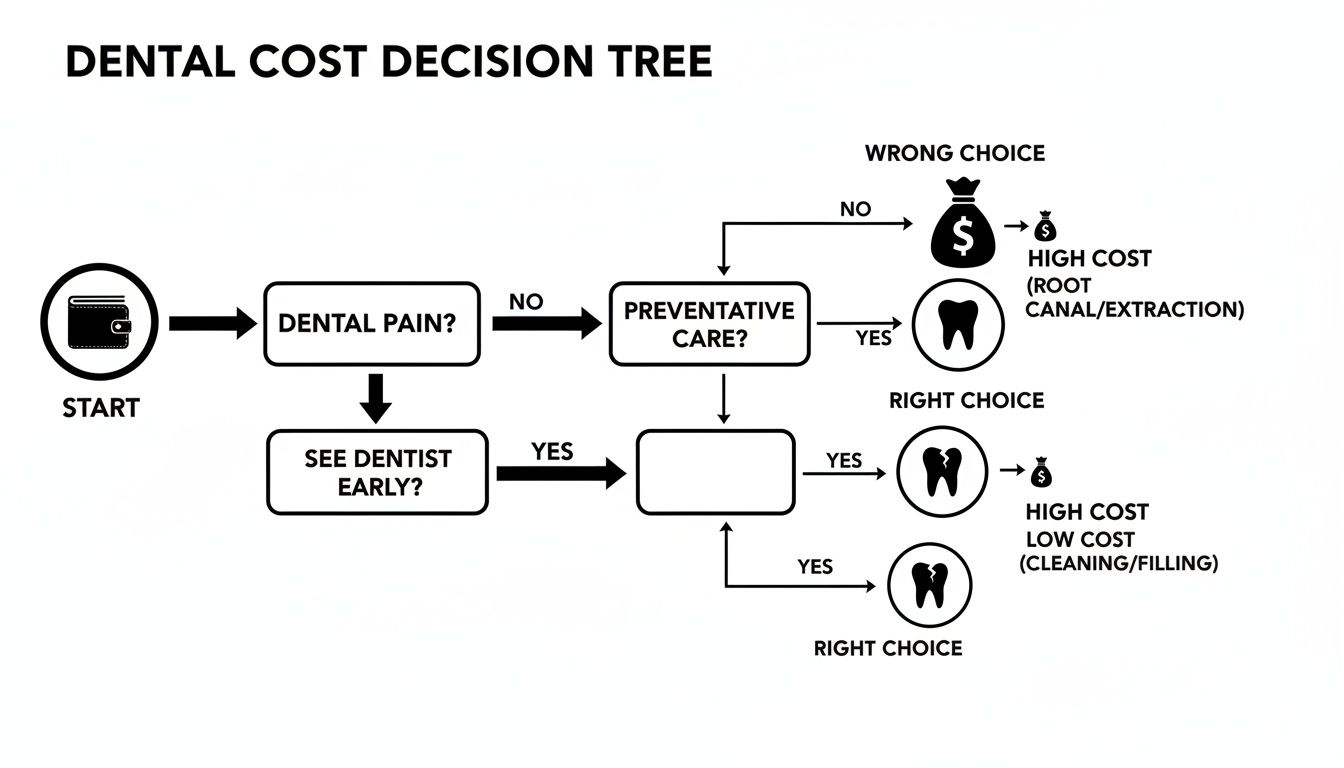
As you can see, tackling the root of the problem with the correct restoration is an investment that protects both your dental health and your finances over time.
Thinking About Long-Term Success
So, how do these treatments hold up over the years? While both are proven solutions, their track records can look different a decade or more down the line.
Studies show that traditional dental bridges have about a one-third failure rate over a 15-year period. In contrast, implant-supported crowns boast a much higher success rate for the long haul.
Of course, restoring a tooth is just one piece of the puzzle. If you're also thinking about cosmetic improvements, you might find this guide to teeth whitening for sensitive teeth useful.
If you're still weighing your options, we're here to help. We invite you to visit our Huntington Beach office, where Dr. Kalvin Nguyen can provide a clear, pressure-free assessment.
Your Questions About Crowns and Bridges Answered
We get a lot of great questions about crowns and bridges here at Kali Dental. Here are some straightforward answers to what our patients ask most often.
How long does it take to get a crown or bridge?
It's usually a two-visit process. At your first appointment in our Huntington Beach office, we'll prepare the tooth and take precise digital impressions. You'll leave with a temporary restoration. About two weeks later, you'll come back to have your permanent, custom-crafted crown or bridge securely bonded in place.
Will getting a crown or bridge hurt?
Your comfort is our top priority. We use a local anesthetic to thoroughly numb the area, so you shouldn't feel any pain during the procedure. It's common to have mild sensitivity for a few days as things heal, but this is temporary and manageable.
How long do crowns and bridges last?
With proper care, a crown can easily last 10–15 years or more. Bridges have a slightly shorter expected lifespan, usually around 7–12 years, because their longevity depends on the health of the two supporting teeth. Great oral hygiene and regular checkups are key.
Can a crown or bridge fail?
It can happen, though it’s not common with good maintenance. The biggest reason for failure is new decay getting under the restoration. Other issues include problems with the underlying tooth or habits like clenching and grinding, which can put stress on the restoration.
Does dental insurance cover crowns and bridges?
In most cases, yes. Most dental insurance plans offer partial coverage for crowns and bridges because they are considered medically necessary restorative treatments. Coverage levels vary, so our team at Kali Dental can help you understand your benefits and provide a clear cost estimate.
If you're still weighing your options and wondering, "Do I actually need a bridge, or is a crown enough?" let's figure it out together. Dr. Kalvin and the Kali Dental team can give you a clear, honest answer based on your unique situation.
Schedule a consultation at our Huntington Beach office for a no-pressure conversation about the best path forward for your smile. You can find us online at https://kalidental.com.