
When you have a damaged or missing tooth, the cost of fixing it is a major concern. Many patients ask, "Which is cheaper, a dental bridge or a crown?"
From a purely upfront cost perspective, a single dental crown is almost always less expensive. A crown is a procedure to fix one damaged tooth. A bridge replaces a missing tooth and involves at least three units, making it more costly.
But the choice isn't just about the initial price—it's about what your tooth needs. It’s a clinical decision first and a financial one second.
Clarifying the Crown vs. Bridge Cost Question
Many patients in Huntington Beach worry about being upsold or making a choice that costs more in the long run. They aren't just comparing prices; they're trying to find the most cost-effective solution for their oral health.
Delaying treatment due to cost anxiety is a common issue. Data shows cost is a top reason people delay dental care, and when treatment is postponed, patients often need more complex and expensive procedures later.
A Common and Costly Misstep
A frequent mistake is choosing a treatment based only on the lowest upfront price or avoiding care altogether. This approach often backfires.
For example, skipping a recommended crown to "save money" can lead to the tooth fracturing beyond repair, requiring an extraction and a more expensive replacement. Waiting to replace a missing tooth can lead to shifting teeth, bone loss, and the need for more extensive work later.
The Smarter, Health-First Approach
The most cost-effective strategy is to choose the option that best preserves your long-term oral health. This means selecting the treatment that:
- Preserves as much natural tooth structure as possible.
- Prevents surrounding teeth from shifting.
- Reduces the chance of needing emergency or repeat procedures.
In most cases, the decision is clear: crowns are for damaged but salvageable teeth, while bridges are for teeth that are already missing. The "cheapest" option depends entirely on your tooth's current condition, not a generic price list.
Crowns vs. Bridges: What's the Real Difference?
Thinking about a bridge versus a crown isn't like comparing similar products. You're choosing the right tool for two completely different jobs.
The entire decision boils down to one simple question: are you trying to save a tooth or replace one?
- A dental crown is a custom-fitted cap. We use it to save a single, damaged tooth that is still structurally sound enough to keep.
- A dental bridge does exactly what its name suggests—it "bridges" a gap left by a completely missing tooth, using neighboring teeth for support.
This decision tree helps visualize which path you're likely on.
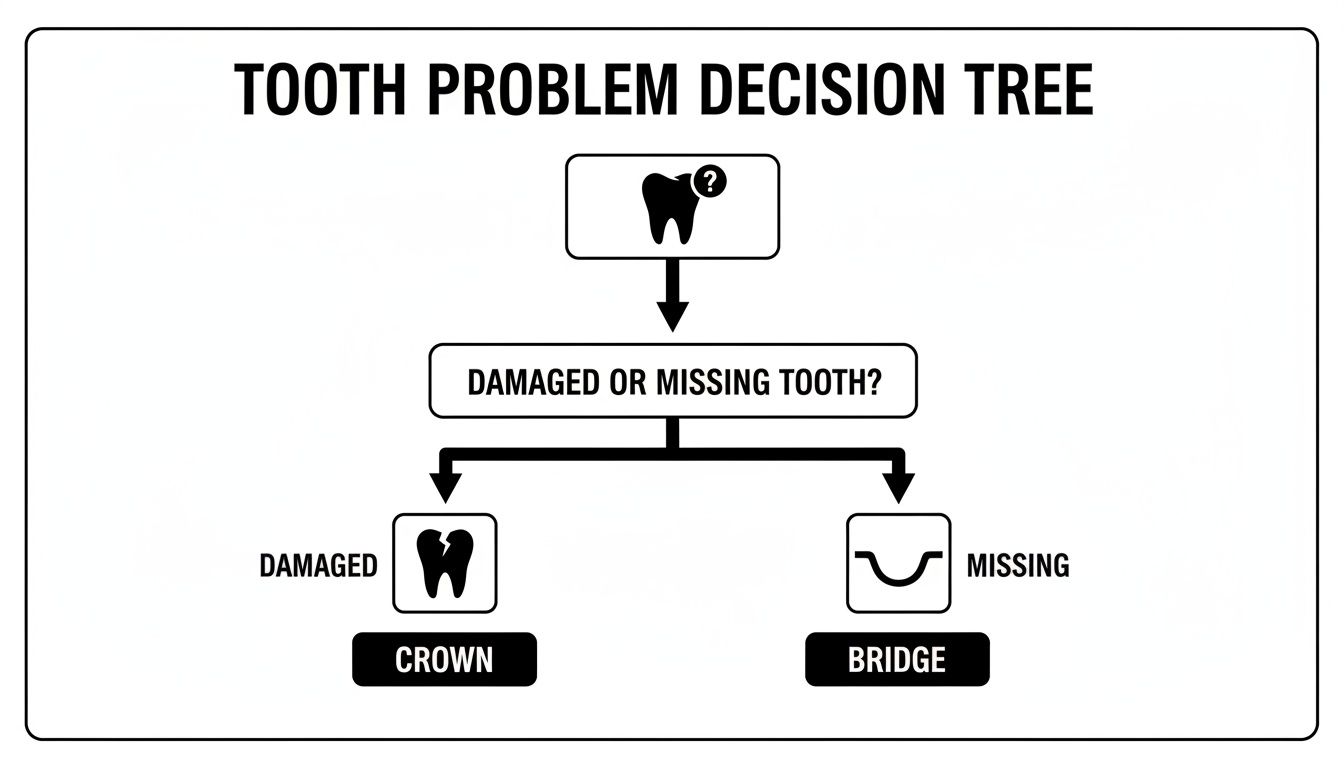
As you can see, your tooth's condition dictates the treatment, which in turn determines the cost.
For a quick summary, here’s a simple table breaking down how these two cornerstones of restorative dentistry in Huntington Beach stack up.
Quick Cost and Purpose Comparison: Crown vs. Bridge
| Factor | Dental Crown | Dental Bridge |
|---|---|---|
| Primary Purpose | To save and strengthen a single damaged tooth. | To replace one or more missing teeth. |
| Number of Teeth Involved | One tooth. | At least three units (two anchor teeth, one replacement). |
| Typical Upfront Cost | Generally lower ($1,000–$2,500). | Generally higher ($2,000–$5,000). |
| When It's Used | Cracked teeth, severe decay, post-root canal. | A tooth is already lost or must be extracted. |
This makes it clear: the procedure you need is based entirely on whether your tooth can be saved or if it's already gone.
When Is a Dental Crown the Right Financial Move?
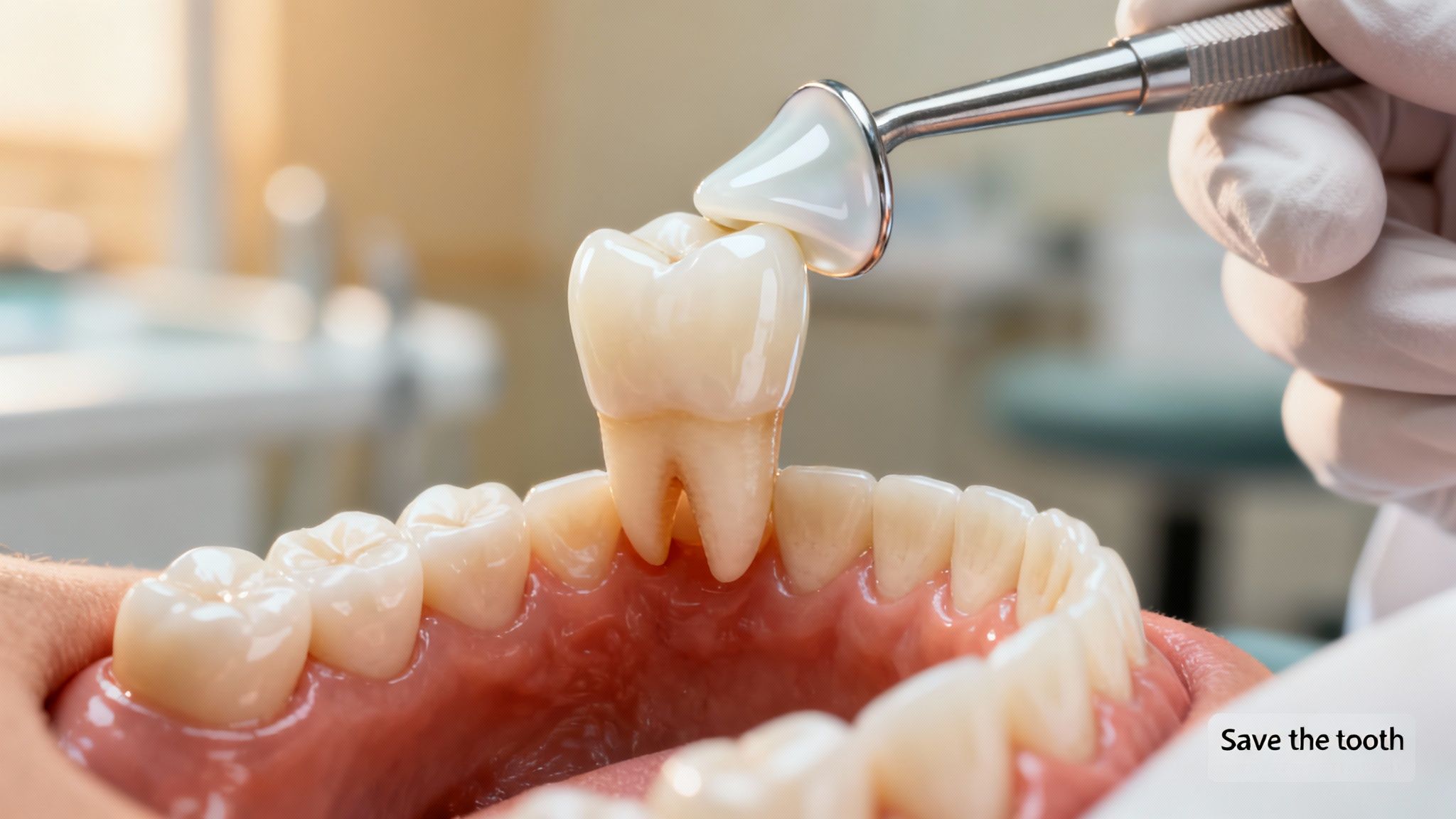
When a tooth is damaged but not lost, a dental crown is a shield. Its main job is to protect what’s left of your natural tooth, preventing an extraction and the more complicated procedures that follow.
Putting off a needed crown to "save money" almost always ends up costing more. A small crack or area of decay won't stay small forever.
The best financial strategy is always to preserve your natural tooth. A crown does just that—it stops further damage and helps you avoid much costlier emergency treatments down the road.
If left untreated, damage can worsen to the point where the tooth is beyond saving. At that point, the conversation shifts from a simple crown to a full tooth replacement like a bridge or implant, which are in a different price bracket.
Top Scenarios Where a Crown Protects Your Wallet
Think of a crown not as a cost, but as an investment in avoiding a bigger bill. Here are the most common situations we see in our Huntington Beach office where a crown is the clear financial winner:
- Protecting a Tooth After a Root Canal: A tooth is fragile after a root canal. Without a crown, it's vulnerable to fracturing, which usually means it must be pulled.
- Replacing a Large, Old Filling: If a filling takes up more than half the tooth, it weakens the structure. A crown acts as reinforcement, giving it strength.
- Saving a Cracked or Fractured Tooth: A crown acts like a helmet, holding a cracked tooth together and preventing the crack from spreading to the root.
- Dealing with Extensive Decay: When a cavity is too large for a regular filling, a crown is the only option to restore the tooth's function and strength.
In every case, the one-time cost of a crown is significantly less than the combined expense of an extraction, potential bone grafting, and a future bridge or implant.
The Real Cost of Waiting
Let’s look at the numbers. Say you skip a recommended crown to avoid the initial $1,500 cost. If that unprotected tooth eventually breaks and needs extraction, you've created a new, more expensive problem.
First, there's the extraction cost. Then, you have to fill the gap. A three-unit bridge can run $3,000 to $5,000, and a single dental implant can cost $3,500 to $6,000. Suddenly, that initial "saving" has multiplied into a much larger expense.
Modern technology has made getting a crown easier than ever. Here at Kali Dental, you can read more about how one-day crowns and other technologies set Kali Dental apart and make the process more convenient.
When a Dental Bridge Is the Right Move
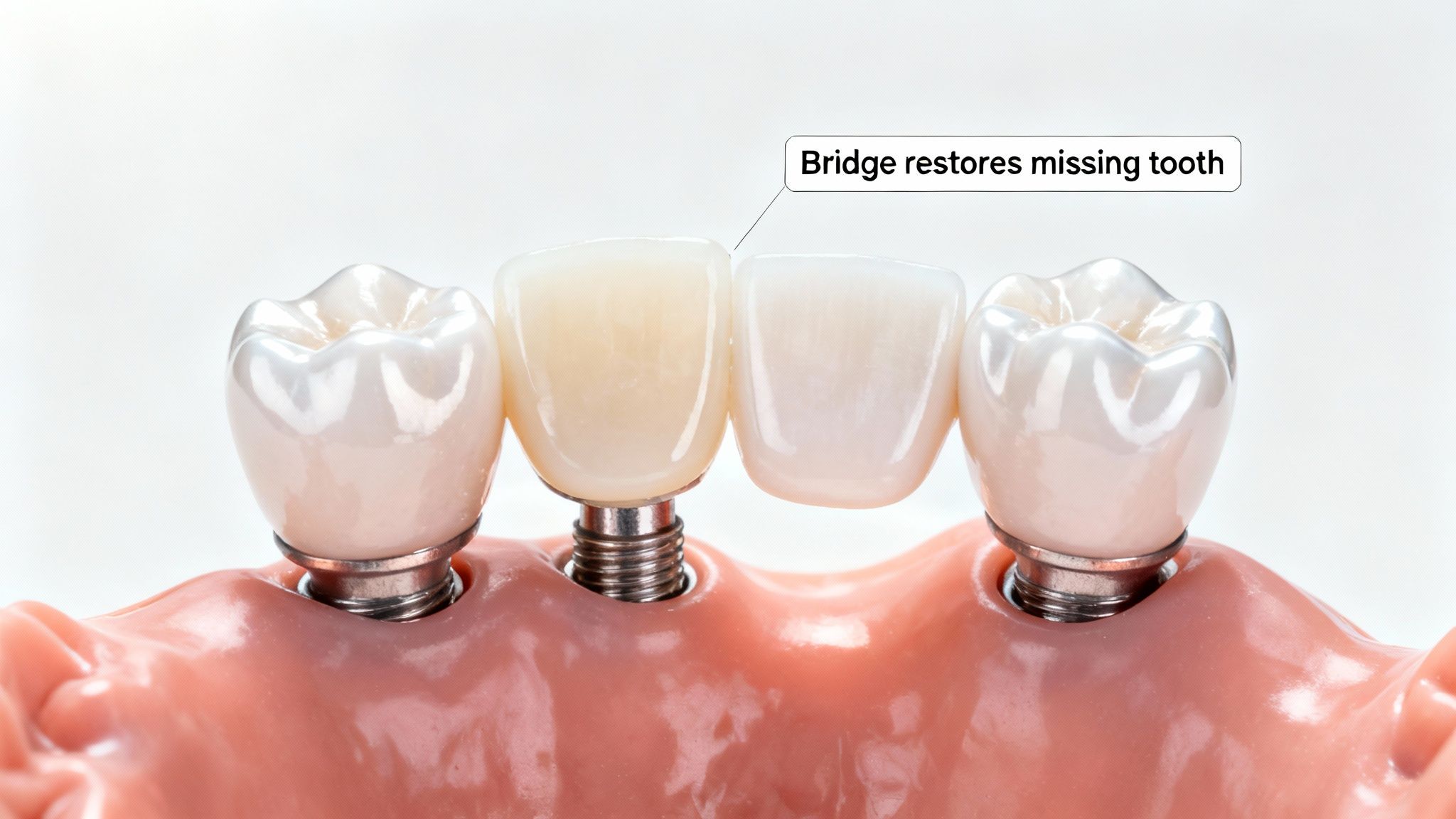
While a crown saves a damaged tooth, a dental bridge steps in when the tooth is already gone. It's not a more expensive version of a crown—it's a different treatment for a different problem: a gap in your smile.
A bridge literally "bridges" the gap. It's a single unit made of an artificial tooth (pontic) fused between two crowns. We place those crowns over the healthy teeth on either side of the gap (abutments), anchoring the whole thing in place.
The High Price of Doing Nothing
Is it necessary to replace a single missing tooth, especially a molar no one can see? The answer is an emphatic yes. Putting it off almost always leads to bigger problems.
Leaving a gap can trigger a domino effect of issues:
- Shifting Teeth: Teeth next to the gap will tilt and drift into the empty space, messing up your alignment.
- Bite Problems: As teeth shift, your bite no longer fits together correctly. This can cause jaw pain and TMJ issues.
- Super-Eruption: The tooth in the opposite jaw will begin to grow out of its socket, searching for the missing tooth.
- Bone Loss: The jawbone underneath the gap will start to shrink and weaken over time.
Delaying a fix turns a simple procedure into a major dental project later on.
How a Bridge Stops Future Problems
A dental bridge halts this chain reaction. By filling the gap, it gives neighboring teeth the support they need to stay put. This keeps your bite stable and prevents unwanted shifting.
Think of a dental bridge as more than just a gap-filler—it’s an investment in protecting the entire structure of your mouth. It’s the difference between a straightforward fix today and potentially needing extensive orthodontic or surgical work later.
For our Huntington Beach patients, a bridge is a trusted solution for restoring a complete smile. While a bridge is an excellent choice, it's wise to know all your options. Learn more about the benefits of dental implants as another powerful alternative.
A Detailed Cost Breakdown for Huntington Beach Patients
When deciding between a crown and a bridge, the bottom line is often a major concern. Here in Huntington Beach, patients want a clear explanation of the costs involved.
The final price tag isn't just a single number; it's a combination of factors we believe in explaining transparently from the start.
What Determines the Final Price
Understanding what goes into the cost helps you see the value in the treatment. Here’s a look at the key drivers:
- Choice of Material: This is usually the biggest factor. All-porcelain or zirconia crowns look incredibly natural and are very strong, but they cost more upfront.
- Preparatory Work: Sometimes a tooth needs help before restoration. If a root canal or a core buildup is required, these necessary procedures will be factored into the total cost.
- Lab Fees and Technology: We partner with top-tier dental labs. The precision and artistry involved are a crucial part of the investment.
- Complexity of Your Case: A single crown on a front tooth is different from a multi-unit bridge for a back molar. Your unique situation influences the final cost.
Estimated Treatment Costs in Huntington Beach CA
To give you a realistic idea, here are some typical price ranges for our Orange County community. In the Huntington Beach area, you can generally expect a single dental crown to range from $800 to $2,500. A standard three-unit bridge typically costs between $2,500 and $5,000.
For a more customized estimate, using a dedicated Dental Crown Cost Estimator can give you pricing information based on your location.
The table below breaks down typical costs for these procedures in our area.
Estimated Treatment Costs in Huntington Beach CA
This table outlines typical price ranges for common restorative treatments in the Orange County area.
| Dental Treatment | Typical Low-End Cost | Typical High-End Cost |
|---|---|---|
| Single Dental Crown (Porcelain/Zirconia) | $1,200 | $2,500 |
| Standard 3-Unit Dental Bridge | $2,500 | $5,000 |
| Root Canal (Molar) | $1,100 | $2,000 |
| Core Buildup (Post-Root Canal) | $250 | $450 |
These ranges reflect the investment needed for high-quality materials and meticulous care.
How Kali Dental Makes Care Affordable
At Kali Dental, we get it. Cost is a real concern, especially without dental insurance. We’ve structured our practice to make exceptional dentistry accessible for everyone in our Huntington Beach community.
It starts with honest communication. Dr. Kalvin Nguyen provides transparent treatment explanations, explaining why a certain treatment is recommended without pressure.
We also focus on affordability-first planning. Kali Dental offers flexible financing and in-house savings options designed for patients managing out-of-pocket expenses. Our guide on the cheapest ways to fix teeth without insurance is packed with practical advice.
Beyond the Initial Bill: The True Cost of Your Choice
The smartest financial decision isn't always the one with the lowest initial cost. It's the one that provides the best long-term value by protecting your oral health.
For busy families and professionals in Huntington Beach, durability is as important as the upfront expense. A well-crafted restoration means fewer unexpected trips back to the dentist.
Lifespan and Lifetime Cost: A Closer Look
A high-quality dental crown can easily last 15 years or longer with proper care. A dental bridge generally has a shorter lifespan, often needing replacement every 7 to 10 years.
That difference changes the long-term math. Research shows that three-unit bridges have lower survival rates over 5 and 10 years compared to single crowns. If you'd like to dive deeper, you can discover more insights about dental restoration longevity here.
The Hidden Costs of Altering Healthy Teeth
To place a dental bridge, the dentist must file down two healthy teeth on either side of the gap to act as anchors. This process removes irreplaceable enamel and can introduce new risks.
- Increased Decay Risk: The anchor teeth can become more vulnerable to decay where the bridge meets the gumline.
- Potential for Nerve Damage: Grinding down a tooth can sometimes irritate the nerve, possibly leading to a root canal later.
- Future Complications: If an anchor tooth fails, the entire bridge is lost, often requiring a more complex and expensive solution.
In contrast, a dental crown treats only the single tooth that needs help, preserving the health of surrounding teeth.
A crown is a targeted solution. It strengthens a weak tooth without involving its neighbors. This conservative approach is almost always the healthier and more cost-effective option in the long run.
Choosing a crown is an investment in preserving your natural tooth structure, which is always the top priority.
Making the Right Choice for Your Smile at Kali Dental
If you’re in Huntington Beach and trying to decide between a dental crown or bridge—especially on a budget—let us help. Our entire approach is built on taking the pressure off your shoulders. We’re here to give you clear, honest information so you can make a choice with confidence.
Your Personal Consultation with Dr. Nguyen
When you come in, Dr. Kalvin Nguyen will personally explain what he sees. He’ll show you why one option might be better for your unique situation, focusing on your long-term health. When patients understand the "why," they feel empowered.
Clear, Upfront Costs—No Surprises
We believe in financial transparency. Our team will break down every cost before any work begins. We’ll go over your insurance benefits and show you how to maximize them.
If you don't have insurance, that's okay. We offer flexible financing and an in-house savings plan to make treatment manageable. For more information, find helpful tips in our guide on saving on quality dental care.
Frequently Asked Questions
Can I get a bridge years after a tooth is pulled?
Yes, but it can be more complex. Over time, neighboring teeth may drift into the empty space and the jawbone can shrink. This might require extra work, like orthodontics, before placing the bridge, which is why it's best to address a missing tooth sooner.
Which lasts longer: a crown or a bridge?
A well-made dental crown typically has a longer lifespan, often lasting 15 years or more with good care. A dental bridge's longevity depends on the health of the supporting anchor teeth and usually lasts between 7 to 15 years.
Does getting a crown or bridge hurt?
Your comfort is our top priority. We use local anesthetic to completely numb the area, so you should not feel any pain during the procedure. It's normal to have some minor sensitivity for a day or two afterward, which is easily managed with over-the-counter pain relievers.
What happens if I just leave a missing tooth?
Ignoring a gap can cause a chain reaction. The teeth on either side will start to shift, throwing your bite out of alignment and potentially causing jaw pain. The jawbone in that area will also begin to deteriorate over time due to lack of stimulation.
How can I afford a crown or bridge without insurance?
We never want finances to be a barrier to necessary dental care. At Kali Dental, we offer flexible financing to break down the cost into affordable monthly payments. To help manage the investment, we suggest you also explore available payment plans.
Ready to restore your smile with confidence? The team at Kali Dental is here to provide clear, compassionate guidance. Schedule your consultation in Huntington Beach today by visiting us at https://kalidental.com.