
If the thought of a dental cleaning makes you wince, you're not alone. Many people avoid cleanings because of past painful experiences—bleeding gums, sharp tools, or a rough hygienist. The real question is: is that normal, and does it have to be that way?
Some sensitivity is normal if you have tartar buildup or gum inflammation, but cleanings shouldn’t feel traumatic. Discomfort during cleanings often signals underlying issues like gum disease—not a problem with the cleaning itself.
Decoding Discomfort During Your Dental Cleaning
So, why does a dental cleaning hurt so much for some people? It's a question we hear all the time. Instead of thinking of the cleaning as the cause of pain, it’s more helpful to see it as the process that reveals what’s really going on with your oral health.
The two main culprits behind the pain are tartar and inflamed gums. Tartar (also called calculus) is what happens when plaque sits on your teeth for too long and hardens. Getting it off requires special tools and focused effort, which can feel like scraping—especially if it’s settled in below the gumline.
The Connection Between Oral Health and Cleaning Pain
Here's a crucial point: a significant reason cleanings can be uncomfortable is that many people walk into their appointment with already inflamed and sensitive gums. According to the World Health Organization (WHO), oral diseases impact nearly 3.5 billion people globally, with untreated tooth decay being the single most common health condition.
When plaque isn't removed, it irritates the gumline and your body responds with inflammation, making the tissue red, puffy, and tender. This flowchart breaks down the two biggest reasons a cleaning might be painful.
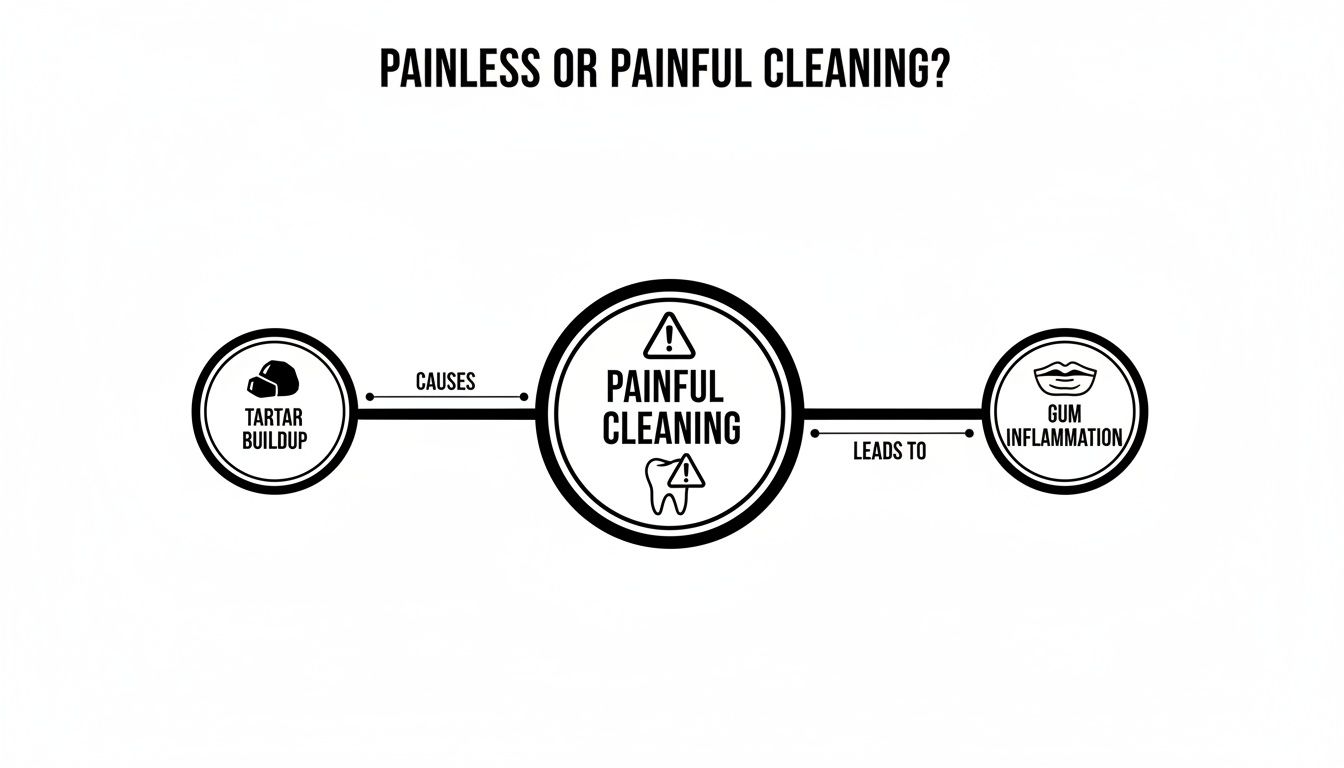
As you can see, tartar buildup and gum inflammation create a vicious cycle that makes routine cleanings feel more intense. The good news is that you can break this cycle. You can learn more by exploring what we call preventive dentistry.
Underlying Issues That Amplify Discomfort
While tartar and gingivitis are the usual suspects, sometimes sharp or severe pain can point to something more serious hiding beneath the surface. If your cleaning feels unusually painful, it’s important to speak up, as it could be a sign of a deeper issue.
For instance, receding gums can expose the sensitive roots of your teeth. Unlike the crowns, roots aren't protected by hard enamel, so they are incredibly sensitive to temperature changes and the vibrations from cleaning tools. Sharp or localized pain might also signal hidden cavities or even infections like dental abscesses.
To make sense of it all, here's a quick guide to what you might be feeling and what it could mean.
Decoding Discomfort During Your Dental Cleaning
| Sensation During Cleaning | What It Likely Means | The Solution |
|---|---|---|
| General Tenderness/Soreness | Mild gum inflammation (gingivitis) from plaque buildup along the gumline. | Consistent brushing, daily flossing, and regular professional cleanings to reverse inflammation. |
| Scraping or Pressure | Your hygienist is removing hardened tartar (calculus) from your teeth. | Regular check-ups prevent heavy buildup, making future cleanings quicker and gentler. |
| Sharp, Zinging Pain | Exposed tooth roots due to gum recession or a possible cavity. | Desensitizing toothpaste, fluoride treatments, and addressing the root cause with your dentist. |
| Bleeding Gums | A clear sign of active gum inflammation. Healthy gums shouldn't bleed. | Don't stop flossing! This is a sign you need to be more thorough to remove irritating bacteria. |
| Localized, Intense Pain | Could indicate a deeper issue like a hidden cavity, a cracked tooth, or an infection. | Immediate communication with your dentist for a proper diagnosis and treatment plan. |
Ultimately, understanding the "why" behind any discomfort is the first step toward a healthier mouth and stress-free dental visits.
Why Gum Health is Everything When it Comes to Cleaning Pain
Think of your gums as the foundation of your oral health. When they're healthy and pink, fitting snugly around your teeth, a cleaning is usually a breeze.
But if you don’t get rid of plaque every day, it hardens into a gritty, cement-like substance called tartar. Imagine that tartar as a pile of tiny, sharp rocks constantly pressed against your delicate gum tissue.
How Plaque Ignites Gum Inflammation
This constant irritation kicks your body’s defense system into high gear, causing inflammation. Your gums will look puffy, red, and feel tender to the touch—the classic signs of gingivitis. At this point, a routine cleaning is more like trying to scrub a bad sunburn; of course, it’s going to be uncomfortable.
The discomfort you feel is a direct result of the existing inflammation. It's not a sign that the cleaning is too aggressive, but rather a sign that your hygienist is removing the very thing that's causing the problem in the first place.
The "Tartar Blanket" Effect
Another common culprit behind sensitivity is what we call the "tartar blanket" effect. Over time, that layer of tartar can become so thick that it acts as an insulator, covering up parts of your teeth.
The Bottom Line: When we finally remove that tartar "blanket," the tooth surface underneath is suddenly exposed to air, water, and temperature changes. This can trigger a temporary but sometimes zinging sensitivity as the tooth gets used to its new environment.
This is actually a good thing! It means the cleaning was thorough and successful. Ignoring it only leads to bigger problems. If you're concerned about your gumline, our guide on how to prevent gum recession is a great resource.
How Dental Anxiety Can Make Everything Feel Worse
It's amazing how much the mind can influence what the body feels. If you have dental anxiety, your brain is already on high alert for danger before the hygienist even picks up a tool. That constant state of worry can literally lower your pain threshold.
This kicks your "fight-or-flight" response into high gear, making you hyper-aware of every sound and sensation. Your muscles—especially in your jaw, neck, and shoulders—tense up, magnifying the feeling of pressure and vibration from the dental tools.

The Mind-Body Connection in the Dental Chair
Pain during a cleaning isn't just a physical event; it's deeply tied to how your brain interprets threats. When you're anxious, your brain is already convinced something bad is about to happen. Research shows that psychological factors, like fear from a bad past experience, can make a cleaning feel significantly more painful.
For many people, this is a classic case of situational anxiety, where the dental office itself is the trigger. That’s why a dentist who focuses on building trust and making you comfortable can completely change the game.
Actionable Strategies to Take Back Control
Letting your dental team know about your fears is the single most important thing you can do. A team that knows you're anxious can immediately change their approach to make you more comfortable.
Here are a few simple but powerful strategies:
- Deep Breathing: Focusing on slow, deep breaths helps calm your nervous system and dials down that fight-or-flight feeling.
- Bring Headphones: Listening to your favorite music or a podcast is a fantastic way to distract your mind from the sounds of the cleaning.
- Agree on a Hand Signal: Before you start, agree on a signal—like raising your hand—to let the hygienist know you need a break. This simple step puts you back in control.
If you struggle with dental fear, our team is experienced in helping patients feel safe and at ease. We have a complete guide on how to overcome dental anxiety with more tips to help you through your next visit.
Your Guide to a Comfortable Dental Cleaning
Knowing why a cleaning might hurt is one thing, but preventing that pain is the real goal. The good news is, you have a lot more control over your dental experience than you might think. A few simple words and requests can make a world of difference.
The common misstep is assuming all cleanings are painful and avoiding them altogether. This actually makes future visits worse, as plaque hardens and gum health declines. The solution is to communicate with your dental team and be proactive.
Partnering With Your Dental Team
Let your dental team know about your past pain. Think of your relationship with your hygienist as a partnership. You're working together for the health of your smile.
Here’s a simple checklist to help you communicate your needs and ensure your hygienist is on the same page from the moment you sit in the chair.
Your Comfortable Cleaning Checklist
| Action | Why It Works | What to Say to Your Dental Team |
|---|---|---|
| Mention Your Sensitivity When Booking | This gives the team a heads-up so they can add notes to your chart before you even arrive. | "I have sensitive teeth and find cleanings painful. Could you please make a note of that for my appointment?" |
| Request Topical Numbing Gel | A simple gel wiped on your gums beforehand can seriously dull the sensations from the cleaning instruments. | "I'd feel more comfortable if we could use a topical numbing gel before we start." |
| Ask About Ultrasonic Scalers | These modern tools use high-frequency vibrations and a gentle stream of water to break up tartar, meaning much less scraping. | "I've heard ultrasonic scalers can be gentler. Is that an option for my cleaning today?" |
| Establish a 'Pause' Signal | This simple agreement puts you back in the driver's seat. You can take a break whenever you need one. | "If I need a short break, I'll raise my left hand. Is that a good signal to use?" |
This isn't about being a "difficult" patient; it's about being an informed one. Your dental team will appreciate you taking an active role in your own care.
Taking Proactive Steps for a Better Experience
Beyond what happens in the dental chair, the work you do at home is your best defense against painful cleanings. Consistent daily care is the single most effective way to cut down on tartar buildup and gum inflammation.
Dr. Nguyen's Insight: "The best cleanings are the ones where we have less work to do. When a patient is consistent with brushing and flossing, we're mostly doing maintenance. That's always going to be more comfortable than having to remove months of hardened tartar from sensitive gums."
Frequent cleanings (every 6 months or more) also reduce tartar buildup and make each visit easier over time. If you know you have sensitive teeth, try switching to a desensitizing toothpaste for a few weeks before your appointment.
For our patients here in Huntington Beach, we make this whole process easy. When you schedule your next dental cleaning and exam, just let us know about your concerns. Your peace of mind is always our top priority.
The Kali Dental Approach to Gentle Cleanings in Huntington Beach
At Kali Dental, we prioritize your comfort. When new patients ask us, "Why does my dental cleaning hurt so much?" our answer is always the same: it doesn't have to. We've built our entire practice in Huntington Beach around ensuring your comfort.
Dr. Kalvin Nguyen and our team combine a compassionate, human-first mindset with the best modern techniques. We focus on creating a calm atmosphere where you feel listened to, respected, and in control from start to finish. Nervous? Just tell us—we’ve got your back.
Technology and Technique for a Painless Visit
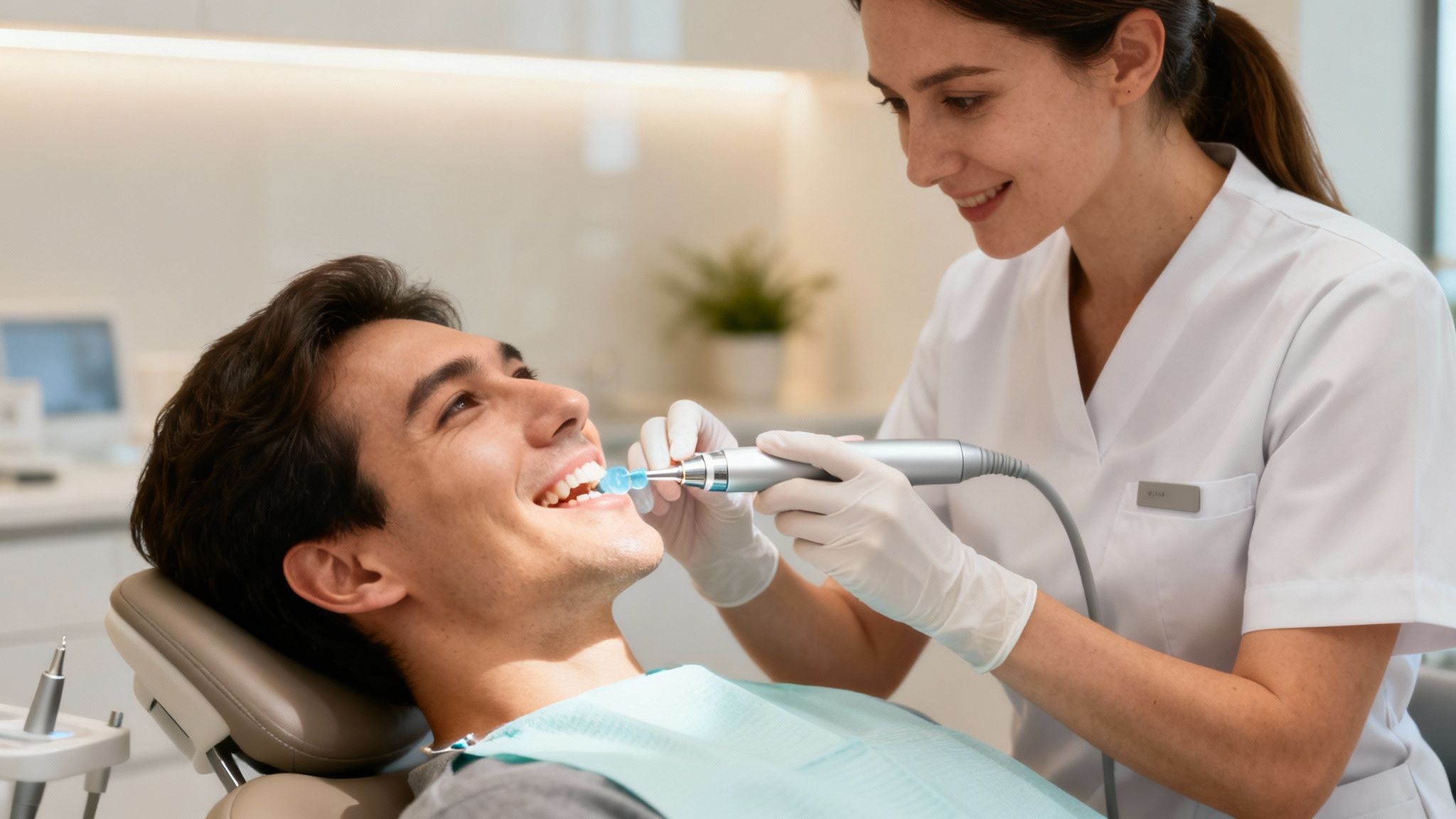
To deliver a gentle yet effective cleaning, we rely on advanced tools designed specifically to minimize discomfort. One of our go-to instruments is the ultrasonic scaler. Instead of relying solely on manual scraping, this tool uses high-frequency vibrations and a gentle water stream to break down tough plaque and tartar.
For anyone with sensitive gums or a history of dental anxiety, this technology is a breath of fresh air. The process is quieter, quicker, and feels far less invasive than old-school methods. We dive deeper into the tools that make this possible in our article on the tech behind a better dental experience in Huntington Beach.
A Personalized Comfort Plan for Every Patient
We know that great technology is only part of the equation. Real comfort comes from a personalized plan that addresses your unique needs and worries.
Our Promise to You: Your comfort is our top priority. We will never rush you, and we won’t move forward with any part of your cleaning until you feel completely ready. We see ourselves as your partners in achieving a healthy, beautiful smile.
To make sure your visit is as painless as it is productive, we offer several comfort options:
- Topical Numbing Gel: A quick swipe of this gel on your gums can make a world of difference, numbing the area just enough to make the cleaning process a breeze.
- Comfort Amenities: We offer soothing music, cozy neck pillows, and other small touches that help you relax in the chair.
- Open Communication: We’ll agree on a simple hand signal you can use anytime you need a break. You’re in the driver's seat.
If you're in Huntington Beach—especially around Goldenwest, Huntington Harbour, or Central HB—and have been putting off dental care because of pain, we invite you to experience the Kali Dental difference.
Frequently Asked Questions About Painful Dental Cleanings
1. Is it normal for my gums to bleed after a cleaning?
Yes, a little bleeding for a day or so after a professional cleaning is common, especially if you had gum inflammation (gingivitis). It's a sign that the irritants have been removed and your gums can now begin to heal. Consistent daily flossing will prevent this at your next visit.
2. Should I take pain medication before my dental cleaning?
We generally advise against it, as we prefer to make you comfortable from the start with options like topical numbing gel. If you feel you need something, please call our office first so we can discuss the best and safest approach for your specific needs.
3. If my teeth are sensitive, should I get cleanings less often?
Actually, the opposite is true! More frequent cleanings (e.g., every 3-4 months) can lead to less sensitivity over time. This prevents heavy tartar buildup, making each visit quicker, gentler, and more comfortable.
4. What’s the difference between a regular cleaning and a deep cleaning?
A regular cleaning (prophylaxis) is preventive and removes plaque and tartar from above the gumline. A deep cleaning (scaling and root planing) is a treatment for gum disease that cleans below the gumline. We always use a local anesthetic for deep cleanings to ensure you are completely comfortable.
5. Can a dental cleaning damage my tooth enamel?
No, this is a common myth. The tools used by our trained hygienists are designed to remove tartar buildup without harming your enamel. Your enamel is the hardest substance in your body, and professional cleanings are safe and essential for your oral health.
Your comfort and health are our top priorities. If you've been putting off a visit because you're worried about why your dental cleaning might hurt, we invite you to experience a new standard of care at Kali Dental. Schedule your gentle cleaning with our compassionate Huntington Beach team today and let us help you get a healthy, confident smile without the stress.