
A dentist recommends a deep cleaning, also known as scaling and root planing, when they see signs of gum disease that a regular cleaning can't fix.
It's a specific treatment designed to stop gum disease by cleaning below the gumline, where harmful bacteria and tartar hide.
Why Your Dentist Recommended a Deep Cleaning

Hearing "deep cleaning" can be alarming, especially if you aren't feeling pain. One of the most common questions we hear is, "If my gums don’t hurt, why do I need an expensive deep cleaning?"
Many patients worry it's a profit move, not a medical need. But the truth is that early-stage gum disease is often a silent problem.
Think of it this way: termites can quietly damage a house's foundation long before you see trouble. Gum disease works similarly, damaging the bone and gums holding your teeth in place before you feel discomfort. A deep cleaning isn't an upsell; it's a preventive treatment to stop damage before it leads to tooth loss.
The Evidence: What Your Dentist Is Actually Seeing
When we recommend this treatment, it’s based on clear, measurable signs of infection found during your dental exam. This is why it's so important for patients to find a trusted dentist, and good dental SEO marketing helps practices like ours connect with families who need this level of care.
Here are the specific red flags we look for that point to the need for a deep cleaning:
-
Gum Pockets Exceeding 4mm: Healthy gums hug your teeth tightly, creating a tiny space (a "pocket") that's only 1-3 millimeters deep. When pockets measure 4mm or more, the gum has pulled away, creating a space where your toothbrush can't reach and bacteria thrive.
-
Bleeding During Your Exam: When we gently measure those pockets, healthy gums don't bleed. If your gums bleed easily, it's a definite sign of inflammation and infection.
-
Tartar Below the Gumline: We can often see or feel hardened plaque (tartar) on the root surfaces under the gums. This rough buildup acts as a magnet for more bacteria.
-
Bone Loss on Your X-Rays: Dental X-rays show us if the infection has started to eat away at the jawbone that supports your teeth.
These signs tell us the problem has moved from simple plaque to a serious infection. This is where a deep cleaning becomes essential. To learn how this differs from routine care, read about our teeth cleaning services.
What a Deep Cleaning Actually Means for You
So, you've heard the term "deep cleaning." Let's break down what it really is, because it's more like a healing treatment for your gums.
Imagine you have a plant in a pot. Over time, tough weeds (tartar) grow deep into the soil around the plant's roots (your teeth). You have to get down into the soil to carefully remove the weeds so the plant can thrive again.
That's exactly what a deep cleaning does. It's a two-part therapeutic process to get your gums healthy from below the surface.
Part One: Scaling
The first step is called scaling. This is where we meticulously remove all the hardened plaque and tartar from your teeth, especially from below your gum line.
This is the "weeding" phase. We use specialized instruments to gently clear away harmful deposits that your toothbrush and floss can't touch.
Part Two: Root Planing
Once the tartar is gone, we move on to root planing. This involves carefully smoothing out the surfaces of your tooth roots.
Rough root surfaces are a magnet for bacteria. By making them smooth, we make it harder for new bacteria to latch on and encourage your gums to heal and reattach snugly to your teeth.
This two-stage, non-surgical process is the gold standard for treating active gum disease. As the American Dental Association (ADA) explains, scaling removes tartar while root planing smooths roots to help gums reattach, all while local anesthesia ensures your comfort.
This procedure gives your gums a fresh start. It is fundamentally different from the care you receive during routine preventive dentistry services, which focus on maintaining already healthy gums.
The Step-by-Step Deep Cleaning Process
Knowing what to expect can make any dental procedure feel less intimidating. At Kali Dental, we walk you through everything so you feel prepared and confident.
Let's break down what your deep cleaning journey looks like at our Huntington Beach practice.
Your Initial Exam and Getting Comfortable
First, we do a detailed assessment. We’ll review your periodontal chart and look at your digital X-rays to check the bone supporting your teeth. You can learn more about how advanced dental technologies make your care precise and comfortable.
Before we start, we'll gently numb the area we’re working on with a local anesthetic. Your comfort is our priority, ensuring you feel pressure but no pain.
Scaling and Root Planing: The Deep Clean Itself
Once you're numb, we begin the two-part process:
- Scaling: Using ultrasonic and hand instruments, your hygienist will carefully remove plaque and tartar from below the gumline. This step gets rid of the source of the infection.
- Root Planing: After the tartar is gone, we'll smooth out your tooth roots. This makes it harder for new bacteria to attach and helps your gums reattach to your teeth.
This infographic shows the three main stages of a deep cleaning.
The whole point is to treat the infection below the gumline—something a regular cleaning just can't do.
Your Deep Cleaning Journey: What to Expect
This table summarizes the key stages of the process.
| Stage | What Happens | Patient Experience |
|---|---|---|
| Consultation & Diagnosis | We perform a full exam, measure gum pockets, and review X-rays to confirm the need for a deep cleaning. | A calm discussion where we explain our findings and answer all your questions. No pressure. |
| Numbing the Area | A local anesthetic is gently applied to the quadrant we will be treating. | You’ll feel a small pinch, then the area will become numb. You won't feel any pain. |
| Scaling & Root Planing | Your hygienist carefully cleans below the gumline, removing tartar and smoothing the tooth roots. | You may feel pressure and vibrations, but no discomfort. The appointment usually lasts 1-2 hours. |
| Post-Procedure Care | We provide detailed aftercare instructions and schedule a follow-up to check on your healing. | You'll leave feeling confident. Some mild sensitivity is normal for a few days. |
This structured approach ensures your treatment is comfortable and effective. We’ll also schedule a follow-up visit to see how you’re healing.
How We Know a Deep Cleaning is Necessary
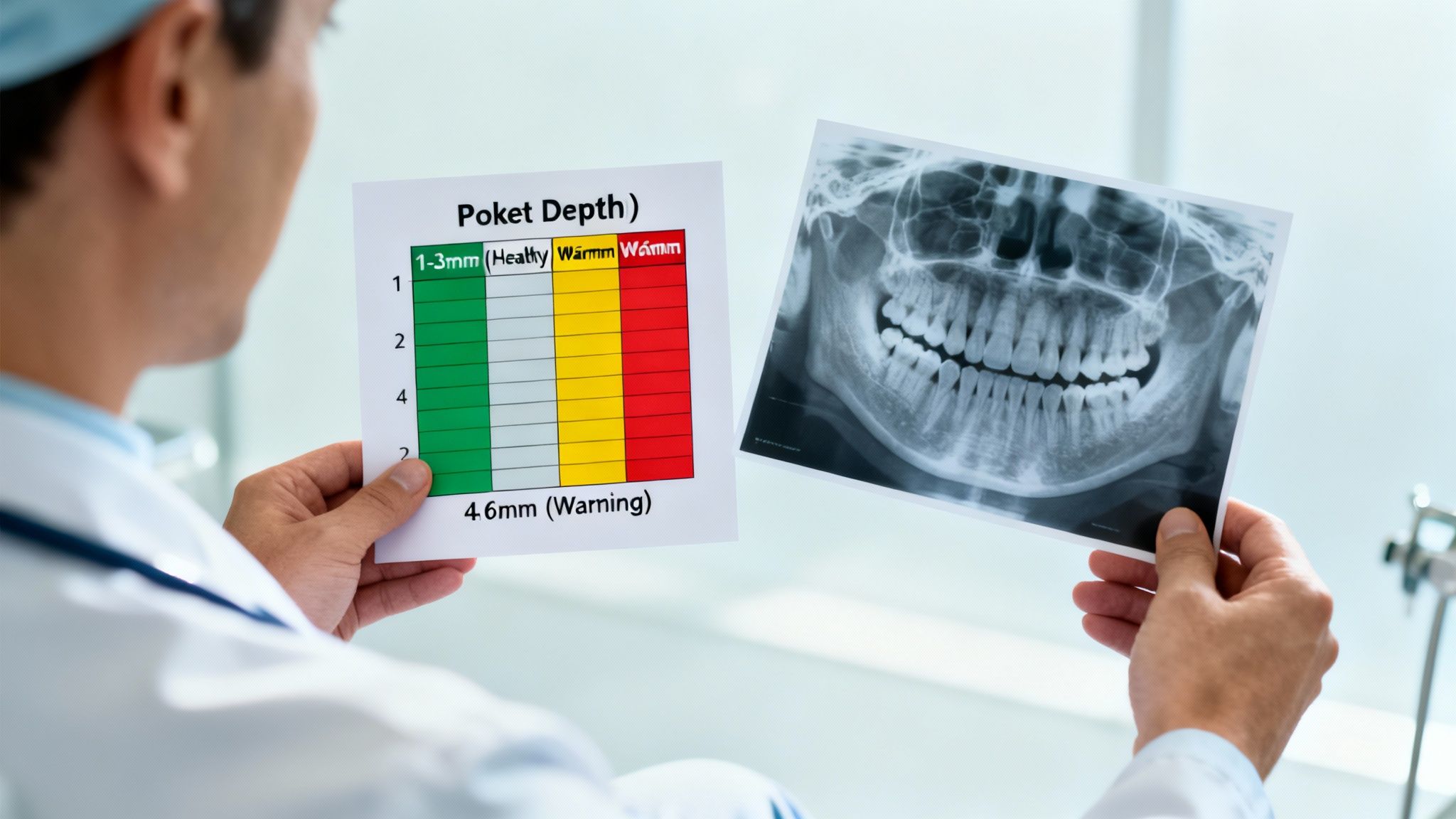
We believe in empowering you with information. A recommendation for a deep cleaning is never a guess; it's based on clear evidence from your exam.
We'll always take the time to show you the two key pieces of evidence we use: your periodontal chart and your dental X-rays.
Decoding Your Periodontal Chart
We measure the tiny "pocket" between each tooth and the surrounding gum. Here’s what those numbers mean:
- 1-3 millimeters: This is the magic number for healthy gums. The tissue is firm and fits snugly around your teeth.
- 4 millimeters: This is a warning sign. Inflammation is causing your gums to pull away from the tooth.
- 5+ millimeters: Numbers of 5mm or more are a red flag. These pockets are a clear sign of active gum disease and are too deep to clean at home.
What Your X-Rays Reveal
Your X-rays tell us what’s happening with the jawbone that supports your teeth. In a healthy mouth, the bone comes up high around the roots.
When gum disease progresses, the infection eats away at this bone. Unfortunately, this bone loss is permanent. We can see the bone level dropping on an X-ray, a critical sign that we need to intervene before you lose the foundation holding your teeth in place.
The best thing you can do is ask to see your periodontal charting and X-rays. A good provider will walk you through the diagnosis and let you decide, without pressure.
If you’ve been told you need a deep cleaning and feel uncertain, please don’t hesitate to reach out. At Kali Dental in Huntington Beach, we welcome patients seeking a second opinion. We want you to feel confident, not confused.
The Payoff of Treatment vs. The Price of Waiting
We know a deep cleaning is a big decision. It's natural to wonder if it’s truly necessary, especially when gum disease can progress quietly.
The most important thing to know is this: a deep cleaning is the only non-surgical way to stop active gum disease. Think of it as hitting the reset button for your gum health.
The Clear Advantages of Taking Action
By getting rid of the bacteria deep below your gumline, you’ll see incredible benefits.
- Stops Gum Disease: A deep cleaning physically removes the bacterial colonies destroying gum tissue and bone.
- Helps You Keep Your Teeth: Healthy gums provide a strong foundation for your teeth, lowering the risk of tooth loss.
- Gets Rid of Bad Breath: Persistent bad breath is often caused by gum disease bacteria. Removing the source tackles the problem from the inside out.
- Soothes Sore, Bleeding Gums: Your gums will look healthier and stop bleeding when you brush, a clear sign of healing.
- Boosts Your Overall Health: Bacteria from infected gums can travel through your bloodstream, contributing to issues like heart disease and diabetes.
The Real Risks of Putting It Off
It’s easy to think, "If it doesn't hurt, what's the rush?" But gum disease doesn't take a break. Postponing treatment allows the infection to cause irreversible damage.
Postponing a deep cleaning isn't a neutral decision; it's a choice to let the disease progress. What starts as a manageable gum issue can lead to tooth loss or costly surgery later.
Delaying necessary care can lead to serious consequences:
- Advanced Periodontitis: The infection will continue to destroy the bone that anchors your teeth. This bone loss is permanent.
- Need for Gum Surgery: If pockets get too deep, you could end up needing more complex procedures like flap surgery or bone grafts.
- Losing Your Teeth: This is the ultimate outcome of untreated gum disease.
- Higher Costs Later: Replacing a lost tooth with an implant or bridge is significantly more expensive than a deep cleaning today.
Life After a Deep Cleaning: Your Path to Lasting Gum Health
Getting a deep cleaning is a huge step toward getting your gums healthy. Now, what you do after is key for keeping your smile healthy long-term.
What to Expect Right After Your Appointment
It's normal to feel mild tenderness for a few days. This is a good sign that your body is healing the inflamed tissues.
We suggest sticking to softer foods for a little while. You can find our comprehensive post-operative care instructions on our site to help make your recovery smooth.
Your New Routine: Periodontal Maintenance
The most important change is your future hygiene schedule. Once you've had gum disease, you're more prone to it coming back.
Instead of a standard six-month cleaning, we'll set you up on a periodontal maintenance schedule. These appointments happen more often, usually every three to four months.
This isn’t a punishment. It’s a proactive strategy to protect the investment you just made in your health and stop the disease from creeping back in.
These more frequent visits allow our team to:
- Keep a close eye on your gum pockets, ensuring they are healing and staying shallow.
- Gently clean just below the gumline where bacteria hide.
- Remove any new plaque and tartar before it causes another infection.
This simple schedule helps you take control of your gum health and stop the cycle of disease.
Frequently Asked Questions About Deep Cleaning
1. Is a deep cleaning painful?
Your comfort is our top priority. We use a local anesthetic to completely numb the area, so you shouldn't feel any pain during the procedure. You may have mild soreness for a day or two afterward, which is easily managed.
2. Why does a deep cleaning cost more than a regular cleaning?
A regular cleaning is preventive care for a healthy mouth. A deep cleaning is a therapeutic treatment to stop an active infection below the gumline, requiring more time, skill, and often multiple visits.
3. Will my dental insurance cover a deep cleaning?
In most cases, yes. Most dental insurance plans recognize scaling and root planing as a medically necessary treatment for gum disease. Our team will help you understand your specific coverage before we begin.
4. How often will I need a deep cleaning?
A deep cleaning is not a recurring procedure. It's a "reset" to get an infection under control. Afterward, you will move to a more frequent "periodontal maintenance" schedule (every 3-4 months) to prevent the disease from returning.
5. What happens if I skip the deep cleaning and just get a regular one?
A regular cleaning cannot reach the source of the infection deep below your gums. Skipping a needed deep cleaning allows the gum disease to progress, which can lead to permanent bone loss, gum surgery, or even tooth loss.
Not sure if you really need a deep cleaning? At Kali Dental, we offer second opinions and walk you through your exam results—so you feel confident, not confused.
Contact our Huntington Beach office today to schedule your consultation at https://kalidental.com.