
A gap between your front teeth, clinically known as a diastema, can significantly impact how you feel about your smile. While some people embrace this unique feature, many in Huntington Beach seek effective ways to achieve a more uniform appearance. Understanding what causes gaps in front teeth is the essential first step toward finding the right solution.
This guide breaks down the top reasons for a diastema, from genetics to complex issues like gum disease. We will explore each cause and explain the modern treatments available right here at Kali Dental. Dr. Kalvin Nguyen develops personalized plans to close unwanted spaces, helping you achieve a smile that is both healthy and confident.
Common Causes of Gaps Between Front Teeth (Diastema)
1. Natural Genetics and Jaw Structure
One of the most common reasons for a diastema is genetics. The size of your teeth and the structure of your jaw, inherited from your parents, play a significant role in your smile’s appearance. If you have a larger jawbone and smaller teeth, extra space can naturally result in a gap.
This tooth-to-jaw size discrepancy is entirely natural. If you notice similar traits in your family, it’s likely your gap is hereditary. For many in Huntington Beach, understanding this genetic link is the first step in deciding whether to seek treatment.
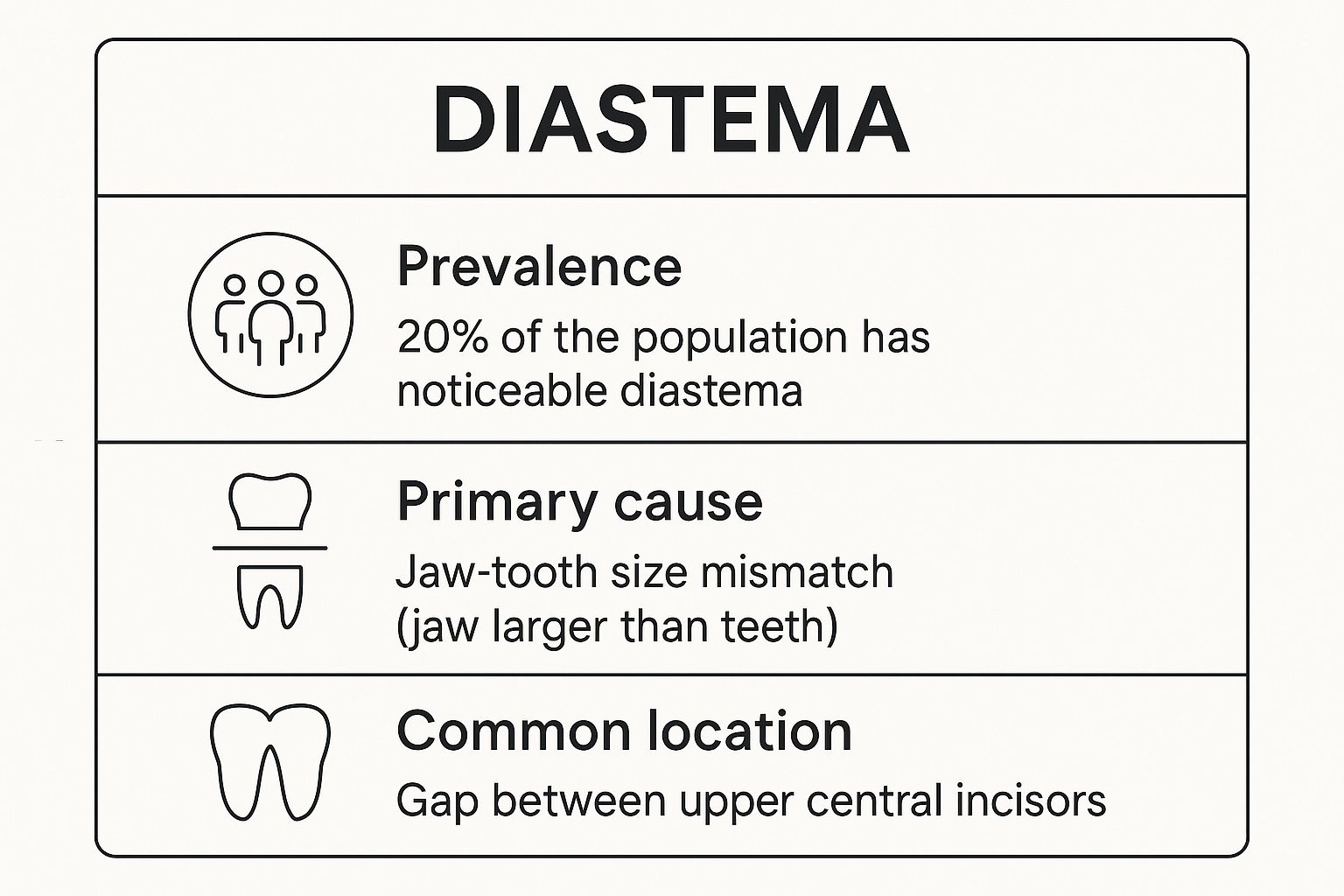
If a hereditary gap impacts your confidence or bite alignment, modern orthodontic solutions offer effective ways to correct it. At Kali Dental, we often recommend clear aligners for a discreet experience. Find out if clear aligners in Huntington Beach are the right solution for you.
2. Oversized Labial Frenum
Another key reason for a gap involves a small piece of tissue called the labial frenum. This tissue connects your upper lip to the gum line between your two upper front teeth. If this frenum is too large, it acts as a barrier, preventing the teeth from closing together.
This condition often becomes noticeable as permanent teeth come in. The oversized tissue can continually push the front teeth apart, creating or widening a diastema. For many families in Huntington Beach, identifying this issue early can prevent long-term problems.

A simple surgical procedure called a frenectomy can remove the excess tissue, often before or during orthodontic treatment. At Kali Dental, we can assess the frenum's role and coordinate the ideal treatment plan. Often, we use cosmetic solutions to perfect your smile afterward.
3. Missing or Undersized Teeth
Gaps in front teeth can also be caused by missing or irregularly sized teeth. This can occur when a tooth never develops, is lost to injury, or is naturally smaller than its neighbors (a condition called microdontia). The lateral incisors, next to your two front teeth, are most commonly affected.
When a tooth is missing or undersized, adjacent teeth begin to drift into the empty space. This shifting can create new gaps and affect your bite alignment. In an active community like Huntington Beach, understanding this cause is particularly relevant due to sports-related dental injuries.
At Kali Dental, we conduct a thorough evaluation to determine the best solution, whether it involves replacing the tooth or using orthodontics. If a tooth was lost, we can discuss restorative options like implants or bridges. Learn more about our approach to tooth extractions in Huntington Beach and planning for what comes next.
4. Tongue Thrusting and Oral Habits
Certain habits can also cause gaps in front teeth. Tongue thrusting, where the tongue pushes against the front teeth during swallowing, can gradually force them apart. This habit often develops in childhood and can persist into adulthood.
Similarly, prolonged habits like thumb-sucking or extended pacifier use can apply the same type of steady pressure. For parents in Huntington Beach, understanding how these habits affect dental development is key to preventing long-term alignment issues.
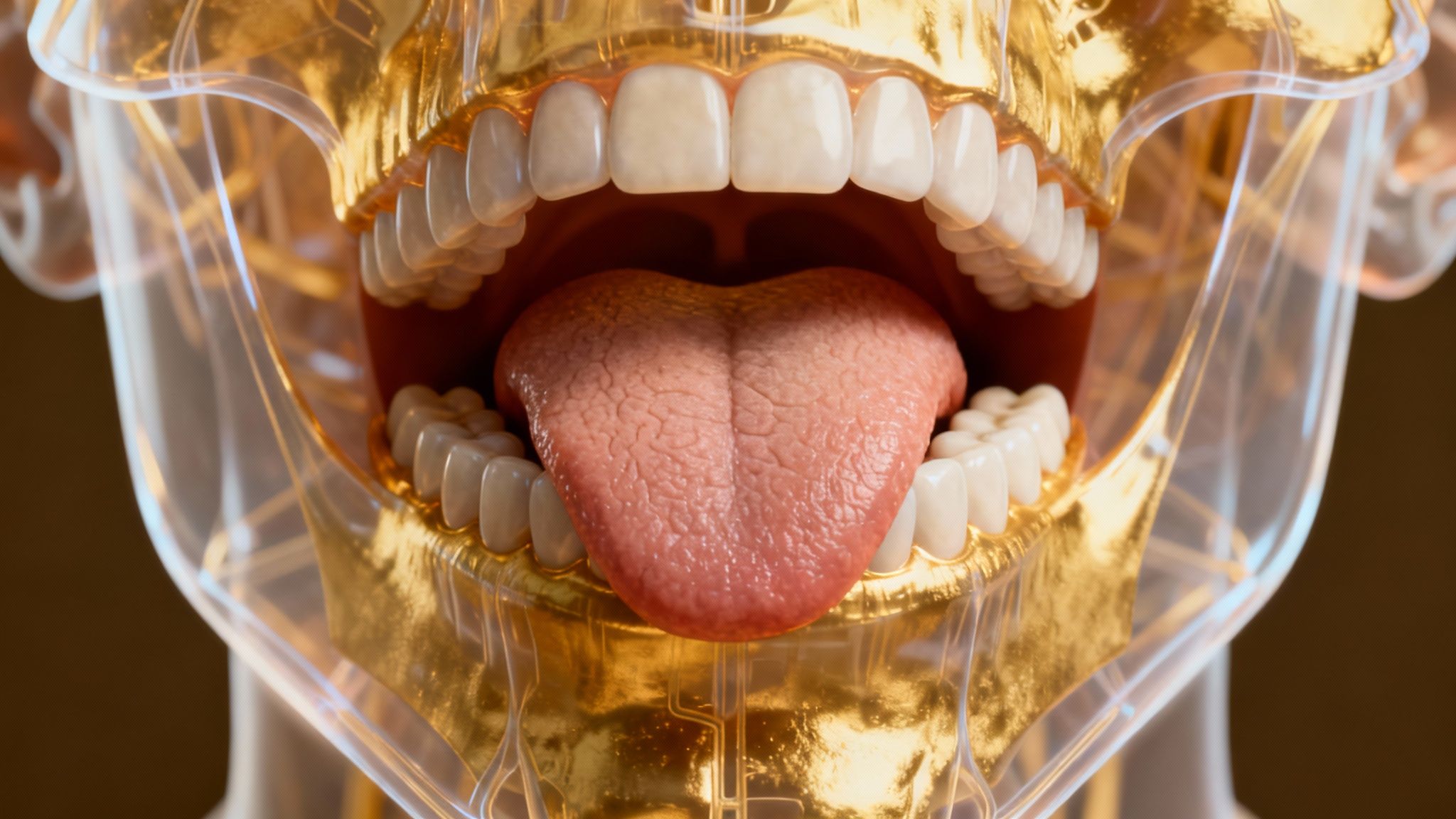
If these habits are the cause, simply closing the gap won't be a permanent fix. Correcting the behavior is the first step. Once the habit is managed, Dr. Kalvin Nguyen can recommend options like dental bonding for a quick and effective fix.
5. Gum Disease and Bone Loss
Periodontal (gum) disease can create new spaces between teeth, especially in adults. This serious bacterial infection attacks the gums and the underlying bone supporting your teeth. As the disease progresses, it causes bone loss, leading to loose teeth that shift and create gaps.
This condition is a major threat to your oral health. According to the CDC, nearly half of adults over 30 have some form of periodontal disease. Recognizing signs like bleeding gums is critical for early intervention.
Treating gum disease is the first priority before any cosmetic gap closure. Key steps include:
- Maintaining strict oral hygiene by brushing twice and flossing daily.
- Scheduling regular professional cleanings.
- Seeking immediate treatment if your gums bleed.
- Quitting smoking, as it dramatically increases your risk.
If you've noticed new gaps, it’s essential to address the underlying infection first. Learn more about our periodontal services in Huntington Beach and take the first step toward a healthier smile.
Why It’s Important to Address Tooth Gaps
While sometimes just a cosmetic concern, gaps between teeth can have a real impact on your well-being and oral health. Understanding these potential issues can help you decide if treatment is right for you.
- Self-Esteem and Confidence: Your smile is often the first thing people notice. A noticeable gap can make some people feel self-conscious, affecting their social interactions and overall confidence.
- Bite Alignment Issues: Gaps can allow other teeth to shift, leading to a misaligned bite (malocclusion). This can cause jaw pain, headaches, and uneven wear on your teeth.
- Speech Difficulties: The front teeth play a role in forming certain sounds. A diastema can sometimes lead to a lisp or other speech impediments.
- Oral Health Risks: Gaps can trap food particles, making them harder to clean and increasing the risk of plaque buildup, cavities, and gum disease.
Addressing a tooth gap isn't just about aesthetics; it's about restoring function, protecting your long-term oral health, and reclaiming your confidence.
Treatment Options: From Invisalign to Veneers
At Kali Dental, Dr. Kalvin tailors every treatment plan to the specific cause of your tooth gap. Depending on your needs, he may recommend one of several effective solutions.
Orthodontics (Clear Aligners or Braces)
For gaps caused by misaligned teeth or jaw structure, orthodontics is often the best solution. Clear aligners like Invisalign discreetly and gradually move your teeth into their proper positions, closing the gap for a permanent, healthy result.
Dental Bonding
Dental bonding is a fast and affordable cosmetic fix for small gaps. Dr. Kalvin applies a tooth-colored composite resin to the teeth on either side of the gap, sculpting it to close the space and create a seamless look. The entire process can often be completed in a single visit.
Porcelain Veneers
Veneers are thin shells of custom-made porcelain bonded to the front surface of your teeth. They are an excellent choice for closing gaps while also improving the color, shape, and size of your teeth for a complete smile makeover.
Personalized Care from Dr. Kalvin in Huntington Beach
The key takeaway is that no two smiles are alike, and therefore, no single solution fits everyone. Your unique situation requires a personalized approach. One patient may achieve incredible results with simple cosmetic bonding, while another might benefit from the comprehensive alignment provided by Invisalign.
By identifying the specific reason behind your diastema, Dr. Kalvin Nguyen can design a treatment plan for long-lasting success. This proactive approach not only enhances your smile’s aesthetics but also improves your overall bite function and oral hygiene. The journey to closing your gap begins with a clear diagnosis and a customized strategy.
Frequently Asked Questions About Gaps in Teeth
1. Is it bad to have a gap in your front teeth?
Not always. A gap is only a problem if it affects your bite, causes food to get stuck, or makes you feel self-conscious. If it doesn't bother you or cause health issues, treatment is a personal choice.
2. Can Invisalign fix a gap between front teeth?
Yes, Invisalign is a very effective and popular option for closing gaps. The clear aligners gradually shift your teeth into the correct position, providing a permanent solution for gaps caused by misalignment.
3. How long does it take to close a tooth gap?
The timeline varies depending on the treatment. Dental bonding can close a gap in one visit, while veneers may take a few weeks. Orthodontic treatment with clear aligners can take anywhere from a few months to over a year, depending on the gap's size.
4. Will a gap in my teeth get bigger over time?
It's possible. If the gap is caused by issues like gum disease, tongue thrusting, or shifting teeth, it can widen over time. It's best to have it evaluated by a dentist to understand the underlying cause.
5. What is the cheapest way to fix a gap in front teeth?
Dental bonding is typically the most affordable and quickest way to fix a small gap. However, the best treatment depends on the cause of your gap, so a consultation is needed to determine the most cost-effective long-term solution.
Your Personalized Path to a Gap-Free Smile in Huntington Beach
Ready to take the first step toward the confident, gap-free smile you deserve? At Kali Dental, we specialize in creating personalized treatment plans that address the unique causes of gaps in front teeth, from Invisalign to veneers. Schedule your consultation with Dr. Kalvin Nguyen today to explore your options right here in Huntington Beach.