
You've made a wonderful investment in your smile with veneers, and now the focus shifts to keeping them looking brilliant for years to come. The good news is that proper care isn't complicated. It's about building a few simple, mindful habits into your daily routine.
At Kali Dental, we want you to feel confident and empowered in maintaining your beautiful results. This guide will walk you through everything you need to know.
Protecting Your Investment in a Perfect Smile
Think of your new smile as a partnership between your daily habits and our professional guidance. While today's porcelain veneers are incredibly durable and stain-resistant, a consistent care routine ensures they stay stunning.
This is about more than aesthetics; it's about protecting the health of your natural teeth and gums underneath. They are the very foundation of your beautiful new smile.
The best approach breaks down into a few core areas:
- Gentle Daily Hygiene: Using the right tools and techniques is key to cleaning effectively without being abrasive.
- Smart Food and Drink Choices: Being mindful of what you eat can prevent accidental chips, cracks, or staining.
- Avoiding Harmful Habits: Protecting your veneers from things you might not realize are damaging, like grinding your teeth.
The longevity of your veneers hinges on following these guidelines. In fact, some market reports show that improper care can shorten a veneer's lifespan by nearly 40%.
Our team is always here to provide guidance on all aspects of cosmetic dentistry in Huntington Beach. We want to make sure you feel confident caring for your smile long after you leave our office.
Veneer Care At A Glance
For a quick reference, here’s a simple breakdown of the most important do's and don'ts for your daily and long-term veneer care.
| Care Aspect | Best Practice (Do) | What to Avoid (Don't) |
|---|---|---|
| Brushing | Use a soft-bristled toothbrush and non-abrasive gel toothpaste twice a day. | Avoid whitening or abrasive toothpastes with harsh particles. |
| Flossing | Floss daily, gently gliding the floss between teeth and along the gumline. | Don't snap floss against the gumline or the edge of the veneer. |
| Diet | Enjoy a balanced diet. Cut hard foods into smaller pieces. | Don't bite into very hard foods (ice, nuts, hard candy) or use teeth as tools. |
| Drinks | Rinse with water after consuming staining drinks like coffee, tea, or red wine. | Avoid excessive consumption of staining or highly acidic beverages. |
| Habits | Wear a nightguard if you grind your teeth. | Don't chew on pens, nails, or other hard objects. |
| Checkups | See your dentist for regular checkups and professional cleanings every 6 months. | Don't skip your routine dental appointments. |
Following these simple rules is the best way to ensure your smile stays healthy and beautiful for a long, long time.
Your Daily Veneer Care Playbook
Let's build a daily routine that truly protects your veneers. It all starts with having the right tools for the job. We always tell our patients to use a soft-bristled toothbrush to avoid creating tiny scratches on the porcelain surface.
Pair that with a non-abrasive, fluoride toothpaste. This combination cleans effectively while strengthening the natural tooth structure supporting your veneer from behind.
When you're brushing, remember that technique is everything. Use gentle, circular motions and focus on the gum line where the veneer meets your tooth. That little seam is where plaque loves to hide.
Mastering Your Flossing Technique
When it comes to flossing, the goal is to be thorough but gentle. Instead of snapping the floss down, guide it carefully between your teeth. Hug the side of each tooth in a 'C' shape, sliding it up and down along the tooth surface and just below the gum line.
Many of our patients in Huntington Beach also find a water flosser to be a game-changer. It’s a fantastic, low-impact tool for flushing out debris without putting direct pressure on the veneers.
Dr. Nguyen's Insight: "The single most common issue we see with veneer longevity is related to gum health. Neglecting the area where the veneer meets the gum can lead to inflammation and recession, compromising the entire restoration. Gentle, consistent cleaning right at that margin is non-negotiable."
The image below shows that perfect 'C' shape flossing technique, which is so important for cleaning around veneers without causing any harm.
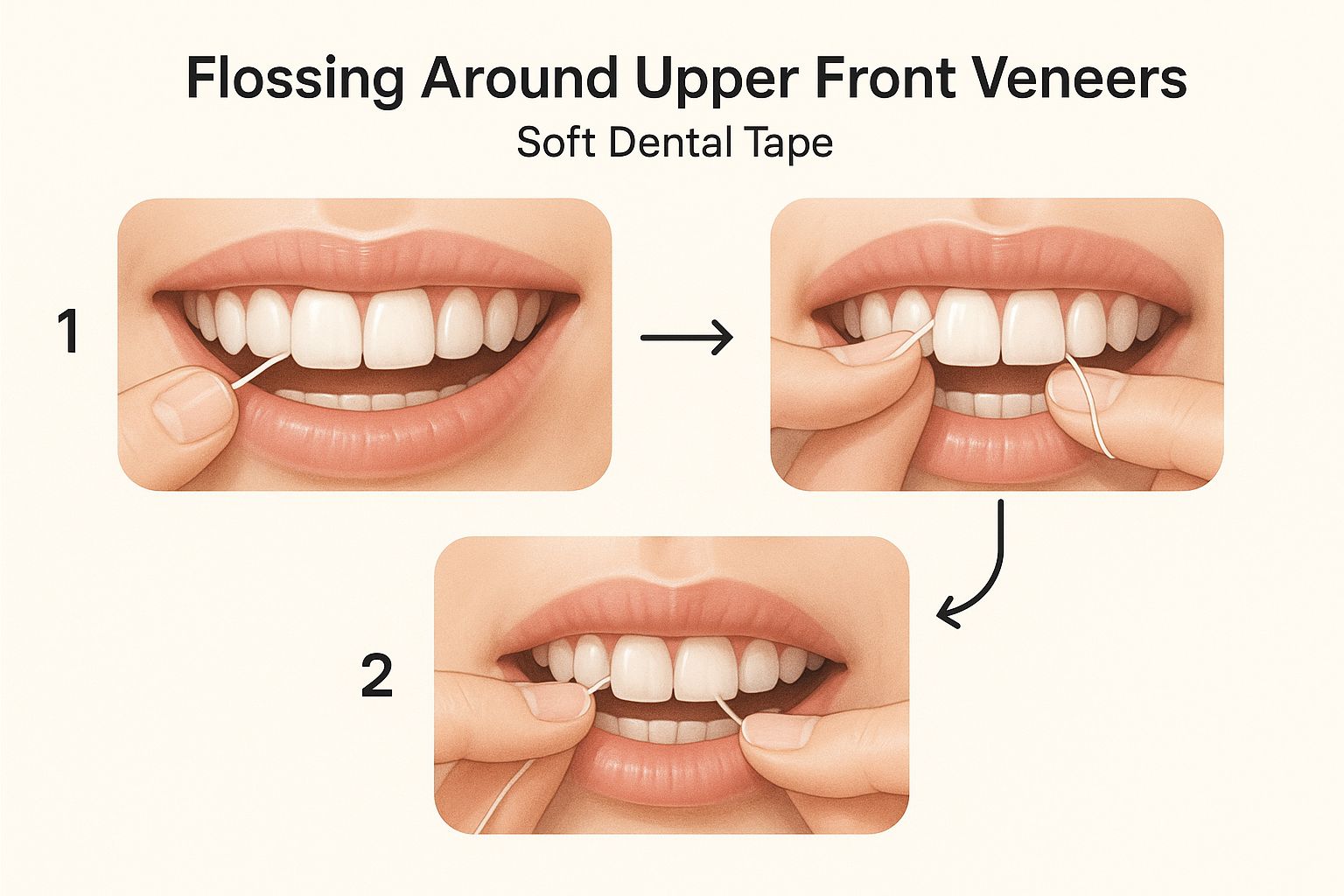
Here’s a quick rundown of the ideal toolkit for your daily veneer care:
- Soft-Bristled Toothbrush: Prevents surface scratching and won't irritate your gums.
- Non-Abrasive Fluoride Toothpaste: Cleans safely and strengthens the underlying tooth.
- Gentle Dental Floss or Tape: Slides easily between teeth to remove plaque without force.
- Water Flosser (Optional): Gives your gumline a powerful yet gentle clean.
Eating and Drinking with Veneers

So, you've invested in your smile—now what can you eat? You don't need a restrictive diet. It’s about being mindful of a few things to keep your veneers looking fantastic.
Porcelain veneers are incredibly strong, but they aren't indestructible. Hard or excessively chewy foods can create enough force to chip the delicate porcelain. Think of sticky caramels that could potentially tug at a veneer and weaken its bond.
Foods and Habits to Be Mindful Of
Small adjustments to your eating habits can make a huge difference. Instead of biting straight into something tough, cut it into smaller, more manageable pieces.
A few things to watch out for:
- Hard Foods: Biting into ice cubes, hard candies, nuts, or very crusty bread is a no-go.
- Sticky Foods: Be careful with gummy candies that stick to your teeth and put stress on the veneer's bond.
- Tough Meats: Cut steak or jerky into bite-sized pieces instead of tearing with your front teeth.
A simple rule we share with our Huntington Beach patients is this: If you think something might damage a natural tooth, be careful with it around your veneers.
Managing Staining Drinks and Foods
One of the best things about porcelain is how stain-resistant it is. However, the bonding agent used to attach the veneer can pick up stains over time, especially along the edges.
This is why it's smart to be aware of the usual suspects when it comes to staining. Following this advice is a key reason why over 90% of patients keep their veneers looking pristine for more than 10 years, according to some reports. Learn more about long-term veneer success.
Here’s an easy tip: rinse your mouth with water right after you have things like:
- Coffee and tea
- Red wine
- Dark sodas
- Berries or soy sauce
That quick swish of water dramatically reduces the risk of stains creeping in around the margins of your veneers.
Avoiding Habits That Can Harm Your Veneers
Beyond what you eat and how you clean them, some common habits can put your new veneers at risk. We see it all the time—seemingly harmless actions that cause damage.
One of the biggest culprits is bruxism, the clinical term for grinding or clenching your teeth. Many people do it during sleep and don't even realize it. That intense pressure can eventually lead to tiny cracks or fractures in the porcelain.
The single best defense is a custom-fitted nightguard. It acts as a protective cushion between your teeth, absorbing the force. It's a simple step that can save you money and headaches down the line.
Everyday Actions That Cause Damage
We also have to talk about using your teeth as tools. It’s a surprisingly common habit, but your veneers aren't built for that kind of stress.
You'd be amazed at what can cause a chip. We're talking about things like:
- Opening Packages: Ripping open a bag of chips or a plastic wrapper with your teeth is a definite no-go.
- Biting Objects: Chewing on pen caps, ice cubes, or fingernails creates pressure points that can damage porcelain.
- Holding Items: Using your teeth to hold pins or nails while your hands are busy is another recipe for disaster.
These actions create forces your veneers were never meant to handle. Some research suggests that around 20% of veneer failures are caused by this kind of mechanical trauma. Using a nightguard for grinding can be a game-changer, with some studies showing it can cut the risk of veneer cracks by about 50%, according to some veneer market trends and data.
The bottom line is simple: your teeth are for chewing food, not for acting as a pair of scissors or pliers. Being mindful of these small habits is a huge part of making your veneers last.
For our active patients here in Huntington Beach, a professionally made sports mouthguard is essential. If you play contact sports, it’s a non-negotiable piece of gear to shield your veneers from impact. To understand more about how oral health connects to your overall well-being, check out our guide on the surprising health impacts of oral care.
Why Regular Professional Checkups Are Essential
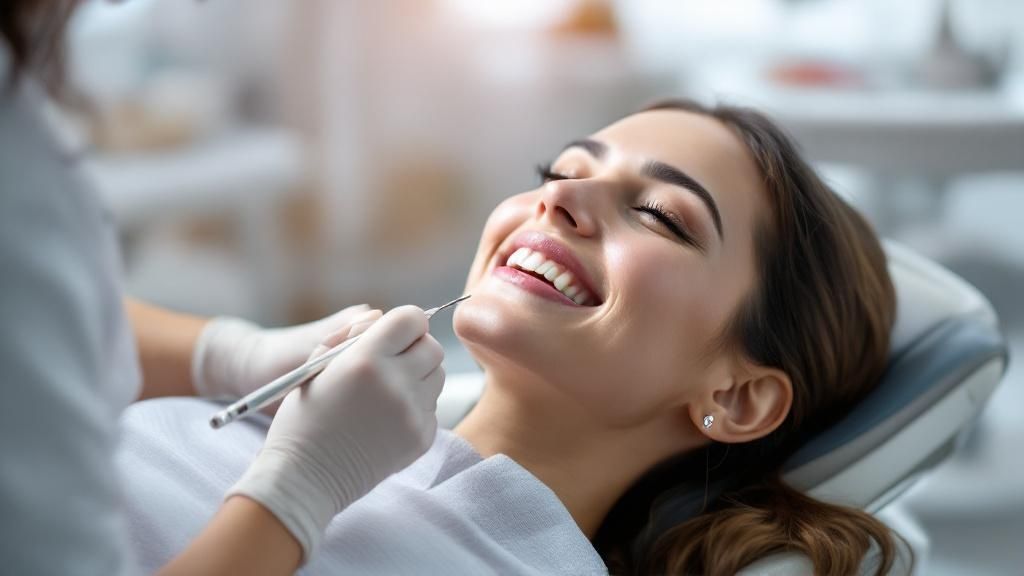
Your at-home care is the foundation for keeping your veneers looking brilliant, but it's only half the equation. To truly protect your investment, nothing replaces the trained eye and specialized tools of a professional.
We strongly recommend a checkup every six months. These visits are more than a standard cleaning. We meticulously inspect each veneer, paying close attention to the margins where the porcelain meets your natural tooth.
Specialized Care for Your Veneers
The health of your gums is just as important as the veneers themselves. During your appointment, we'll assess your gums and use specific tools and techniques designed to protect your smile's flawless finish.
Here's what that involves:
- Non-Abrasive Polishing Paste: We use a professional-grade paste formulated for porcelain. It gently lifts surface stains without scratching or dulling the shine.
- Gentle Instruments: Our team is trained to use instruments that effectively clear away plaque and tartar without risking damage to the veneer's surface or bond.
At Kali Dental, we see these appointments as a proactive partnership. Our goal is to catch potential issues long before they become problems, ensuring your smile stays perfect for years.
These regular visits are the best way to keep your smile looking and feeling its best. Learn more or schedule your next appointment on our dental cleanings and exams in Huntington Beach page.
Your Partner in Lifelong Smile Care
Knowing how to care for veneers comes down to simple, consistent habits. It’s a combination of gentle daily hygiene, smart food choices, and regular check-ins with your dentist.
At Kali Dental, we see ourselves as your lifelong partner in keeping your smile healthy and beautiful. Your success is our success, and we take that responsibility seriously. Our team is always here to offer the expert, compassionate guidance you deserve.
Your veneers are a significant investment in your confidence. Our job is to help you protect that investment with personalized advice and the best care possible.
Whether you're considering veneers or have questions about existing ones, our Huntington Beach team is ready to help. We believe world-class dental services should be accessible, which is why we provide resources on Huntington Beach affordable dental care.
Give us a call today to schedule a consultation. Let's work together to keep your smile shining its absolute brightest.
Frequently Asked Questions About Veneer Care
1. Can I still get cavities with veneers?
Yes, absolutely. A veneer only covers the front surface of your tooth, so the back and sides are still vulnerable to decay. This is why daily brushing and flossing, especially along the gum line where the veneer meets the tooth, are so critical.
2. What should I do if my veneer chips or falls off?
First, don't panic. If possible, find the piece and store it in a small, safe container. Call our Huntington Beach office right away to schedule an appointment. It's very important not to try fixing it yourself with household glue, as this can damage your tooth and the veneer.
3. Are whitening toothpastes safe for veneers?
We recommend avoiding most whitening toothpastes. They often contain abrasive ingredients that can create tiny scratches on the porcelain surface, causing them to look dull over time. A non-abrasive fluoride toothpaste is all you need to keep them clean and bright.
4. How long do porcelain veneers typically last?
With proper daily care and regular professional checkups, high-quality porcelain veneers can last for 15 years or even longer. Their longevity truly depends on your commitment to maintaining them. Consistent habits make all the difference.
5. Can I drink coffee or red wine with veneers?
Yes, you can still enjoy these beverages. High-quality porcelain is very stain-resistant. However, the bonding material at the edge of the veneer can stain over time, so it's a great habit to rinse your mouth with water after consuming staining drinks to minimize contact.