
Quick Answer
Dental exams are routine visits that check your teeth, gums, bite, and oral tissues so small problems can be found early, before they become painful or harder to treat. A modern exam usually includes a conversation, digital imaging if needed, a clinical check, and a cleaning. If you're worried about discomfort, this guide on whether cleanings and exams are supposed to hurt can help.
If you're wondering whether it's time to come in, you're not alone. A lot of people put off dental exams because they feel busy, unsure what will happen, or nervous about being judged if it's been a while.
Knowing what to expect usually takes a lot of the stress out of the visit. That matters, especially because the share of U.S. adults who had a dental visit in the past year declined from 65.5% to 62.7% between 2019 and 2020, according to the CDC National Health Interview Survey summary. Routine care is easier to keep up with when the process feels clear, predictable, and comfortable. If you'd like a broader look at prevention, this overview of preventive dentistry in Huntington Beach is a good place to start.
What Happens During a Comprehensive Dental Exam
Most standard dental exams follow the same basic flow. That consistency helps. When patients know what comes first, what each tool does, and when they can ask questions, the visit feels much more manageable.

The visit starts with a conversation
The first part is simple. We review your health history, medications, past dental treatment, and anything you've noticed lately, such as sensitivity, bleeding gums, jaw tension, or a spot that doesn't feel right.
This matters more than people expect. A good exam isn't just a look at teeth. It connects what you're feeling with what we can see clinically.
Practical rule: If something has changed in your mouth, even if it seems minor, mention it early. Small details often help explain bigger patterns.
The clinical exam checks more than cavities
Next comes the actual exam. Dr. Kalvin checks the teeth for decay, cracks, worn areas, older fillings that may be breaking down, and signs that you're grinding or clenching.
The gums are checked too. Healthy teeth still need healthy support, so we look for inflammation, pocketing, buildup along the gumline, and areas that are hard to keep clean at home.
An oral cancer screening is also part of a complete exam. That means looking at the soft tissues of the mouth and surrounding areas for anything unusual.
Digital X-rays and imaging help us see what eyes can't
A visual exam only shows part of the picture. Digital X-rays let us see between teeth, under existing restorations, and around roots and bone levels.
Patients often feel better once they see how this works. Images appear quickly, and they make the conversation more transparent because we can point to exactly what we're watching over or what needs attention. If you're curious about the tools used in modern, gentle dentistry, this look at digital X-rays and other technologies used at Kali Dental gives a clear overview.
The cleaning removes what brushing can't
If your visit includes a routine cleaning, the hygienist removes plaque and tartar from areas a toothbrush and floss can't fully handle once deposits have hardened. Teeth are then polished, and home care tips may be adjusted based on what we found.
That part shouldn't feel mysterious. If a certain area is tender, we work around it carefully and explain what we're doing.
A complete exam usually ends with a plain-language summary:
- What looks healthy
- What needs monitoring
- What should be treated sooner
- What you can do at home between visits
A good dental exam should leave you better informed, not more confused.
The Real Benefits of Regular Dental Checkups
People often think of checkups as something you do only when you're trying to avoid cavities. This benefit is broader than that. Regular visits let us spot changes while they're still manageable and help you avoid the cycle of waiting until something hurts.
Early detection changes the kind of treatment you need
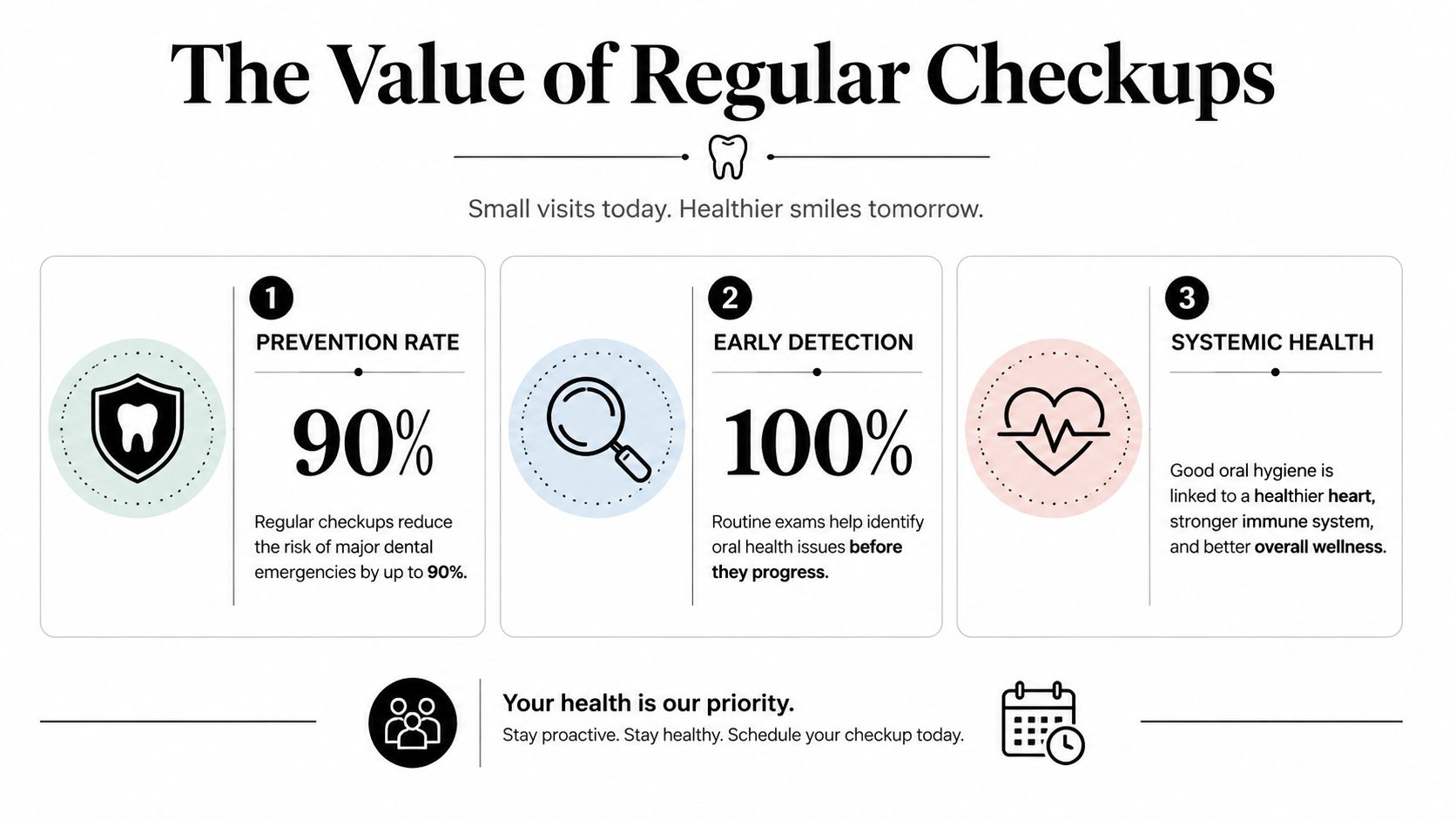
A small area of decay is usually easier to address than a tooth that has been hurting for weeks. The same is true for gum inflammation, worn fillings, and cracks that are still limited to the outer structure of the tooth.
That preventive value matters because untreated cavities affect about 25% of U.S. adults, according to this dental care continuing education review. Dental exams are built to catch those issues before they turn into larger restorative problems.
Professional cleanings help where home care stalls
Even patients with solid brushing habits miss certain areas. Back molars, crowded teeth, old dental work, and the gumline tend to collect buildup over time.
Professional cleaning helps reset things. It gives the gums a better chance to stay calm and gives you a clearer baseline at home.
Skipping preventive visits doesn't make dental needs disappear. It usually just makes them less predictable.
Checkups lower the chance of surprise problems
Busy schedules often make it difficult to accommodate dental interruptions to work, school, travel, or family time. Routine visits reduce the odds that a quiet issue becomes a sudden broken tooth, swelling, or pain that forces an urgent appointment.
That's one reason I encourage patients to think of exams as maintenance, not as a reaction to symptoms. This article on the real cost of not going to the dentist explains that trade-off well.
The benefit is also peace of mind
A lot of stress comes from not knowing. If you've had sensitivity before, old fillings for years, or a history of gum treatment, a regular checkup gives you a current answer instead of ongoing uncertainty.
Patients usually feel most at ease when they leave with a simple plan:
| What regular checkups help with | Why it matters |
|---|---|
| Finding problems early | Smaller issues are often simpler to treat |
| Monitoring old dental work | Fillings and crowns need periodic review |
| Keeping gums healthier | Gum changes are easier to manage early |
| Reducing emergency visits | Fewer surprises means less disruption |
How Often Should You Get Dental Exams
Generally, patients benefit from scheduling dental exams every six months. This frequency serves as a standard rhythm because it provides sufficient time to monitor changes without allowing too much to go unnoticed.
Some patients need a different schedule. The right interval depends on age, cavity history, gum health, dry mouth, medications, and whether you already have fillings, crowns, bridges, or dentures that need monitoring.
For children
Children benefit from steady routine visits because teeth are developing, habits are still forming, and small concerns can change quickly. Exams also help kids get comfortable with the dental setting before they ever need more involved treatment.
For many families, consistency matters as much as timing. When a child knows what a visit looks like, the office feels familiar instead of stressful.
For most adults
For healthy adults with stable gums and no active concerns, every six months is a practical schedule. It gives enough structure for prevention without making care feel burdensome.
If you tend to clench, get frequent buildup, or have several older restorations, Dr. Kalvin may want to see you on a different timeline. That isn't a one-size-fits-all rule. It's based on what your mouth is doing.
For seniors and patients with higher needs
Seniors often benefit from closer monitoring because medications can affect saliva, existing dental work may need maintenance, and gum recession can expose areas that are easier to wear or decay.
Patients with a history of periodontal treatment or repeated restorative issues may also need more frequent follow-up. In those cases, waiting too long between visits usually makes care less comfortable and less efficient.
Here is the simplest way to view the situation:
| Patient Group | Recommended Frequency |
|---|---|
| Children | Usually every six months, unless a different schedule is recommended |
| Most adults | Usually every six months |
| Seniors | Often every six months, sometimes more often based on health history and existing dental work |
| Patients with gum concerns or higher risk | As recommended by the dentist based on active findings |
One thing that often reassures new patients is seeing the exam instead of just hearing about it. Intraoral cameras can show a cracked edge, worn filling, or inflamed area on a screen in real time. Digital X-rays help the same way. You aren't being asked to guess. You're being shown what Dr. Kalvin sees.
Your Dental Exam at Kali Dental A Modern, Gentle Approach
A modern dental exam should feel less like something being done to you and more like a conversation you can follow. That starts with comfort, but it also depends on transparency. If you understand what we're checking and why, the visit usually feels much easier.
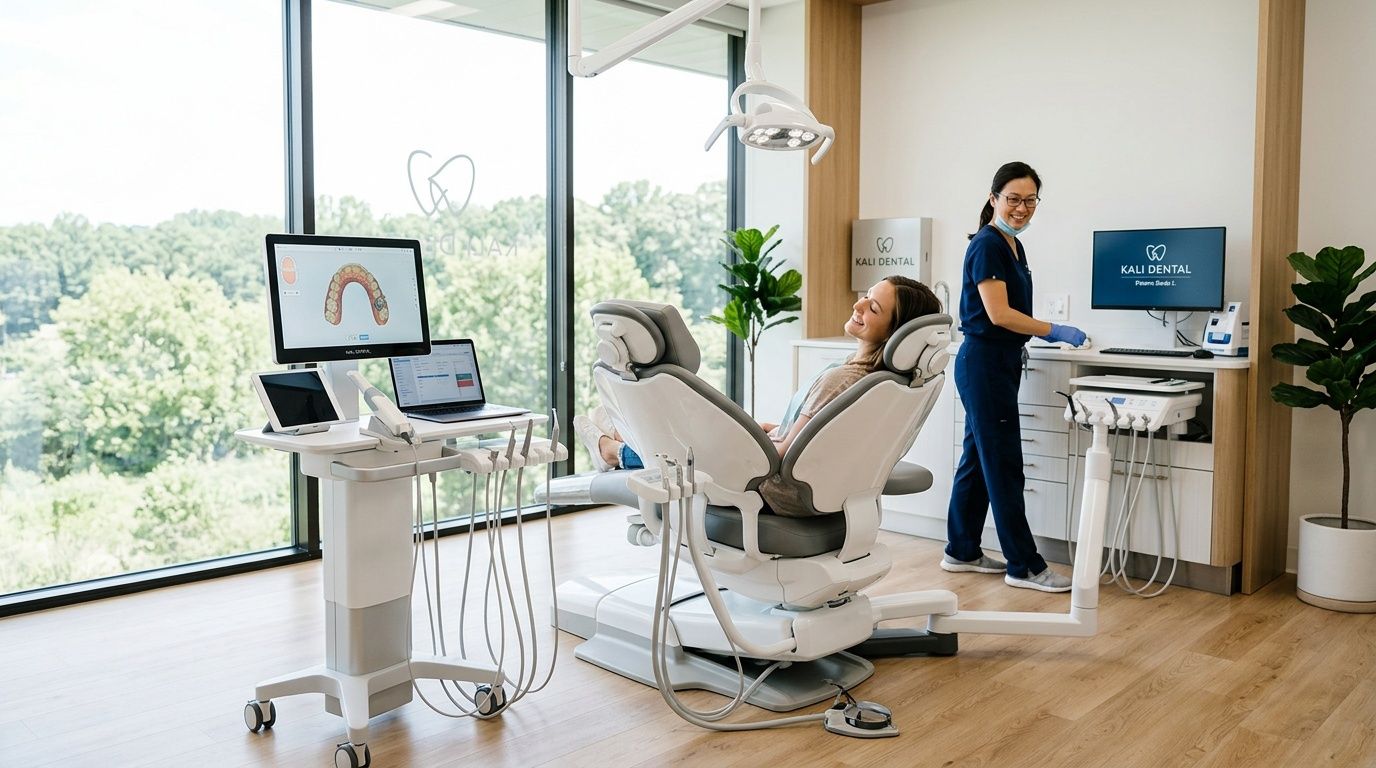
Technology should reduce confusion, not add to it
Digital X-rays are useful because they let us evaluate areas that can't be seen directly. CBCT may be recommended in specific situations when a more detailed three-dimensional view is needed for diagnosis or treatment planning.
Intraoral cameras help in a different way. They let patients see a close-up view of a worn edge, stained groove, or broken filling, which makes recommendations feel more concrete and less abstract.
Gentle care depends on pacing
One of the biggest differences in a comfort-first visit is pace. Some people want to know every step before it happens. Others prefer shorter explanations and more breaks.
Both are fine. What doesn't work is rushing an anxious patient through a visit just because the steps are routine to the team.
What helps most: clear explanations, permission to pause, and a plan that matches the patient's comfort level.
The approach changes by patient, not just by appointment type
Children usually need a slower introduction and simpler language. Adults who haven't been seen in years often need reassurance that the visit is about information, not criticism. Seniors may need extra attention to dry mouth, gum recession, chewing comfort, or older restorations.
That personalized dental experience is part of modern, gentle dentistry. The same exam has to be adaptable if it's going to work well for different people.
For example:
- For nervous patients: We explain tools before using them and keep the visit predictable.
- For busy adults: Digital diagnostics can make the conversation more direct because images are available right away.
- For families: One office that handles children, parents, and grandparents makes scheduling and continuity much easier.
When care feels collaborative, patients ask better questions. That usually leads to better decisions.
Special Considerations for Every Member of the Family
Dental exams aren't the same experience for every patient, and they shouldn't be. A child coming in for a first checkup, an adult who feels embarrassed about the gap since the last visit, and a senior with several older restorations all need something a little different.
For anxious patients
Fear is more common than people think. As many as 36 million Americans avoid dental care because of fear and anxiety, according to the ADA Health Policy Institute overview of dental anxiety.
That means the right approach matters. Judgment doesn't help. Fast talk doesn't help. What usually works is a calm explanation, clear consent before each step, and a team that pays attention to body language.
A few practical adjustments can make a big difference:
- Start with the easiest part: Sometimes the first visit should focus on exam and imaging, then cleaning or treatment follows once trust is built.
- Use visual tools: Intraoral photos and on-screen X-rays reduce the feeling that things are happening behind the scenes.
- Agree on stop signals: Patients relax more when they know they can pause.
If you're comparing offices, patient feedback can tell you a lot about how people are treated. This guide to reputation management for dentists is useful because it explains how reviews reflect communication, trust, and real patient experience.
For children
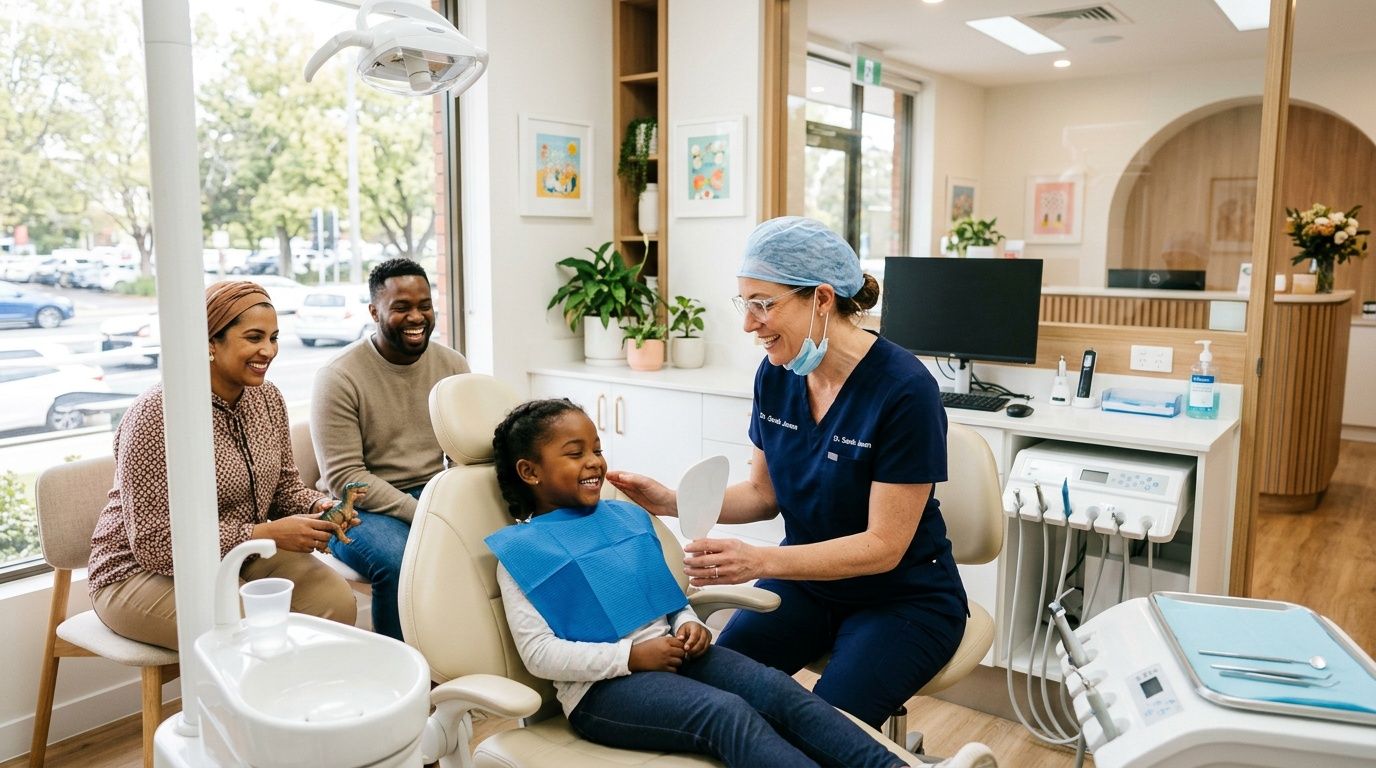
Kids usually do best when the visit feels predictable and age-appropriate. We keep the language simple, show instruments before using them when helpful, and move step by step.
The goal isn't just to finish the appointment. The goal is to make the next one easier too. A positive early experience can shape how a child feels about dental care for years.
For seniors
Seniors often bring a more complex dental history. Existing bridges, dentures, fillings, crowns, gum changes, or dry mouth can all affect what we watch closely during an exam.
Comfort matters here too. Some patients need shorter appointments, a gentler approach around sensitive areas, or extra time discussing how changes in health or medication may be affecting the mouth.
If an exam feels tailored to your situation, you're more likely to keep up with care. That's the part that protects long-term oral health.
When the visit is urgent instead of routine
Emergency exams are different from routine checkups, but the same calm approach still applies. If you're in pain, have a broken tooth, swelling, or something that suddenly changed, the first step is identifying the source and helping you get comfortable enough to make a clear plan.
In those visits, the focus is immediate diagnosis and next steps. Once the urgent issue is under control, we can talk about the broader preventive picture.
Frequently Asked Questions About Dental Exams
Will a dental exam hurt if I've been avoiding the dentist?
Usually, no. The exam itself is primarily a careful evaluation, and modern, gentle dentistry is designed to keep the visit as comfortable as possible. If an area is tender, tell the team right away so the pace and technique can be adjusted.
What if it's been years since my last checkup?
You can still come in without feeling embarrassed. The visit starts with finding out where things stand now, not with judging how long it's been. In many cases, the first appointment is about gathering information and making a realistic plan.
Do I always need X-rays at a dental exam?
Not always in the same way, but imaging is often an important part of a complete evaluation. X-rays help us see between teeth, under restorations, and around roots and bone where a visual exam can't reach. Dr. Kalvin recommends them based on your history, symptoms, and what needs to be checked.
How long does a dental exam appointment take?
That depends on whether you're a new patient, whether you also need a cleaning, and whether updated imaging is needed. A first visit is usually longer than a routine recall visit because there is more to review and document. If you call ahead, the team can tell you what to expect for your appointment type.
Are dental exams covered by insurance?
Coverage depends on your specific dental plan. Many plans include preventive visits, but the details can vary based on frequency, imaging allowances, and whether additional treatment is needed. The easiest way to get clear answers is to call the office and have the team review your benefits with you.
How much do dental exams cost without insurance?
The exact cost depends on whether the visit is a routine exam, a new patient appointment, or a problem-focused evaluation that needs additional diagnostics. Because every case is different, it's best to call for current fees and payment details. That way, you know what the appointment includes before you come in.
What should I do before my exam?
Brush your teeth as you normally would and bring a list of medications, insurance information if you have it, and any questions you want answered. If something has been bothering you, even off and on, make a note of when it happens and what it feels like. That helps us evaluate it more accurately.
Can my child and I come in on the same day?
In many family practices, yes, depending on scheduling availability. This can make routine care much easier for parents who are balancing work, school, and activities. If you'd like grouped appointments, mention that when you call so the team can look for the best times.
Schedule Your Next Dental Exam in Huntington Beach
If you've been putting off dental exams because you weren't sure what to expect, the next step can be simple. A clear, comfortable checkup gives you current information, a chance to ask questions, and a practical plan for keeping your mouth healthy.
For patients in Huntington Beach and nearby Orange County communities, Dr. Kalvin provides family-friendly dental care with an emphasis on communication, comfort, and modern diagnostics. If you'd like to learn more about preventive dental care near you in Huntington Beach, that's a helpful next read.
You can call (657) 800-5254, visit 19201 Brookhurst Street, Suite 103, Huntington Beach, CA, or go to kalidental.com. Office hours are Monday through Friday 9:00 AM to 6:00 PM and Saturday 8:00 AM to 2:00 PM.
If you're ready to schedule a dental exam or just want to ask a few questions first, Kali Dental welcomes you to reach out. Dr. Kalvin and the team offer comfort-first care for children, adults, and seniors in Huntington Beach, with a personalized dental experience built around clear answers and stress-free visits.