
Have you ever had a persistent toothache that seemed to radiate down into your neck? You’re not imagining it. A severe toothache can absolutely cause neck pain, and it’s a sign you shouldn’t ignore.
Your body’s nerve network is incredibly complex. A problem in one area, like an infected tooth, can easily trigger a warning signal somewhere else.
How Does a Toothache Turn Into Neck Pain?
When a tooth is hurting, the pain rarely stays in one spot. Your mouth, jaw, and neck are all intricately connected by a web of nerves, muscles, and tissues. This setup means pain signals can travel far from the original source.
This can happen in a few key ways:
- A Spreading Infection: An infection from a dental abscess can cause inflammation and swollen lymph nodes in your neck.
- Referred Pain: Your brain can get its wires crossed from the intense signals of an infected tooth. It may misinterpret the pain’s location, making you feel it in your neck instead.
- Muscle Tension: You might instinctively clench your jaw to guard against the sore tooth, which strains the muscles connecting your jaw to your neck and shoulders.
This helpful chart breaks down how pain can travel from a tooth, through the trigeminal nerve, and end up causing that nagging discomfort in your neck.
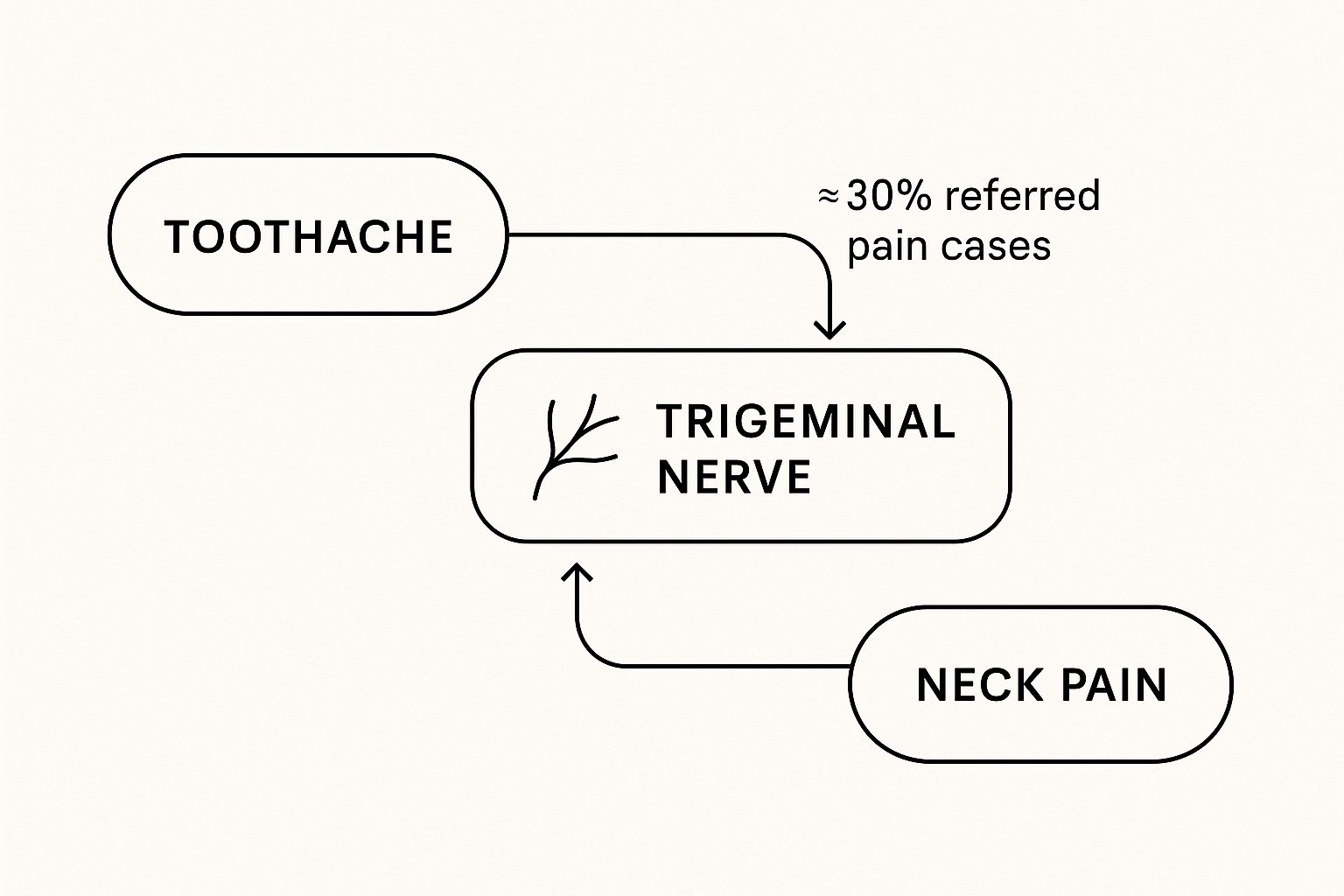
As you can see, the trigeminal nerve is a major highway for these pain signals, creating a direct link between your tooth and your neck. This is surprisingly common. In fact, some studies show that about 90% of patients showing up at emergency clinics for dental pain also report that the pain is radiating to their head and neck.
To help you pinpoint what might be going on, here’s a quick summary of the main culprits.
How a Toothache Triggers Neck Pain
| Connection Type | How It Works | What You Might Feel |
|---|---|---|
| Spreading Infection | A dental abscess leaks bacteria into surrounding tissues. | Swollen, tender lymph nodes on the side of your neck; feeling unwell. |
| Referred Pain | Your brain misinterprets pain signals from the tooth. | A dull, aching pain in your neck that has no obvious cause. |
| Muscle Tension | You unconsciously clench or grind your teeth to cope with the pain. | Stiffness, soreness, or knots in the muscles of your neck and shoulders. |
This connection highlights why you should never ignore a persistent toothache. When you have a severe toothache combined with neck swelling, it’s a big deal. It’s important to understand what’s considered a severe dental emergency so you can get the right care, right away.
How a Dental Infection Travels to Your Neck
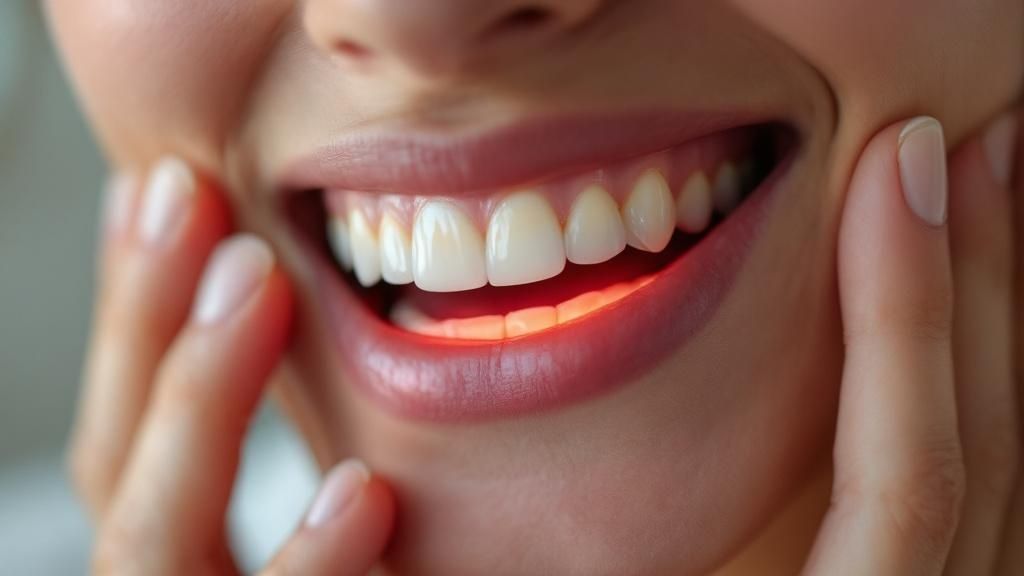
It might start as a simple toothache, but an untreated dental problem can quickly spiral into something much more serious. The trouble usually begins with a dental abscess—a pocket of pus that forms at the root of a tooth due to a bacterial infection.
As the bacteria multiply, they build up pressure and start looking for an escape route. The infection can work its way from the tooth’s root into the surrounding jawbone. Once it breaks through, it can move into the soft tissues of your neck and the floor of your mouth.
Experiencing tooth pain that’s spreading to your neck? That could be a dental emergency. Call Kali Dental today: (657) 800-5254
Your Body’s Alarm System: Swollen Lymph Nodes
As the infection spreads, your body’s defense system kicks into high gear. The lymph nodes in your neck, which are small glands that filter your immune system, jump into action to fight the invading bacteria.
This immune response causes the lymph nodes to swell and become tender to the touch. It’s a classic sign that your body is battling a significant infection and creates a direct, physical link between that nagging toothache and the new pain in your neck.
Dr. Nguyen’s Insight: A swollen, tender spot under your jawline is often one of the first physical signs that a dental infection is no longer contained to just your tooth. Ignoring this can lead to more severe complications.
Recognizing the warning signs of a spreading infection is critical for your health. If you notice any of the following symptoms along with your toothache and neck pain, it’s time to seek immediate dental care.
- Fever and Chills: This means your body is fighting a systemic infection, not just a local one.
- Difficulty Swallowing or Breathing: Swelling in the neck can obstruct your airway, which is a medical emergency.
- Visible Swelling: You might notice obvious swelling in your cheek, jaw, or neck area.
- A Foul Taste in Your Mouth: This is often caused by the abscess draining pus into your mouth.
These symptoms are serious and signal that what started as a tooth problem is now a widespread health risk. Understanding these signs is a key part of our ultimate guide to dental emergencies, because acting fast is essential. For our patients in Huntington Beach, a prompt evaluation at Kali Dental can stop a dangerous situation from getting worse.
Understanding Referred Pain from Shared Nerves
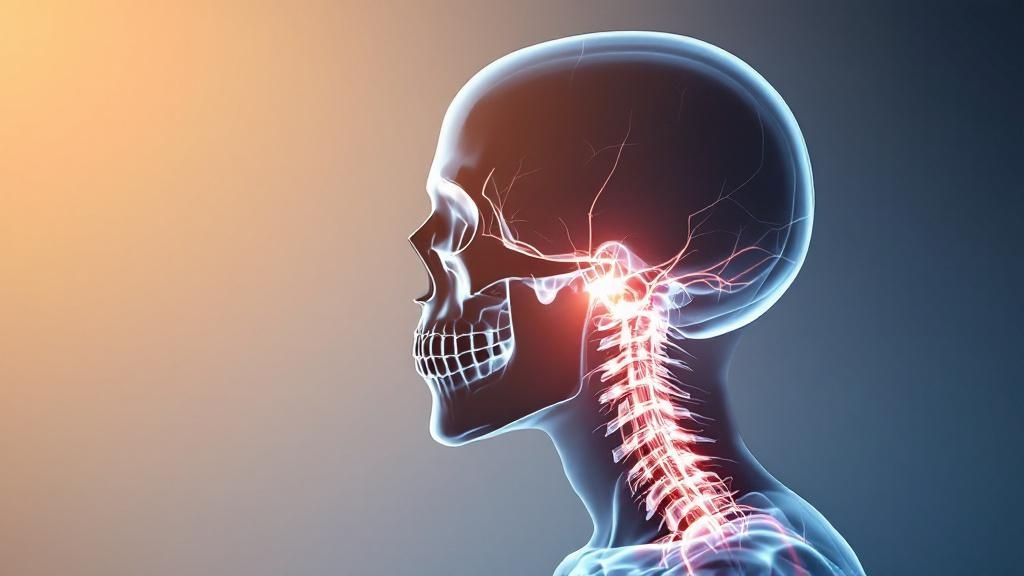
Have you ever felt a nagging ache in your neck, only to discover the real culprit is a throbbing tooth? This phenomenon is called referred pain, and it’s a perfect example of how interconnected our bodies are. It all comes down to your brain getting its wires crossed.
Imagine your nervous system as a highway network. The trigeminal nerve is a superhighway connecting your face, teeth, jaw, and even the muscles in your neck. When an issue like a deep cavity or abscess flares up, it sends a flood of intense distress signals down this highway.
Why Your Brain Gets Confused
This sudden rush of pain signals creates a massive “traffic jam” on the trigeminal nerve. Your brain, working to make sense of the chaos, struggles to pinpoint where the problem started. It might misinterpret the signal as originating from another area served by that same nerve—like your neck, ear, or temple.
This connection isn’t just a one-way street. A clinical investigation found that 37.1% of patients with a specific nerve condition in the back of their head also felt pain in their teeth (study on orofacial pain referral).
Dr. Nguyen’s Insight: The pain you feel in your neck is 100% real, even if the source is your tooth. It’s a legitimate physiological response to scrambled nerve signals—not something you’re just imagining.
Understanding this is critical because it highlights why you can’t just treat the symptoms. Massaging your neck won’t help if the root cause is a dental emergency. It’s crucial to recognize the 7 signs you need to see an emergency dentist to get the right diagnosis and care.
The Link Between Jaw Tension and Neck Strain
When you’re dealing with a throbbing tooth, your body’s first instinct is to guard it. You might start clenching your jaw or changing the way you chew to avoid the pain. This creates constant tension in the powerful muscles around your mouth.
This reaction is a common trigger for bruxism (teeth grinding) and can lead to temporomandibular joint (TMJ) disorders. The major chewing muscles, like the masseter and temporalis, become overworked from the strain.
How Jaw Strain Radiates Outward
Think of your jaw and neck muscles as an interconnected team. When your jaw muscles are tight and exhausted, the stress radiates outward. It pulls on connected muscles in your head, neck, and even down into your shoulders.
What starts as a simple protective clench can evolve into widespread muscular pain that affects your daily life.
You’ll know this is happening if you start noticing signs like:
- Morning Headaches: Waking up with a dull ache, often felt in the temples.
- A Stiff or Sore Neck: Finding it difficult to turn your head or feeling a persistent ache.
- Clicking or Popping Jaw: Hearing sounds when you open or close your mouth.
- Facial Pain: A general soreness around your cheeks, jawline, or in front of your ears.
Dr. Nguyen’s Insight: The soreness in your neck isn’t a random, separate issue. It’s often a direct consequence of tension that started with your dental pain, showing how closely your oral health is tied to your overall well-being.
Learning how to reduce muscle tension can be beneficial. Here at Kali Dental, we help our Huntington Beach patients find the true source of their pain so we can provide relief that lasts.
When It’s Time to See Your Huntington Beach Dentist
A dull, nagging ache in both your neck and your tooth is a good reason to give us a call. But some symptoms are like flashing red lights—they’re telling you to get help, fast.
Knowing the difference between a routine check-up and an emergency is crucial. If the discomfort won’t go away, it’s smart to book a visit for a proper diagnosis. However, some signs point to a serious issue that needs immediate care.
Signs That Require Immediate Attention
Any pain that messes with your daily life is a big deal, but the following symptoms signal a potential emergency. If you have a toothache and neck pain along with any of these, seek help right away:
- A High Fever: A temperature over 101°F (38.3°C) is a strong signal your body is fighting a spreading infection.
- Severe, Throbbing Pain: This is pain that over-the-counter medication can’t touch and keeps you from sleeping.
- Swelling in Your Face, Jaw, or Neck: Visible swelling means an infection is likely spreading into surrounding tissues.
- Difficulty Breathing or Swallowing: This is the most critical warning sign and requires immediate medical attention.
Dr. Nguyen’s Insight: Don’t wait for these symptoms to get worse. A dental infection that spreads can lead to very serious health complications. Getting treated quickly is your absolute best defense.
Symptom Checker: When to Call Your Dentist
Here’s a quick guide to help you figure out how urgently you should act.
| Symptom | Urgency Level | Recommended Action |
|---|---|---|
| Dull, persistent ache in tooth and neck | Medium | Schedule a non-emergency appointment for an evaluation. |
| Sharp pain when biting down | Medium | Call your dentist to book a visit within the next few days. |
| Severe, throbbing pain with facial swelling | High (Emergency) | Seek immediate dental care. This could be a serious infection. |
| Fever above 101°F with a toothache | High (Emergency) | Contact your dentist immediately; this signals a systemic infection. |
| Difficulty breathing or swallowing | Critical (Medical Emergency) | Go to the nearest emergency room or call 911 immediately. |
This table is a helpful starting point, but always trust your gut. For our patients in the Huntington Beach community, we offer compassionate and prompt care. If you are experiencing severe symptoms, it’s crucial to understand your options for dental emergency services in Huntington Beach. Contact Kali Dental immediately.
Our Process for Diagnosing and Treating Your Pain
To get you lasting relief, we first have to find the exact source of the problem. Here at Kali Dental, our diagnostic process is built around precision and clear communication, ensuring you feel informed and comfortable.
It all starts with a comprehensive examination. We pair a detailed visual inspection with advanced digital X-rays to get a complete picture of your oral health.
Identifying the Root Cause
Our thorough diagnostic approach helps us figure out if your pain is coming from common issues like:
- A deep cavity that has reached the sensitive inner pulp of the tooth.
- A hidden dental abscess, a pocket of infection at the tooth’s root.
- An impacted wisdom tooth pushing against other teeth and causing inflammation.
- Severe jaw tension from clenching or grinding your teeth (bruxism).
Toothaches are incredibly common. One survey found that 55.1% of adults had experienced one within a six-month period (full public health study). When these issues aren’t addressed, they can easily lead to inflammation that radiates into your neck.
Once we have a clear diagnosis, we’ll sit down with you and walk through your treatment options in easy-to-understand terms. Whether it’s root canal therapy, an extraction, or a custom nightguard, our goal is to resolve the dental issue and alleviate that nagging neck pain.
Frequently Asked Questions
1. What does tooth-related neck pain feel like?
Most patients describe it as a dull, persistent ache or stiffness, usually on the same side as the painful tooth. If an infection is spreading, you might also feel swollen, tender lymph nodes right under your jawline.
2. Can a wisdom tooth cause pain in my neck and shoulders?
Yes, absolutely. Because wisdom teeth are so far back in the jaw, any inflammation from an impacted or infected tooth can easily irritate surrounding nerves and muscles, sending pain signals into the neck and even down to the shoulders.
3. How quickly will my neck feel better after dental treatment?
You should notice a significant improvement in your neck pain within a few days after we resolve the underlying dental issue. As the inflammation subsides and muscle tension eases, that referred discomfort will start to fade.
4. Should I see my doctor or my dentist first for this kind of pain?
If the neck pain is accompanied by a toothache, jaw pain, or facial swelling, your first call should be to a dentist. At Kali Dental, we are equipped to determine if the problem is dental-related and can start the right treatment to resolve all your symptoms.
5. Is it okay to just use over-the-counter pain relievers?
While pain medication can provide temporary relief, it only masks the symptoms and does nothing to treat the root cause. To get a permanent solution and stop the pain for good, you need a dentist to address the source of the problem.
Struggling with a toothache and neck pain? Don’t wait for it to get worse. The compassionate team at Kali Dental in Huntington Beach is here to provide the expert care you need. Contact us today to schedule your appointment and find lasting relief.