
Quick Answer
TL;DR: Minimally invasive dental care is a modern approach that focuses on preserving as much natural tooth as possible. It uses early detection, prevention, and conservative treatment to reduce drilling, lower discomfort, and catch problems sooner. In 2021, 26% of adults ages 20 to 64 had untreated cavities (CDC, 2021).
If the sound of a drill makes your shoulders tense up, you're not alone. A lot of people put off dental visits because they expect treatment to be uncomfortable, rushed, or more involved than they hoped.
Minimally invasive dental care is a different way to think about treatment. It aims to find problems early, treat them gently, and save as much healthy tooth structure as possible. If you want less drilling and more comfort, even a modern dental practice like 4squares Dentistry reflects the broader shift many patients are looking for in dentistry today.
The Guiding Principle Preserving Your Natural Teeth

The main idea is simple. Your natural tooth is worth protecting. Once healthy enamel is removed, it doesn't grow back on its own, so dentists try to keep as much of it as possible.
The principle is similar to repairing a small crack in a wall before it turns into a hole. If you catch the problem early, the fix is smaller, easier, and less disruptive. That same mindset guides minimally invasive dentistry.
In older dental models, treatment often started later, after damage had become more obvious. Minimally invasive care takes the opposite path. It looks for early signs, lowers risk, and uses the least aggressive treatment that still protects your long-term oral health.
Prevention comes before repair
Minimally invasive care centers on four priorities: caries risk assessment, prevention, early detection, and preservation of tooth structure. That means your dentist isn't only looking for a cavity to fill. They're also asking why it started and how to stop the next one.
The public health need is real. The CDC reported in 2021 that 26% of adults ages 20 to 64 had untreated cavities (Center for Health Care Strategies, 2023). When decay is found early, treatments like fluoride, sealants, and conservative fillings can often keep care simpler.
If you want a good overview of that prevention-first mindset, this page on preventive dental care in Huntington Beach is a helpful place to start.
Practical rule: The smaller the problem when it's found, the more options you usually have to treat it gently.
Why anxious patients often prefer this approach
Fear usually isn't just about pain. It's also about losing control, hearing a drill, needing a shot, or worrying that a small issue will suddenly become a major procedure.
Minimally invasive care addresses those fears by slowing things down and making treatment more precise. Instead of removing broad areas of tooth just to be safe, the goal is to remove only what is damaged and leave healthy structure alone.
That can make visits feel more understandable and less intimidating. For many patients, comfort starts with knowing the plan is conservative from the beginning.
- Early checks: Problems can be spotted before they become obvious or painful.
- Gentler tools: Some modern techniques reduce vibration, pressure, and noise.
- Smaller repairs: Smaller treatments usually mean less recovery and less stress.
- Long-term thinking: Preserving more natural tooth can help avoid a cycle of bigger restorations later.
Common Minimally Invasive Procedures and Technologies
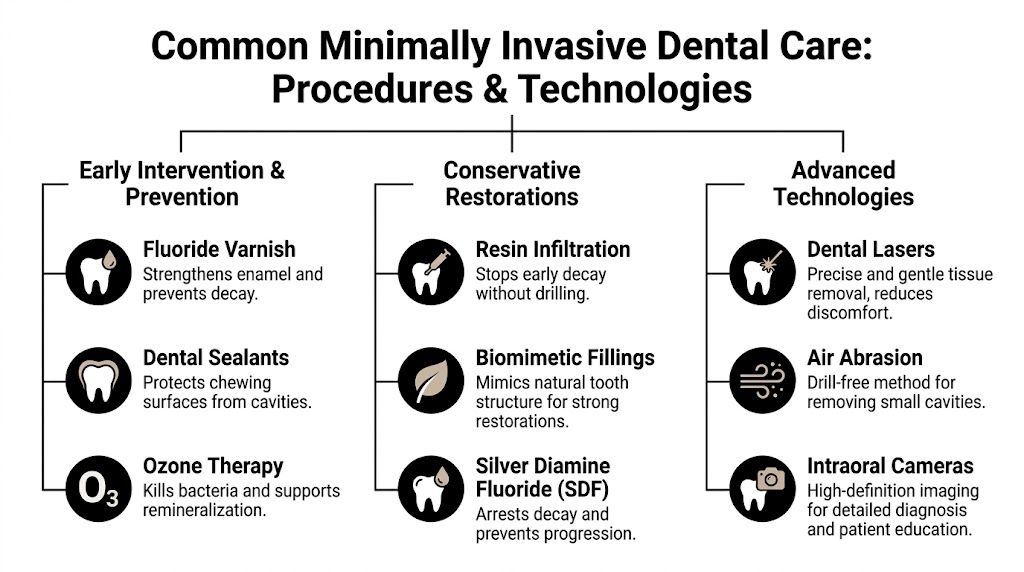
Modern minimally invasive dentistry isn't one single treatment. It's a group of tools and techniques that all serve the same purpose: find problems earlier and treat them with more precision.
For anxious patients, this matters because the experience changes. Less guesswork usually means less unnecessary treatment, and more precise treatment usually feels calmer and more manageable.
Digital X-rays and imaging
Digital X-rays help dentists see what isn't visible during a regular visual exam. They can reveal areas between teeth, under old fillings, and below the surface where decay may be starting.
For patients, the benefit is straightforward. Better information helps your dentist avoid both undertreatment and overtreatment. When a concern is clearly visible, the next step can be more targeted.
Some offices also use CBCT for cases that need a more detailed view. That kind of imaging can be useful when planning treatment carefully and avoiding surprises.
You can see how these tools fit into a comfort-first visit in this overview of digital X-rays to one-day crowns at Kali Dental.
Low-level laser fluorescence and transillumination
Some of the most helpful minimally invasive tools don't treat the tooth first. They detect trouble sooner.
According to Dentistry Today, advanced diagnostic tools such as low-level laser fluorescence systems can detect subsurface decay before it appears on traditional X-rays, preserving 70 to 90% more enamel compared with conventional methods. The same source notes this can reduce pulp exposure risk by up to 80% and significantly lower post-operative sensitivity (Dentistry Today, 2023).
That can sound technical, so here's the plain version. These tools help dentists find weak spots under the surface, before a cavity becomes a larger hole. If treatment is needed, the repair can often stay smaller because the damage was found earlier.
A good diagnosis can be the gentlest part of treatment. If your dentist can see exactly where the problem begins and ends, less healthy tooth needs to be touched.
Intraoral cameras
An intraoral camera is a small camera that shows detailed images of your teeth and gums on a screen. This isn't just for the dentist. It's for you too.
A lot of anxiety comes from not knowing what the dentist sees. When you can look at the same image, the conversation changes. Instead of wondering whether treatment is necessary, you can follow along and ask questions in real time.
Fluoride and sealants
Not every early concern needs a filling. Sometimes the best treatment is to strengthen and protect the tooth before a cavity grows.
Fluoride helps support remineralization in weakened enamel. Sealants create a thin protective barrier in deep grooves where food and bacteria tend to collect, especially on back teeth.
These are classic examples of minimally invasive care because they don't remove healthy tooth structure. They protect what you already have.
Tooth-colored fillings
When decay has moved beyond the point where prevention alone can help, tooth-colored fillings let dentists repair the area conservatively. Modern adhesive materials bond directly to the tooth, which supports smaller preparations than older approaches often required.
For a patient, that usually means the final result feels more natural and looks less obvious. It also means the treatment is aimed at repairing the damaged spot, not reshaping a large area around it.
Dental lasers for selected soft tissue care
Lasers can also play a role in minimally invasive dentistry, especially for certain soft tissue concerns. Kali Dental offers laser dentistry for cold sores, canker sores, and gingivectomy procedures, where precise energy can target the area being treated while limiting trauma to nearby tissue.
Patients often like this approach because it can feel cleaner and more controlled than older methods. For someone who gets nervous about bleeding or a long recovery, that can be reassuring.
Same-day crowns when a tooth needs more support
Minimally invasive care doesn't mean every tooth can be treated with a tiny filling. Sometimes a tooth is too weakened and needs broader protection.
When that happens, the goal is still to preserve what can be saved and restore function efficiently. Same-day crowns can be part of that plan when a tooth needs full coverage and strength without dragging treatment across multiple visits.
Benefits of a Minimally Invasive Approach
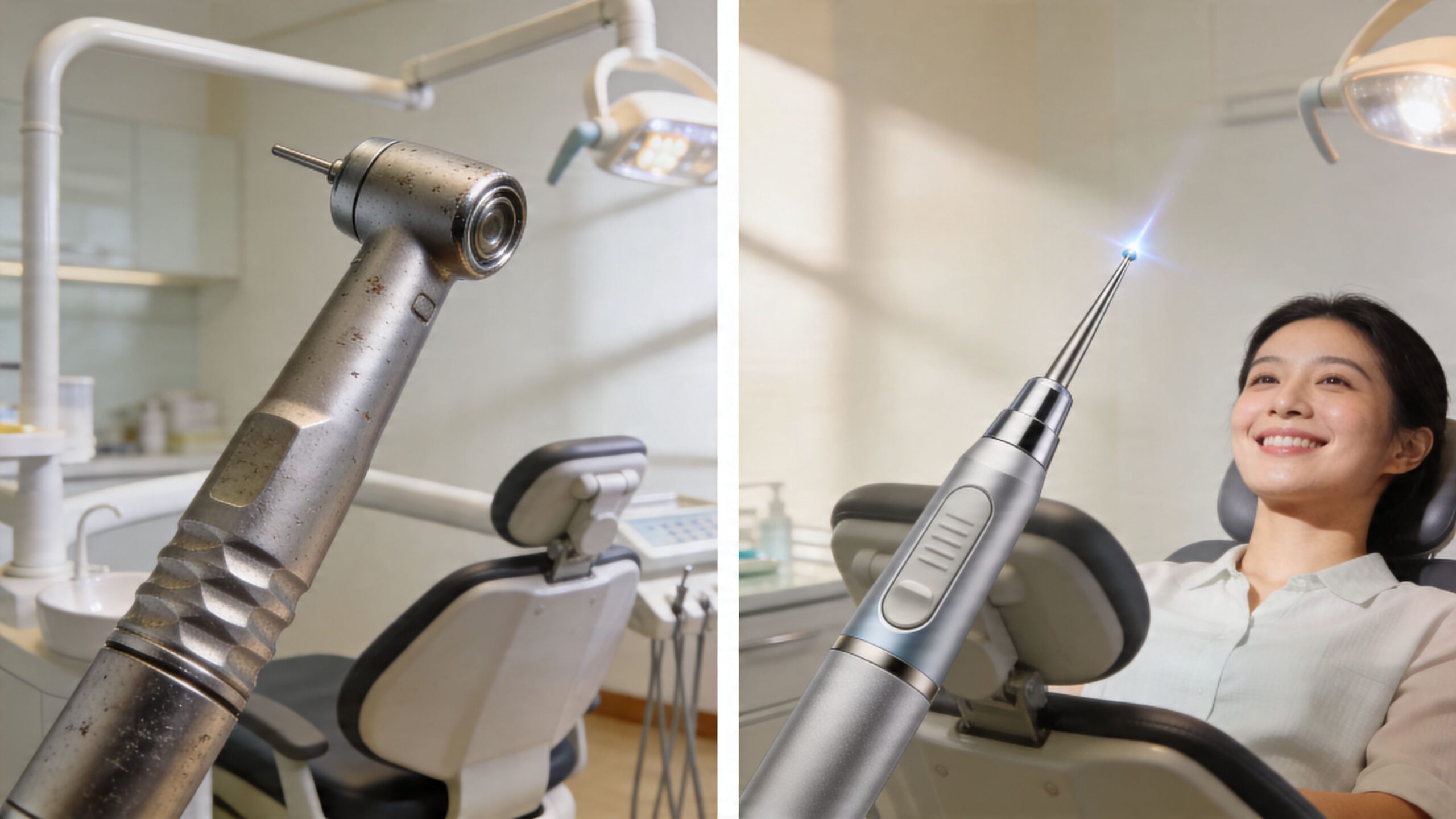
The biggest benefits show up in three places that matter to patients most. Comfort, long-term tooth preservation, and practical value.
Traditional treatment is sometimes necessary. But when a problem can be handled conservatively, the option that removes less healthy structure and asks less of them physically and emotionally is generally preferred.
Comfort during and after treatment
Minimally invasive procedures are often easier on anxious patients because they can involve less drilling, less pressure, and in some situations less need for anesthesia. That changes the whole feel of the visit.
The psychological side matters too. Preventive minimally invasive procedures are described as more economical over the long term and especially appealing to anxious patients because they reduce discomfort and support faster healing (Kirkwood Family Dental Blog / General Clinical Findings, 2022).
Better odds of keeping your natural tooth strong
Every time a large amount of tooth structure is removed, the tooth has a little less natural strength to work with. Smaller repairs help preserve that original framework.
That matters over years, not just one appointment. A conservative treatment today can help delay or avoid larger work later. Good daily habits still matter, and this guide on how to maintain oral health covers the basics that support that goal.
Smarter value over time
Thinking isn't typically framed around "dental philosophy." Instead, the focus is on whether a small issue can stay small.
That's where minimally invasive care often makes practical sense. If you catch decay early, treatment is usually simpler than waiting until the tooth needs a more extensive repair.
| Approach | What it tends to focus on | What patients often notice |
|---|---|---|
| Early conservative care | Prevention, early detection, small repairs | Shorter visits, gentler treatment, less disruption |
| Delayed treatment | Repair after damage becomes larger | More involved procedures, more recovery, more worry |
Small, well-timed treatment is usually easier than delayed treatment on a bigger problem.
Are You a Candidate for Minimally Invasive Dentistry?
Minimally invasive dental care is broadly applicable. This isn't a niche style of care for a small group of patients. It's a practical approach that can be adapted for children, adults, and older patients.
The better question is often not "Can I have minimally invasive treatment?" but "How much of my care can be done this way?"
If you get anxious before appointments
If your stress starts in the parking lot, this approach may be especially helpful. Minimally invasive care tries to reduce the triggers that make people avoid treatment in the first place, such as drilling, uncertainty, and fear of a bigger-than-expected procedure.
That doesn't mean every concern can be handled with a tiny fix. But it does mean your dentist can often start with the most conservative option that still protects your health.
If you're bringing in a child
Children often benefit from early, gentle treatment because small problems can be managed before they become painful or scary. Fluoride, sealants, careful monitoring, and conservative fillings can help protect growing teeth while building trust in the dental office.
For kids, the experience matters as much as the treatment. A calm early visit can shape how they feel about dentistry for years.
If you're an older adult
Seniors often want to keep natural teeth healthy for as long as possible while managing existing fillings, crowns, gum concerns, or wear. A conservative approach helps dentists protect remaining tooth structure and plan treatment thoughtfully.
If a problem has already become more advanced, more involved care may still be needed. In some cases, symptoms point to deeper infection or inflammation, and this page on whether you may need a root canal can help you understand the warning signs.
- Good fit for anxious adults: You want fewer surprises and a gentler pace.
- Good fit for families: Prevention and early treatment help keep care simpler.
- Good fit for seniors: Preserving existing tooth structure becomes more valuable over time.
- Worth discussing even with bigger issues: A minimally invasive mindset can still guide diagnosis and planning.
Your Comfort-First Care at Kali Dental
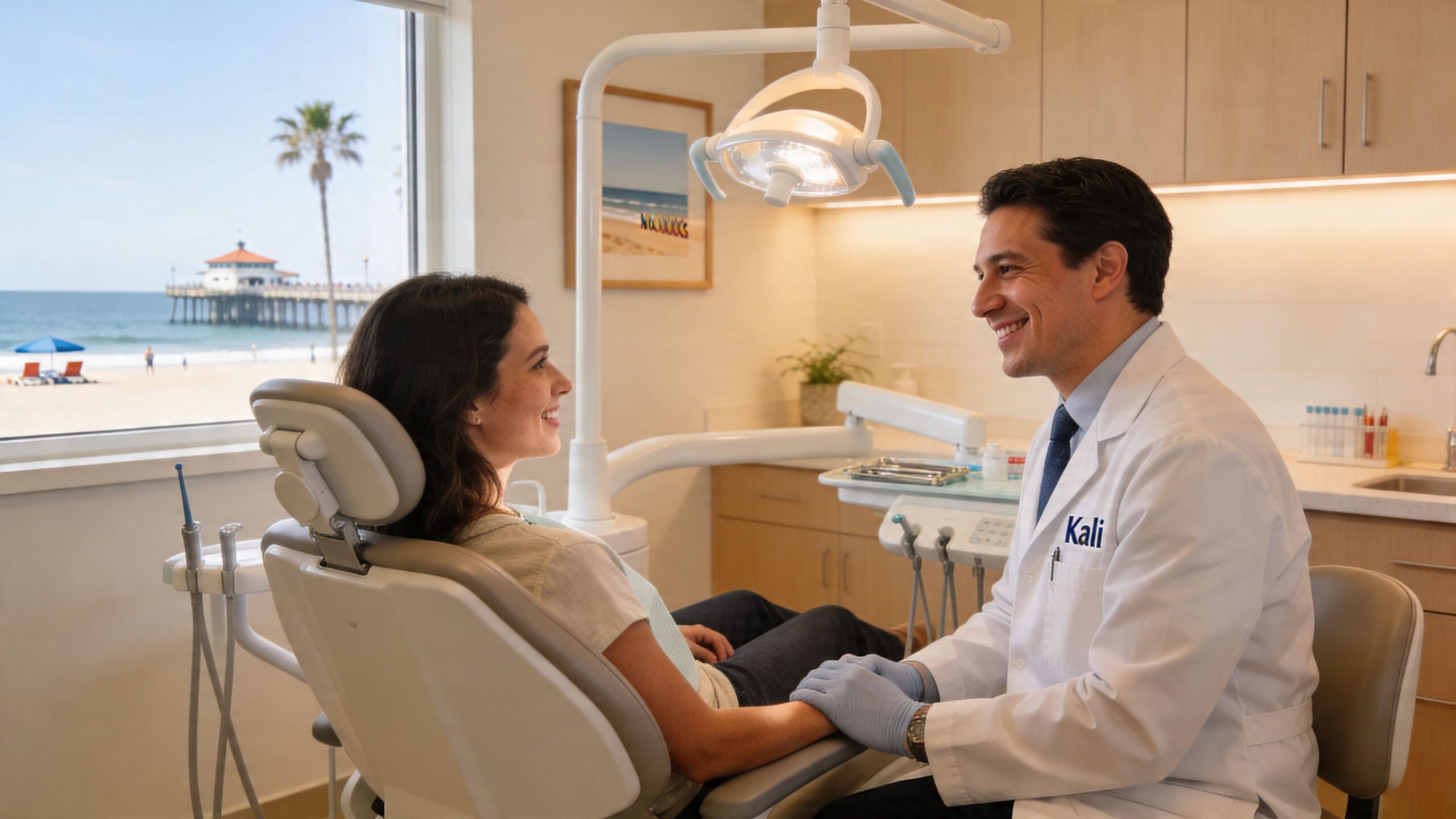
For families and anxious patients in Huntington Beach, minimally invasive dental care isn't just a concept on a website. It's a practical way Dr. Kalvin approaches diagnosis, prevention, and treatment decisions every day.
That starts with listening. If you're worried about pain, embarrassed that it's been a while, or concerned that a visit will turn into a long list of procedures, saying that out loud helps shape the appointment. A personalized dental experience works better when your dentist knows what you're nervous about.
Dr. Kalvin uses modern tools such as digital X-rays, intraoral imaging, fluoride treatments, sealants, tooth-colored fillings, gum care, same-day crowns, and emergency care to keep treatment as clear and conservative as your situation allows. The point isn't to use technology for its own sake. The point is to make decisions with better information and a lighter touch.
If you're nervous, tell your dentist before the exam starts. Comfort-first care begins with communication, not equipment.
If you're looking for family-friendly dental care with a calm, straightforward style, this article on gentle cleanings that don't hurt or upsell gives a good sense of that approach in real life.
Frequently Asked Questions About Minimally Invasive Care
Does minimally invasive dental care mean I won't need a filling?
Not always. If decay is caught very early, prevention-focused treatment may be enough. If the tooth already has a cavity that needs repair, a small tooth-colored filling may still be the right choice.
Is minimally invasive dentistry better for people with dental anxiety?
For many patients, yes. The approach is designed to reduce unnecessary drilling, preserve healthy tooth structure, and make treatment feel more manageable. That can make visits less intimidating.
Will it hurt less than traditional dental work?
It often feels gentler because treatment may be smaller and more targeted. Your exact experience depends on the condition being treated, but many patients appreciate that conservative care can mean less pressure, less noise, and easier recovery.
Is minimally invasive dental care more expensive?
It depends on the treatment and what your teeth need right now. In general, early conservative care can help you avoid more extensive work later. If you have questions about fees, insurance, or payment arrangements, it's best to call the office and talk through your options directly.
How long does a minimally invasive procedure take?
That varies. Some preventive treatments, like sealants, take only a short time. Small composite fillings are commonly completed in 20 to 30 minutes according to the clinical discussion summarized by Kirkwood Family Dental (Kirkwood Family Dental Blog / General Clinical Findings, 2022).
Can kids have minimally invasive dental care?
Yes. Children often benefit from preventive services, close monitoring, and smaller repairs when needed. Gentle early care can protect teeth and help kids feel more comfortable coming back.
What if my tooth problem is already serious?
Minimally invasive care still matters because it guides how the dentist evaluates and plans treatment. Sometimes a more involved procedure is necessary, especially when a tooth has extensive damage or infection. The goal is still to preserve as much healthy structure as possible.
Do you take insurance for this kind of treatment?
Coverage depends on your plan and the service being recommended. The office can help you review benefits and explain what your insurance may cover before treatment starts, so you know what to expect.
If you'd like to talk through minimally invasive dental care with a local, comfort-first team, Kali Dental is here to help. Call (657) 800-5254 or visit us at 19201 Brookhurst Street, Suite 103, Huntington Beach, CA. Office hours are Monday to Friday 9:00 AM to 6:00 PM and Saturday 8:00 AM to 2:00 PM.
Sources
Center for Health Care Strategies. "Emerging Approaches in Oral Health Care Considerations for Minimally Invasive Care in Medicaid." 2023. https://www.chcs.org/resource/emerging-approaches-in-oral-health-care-considerations-for-minimally-invasive-care-in-medicaid/
Dentistry Today. "Modern Technology for Minimally Invasive Dentistry." 2023. https://www.dentistrytoday.com/modern-technology-for-minimally-invasive-dentistry/
Kirkwood Family Dental Blog. "Minimally Invasive Dentistry." 2022. https://www.kirkwoodfamilydental.com/healthy-smiles-blog/minimally-invasive-dentistry