
Quick Answer
TL;DR: Invisalign for most adults takes 6 to 18 months, and the exact timeline depends mainly on how complex your case is, from small spacing issues to significant bite correction. If you want a simple overview of clear aligner treatment, this page on invisible braces and real results can help.
If you've been thinking about straightening your teeth, the timing question usually comes first. You want to know what you're signing up for, how much daily effort it takes, and whether the process will fit your life in Huntington Beach.
When patients ask me how long does Invisalign take, I give a direct answer first, then I narrow it down based on the person sitting in front of me. The overall range is clear, but your actual timeline depends on what your teeth need and how closely you follow the plan.
Introduction
The reason this question matters is simple. A straighter smile sounds appealing, but a long treatment can feel hard to commit to if you work, travel, parent, or just don't want your routine turned upside down.
The good news is that Invisalign doesn't follow one rigid timeline for everyone. Mild cases often move faster, moderate cases take longer, and complex bite problems need more time because the teeth have to move in a controlled, healthy way.
For most adults, Invisalign falls somewhere in a manageable middle ground. That makes it a practical option for patients who want a personalized dental experience and a clearer idea of what to expect before they start.
Typical Invisalign Timelines for Different Needs

A patient comes in wanting straighter front teeth before an upcoming wedding. Another wants to fix crowding and a bite that has bothered them for years. Both may be good Invisalign candidates, but their timelines will not look the same.
For many adults, Invisalign often falls somewhere around 6 to 18 months, with shorter plans for minor alignment changes and longer plans for bite correction or heavier crowding. Invisalign notes that treatment time depends on case complexity and patient compliance, including wearing aligners as directed (Invisalign).
Mild cases
Minor spacing or mild crowding usually moves faster. If the goal is limited to small cosmetic adjustments, treatment may finish in several months rather than over a year.
These cases are where patient-controlled factors make the biggest difference. Wearing trays the full recommended time each day, changing them on schedule, and not losing aligners can keep a simple case simple.
Moderate cases
Moderate cases usually involve more than straightening the front teeth. Teeth may need rotation, arch coordination, or correction of spacing that affects how the upper and lower teeth meet.
This is also where I often see the split between what the patient controls and what I control. The patient controls wear time and follow-through. I control the staging, attachment placement, and whether refinements are needed to keep movement healthy and predictable.
Complex cases
Complex Invisalign treatment takes longer because the goal is larger, more coordinated movement. That can include significant crowding, bigger spaces, or bite problems that affect comfort and function, not only appearance.
Longer treatment is not a red flag. It usually means we are correcting more than one problem at once, and that takes a carefully sequenced plan.
What affects the timeline most
Patients often assume the timeline is based only on how crooked the teeth look. In practice, the timeline is shaped by two categories.
What you can do
- Wear aligners as instructed each day
- Switch trays only when directed
- Keep review visits
- Use elastics or other accessories if prescribed
What Dr. Kalvin manages
- Diagnosing how much movement is safe
- Planning the order of tooth movement
- Monitoring tracking and bite changes
- Deciding whether refinement trays are needed
That distinction matters. A moderate case with excellent compliance can finish more smoothly than a mild case where trays are worn inconsistently.
If you are comparing options locally, this overview of clear aligner treatment in Huntington Beach explains how the process is planned. Clear communication also matters during longer cases. Practices that improve patient experience usually make it easier for patients to stay on track with treatment.
| Case type | Typical timeline |
|---|---|
| Mild alignment issues | Several months to under a year |
| Moderate alignment issues | Often around a year, sometimes longer |
| Complex orthodontic needs | Often well over a year |
The useful question is not only "How long does Invisalign take?" It is "What part of that timeline is in my hands, and what part depends on the treatment plan?" That is the conversation that gives you a realistic estimate.
Your Invisalign Journey Step by Step
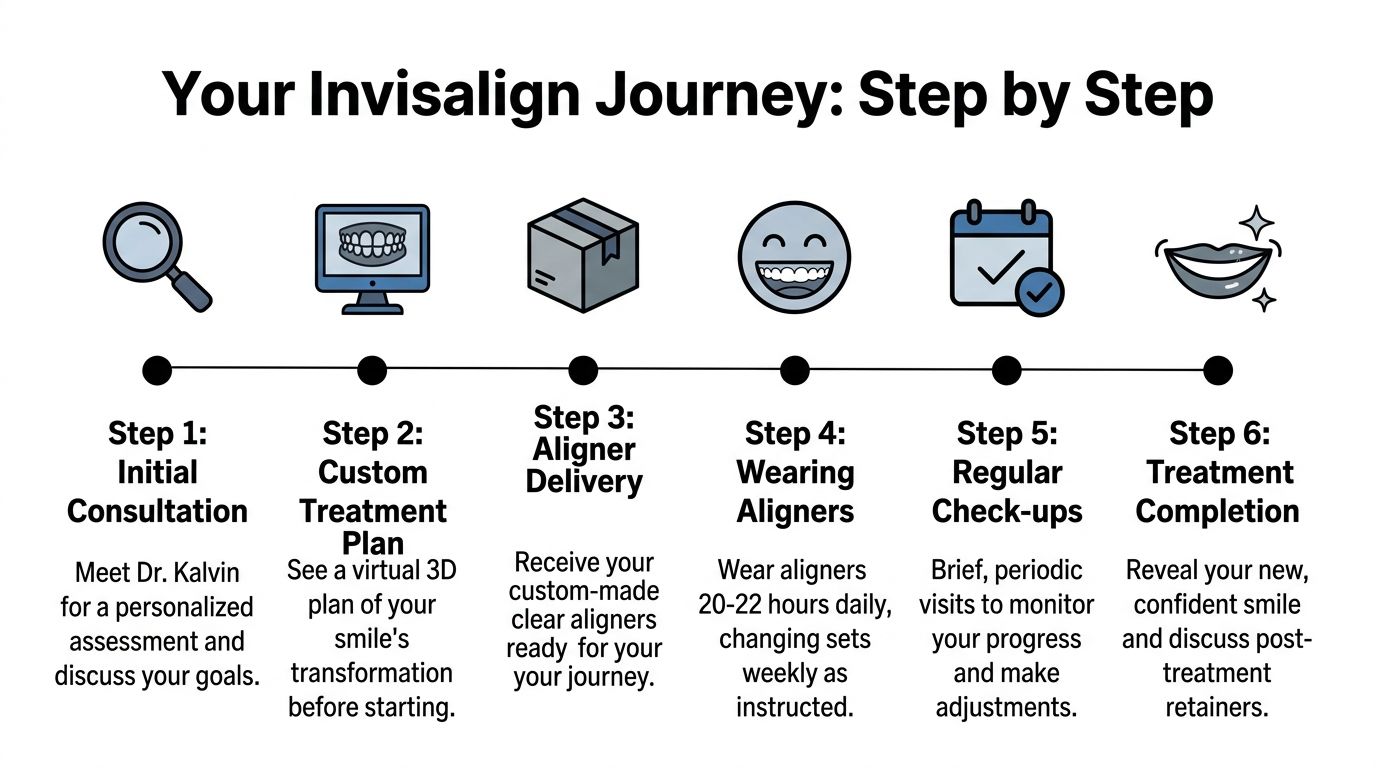
Patients usually feel better once they can picture the full process. Invisalign is easier to commit to when you know what happens at each stage and which parts are in your hands.
If you're comparing options, this page on clear aligners in Huntington Beach gives a local overview of the treatment itself.
Step one and step two
The first visit is the planning visit. Dr. Kalvin examines your teeth, reviews your bite, takes digital records, and finds out what you're hoping to change.
After that, the treatment plan gets mapped out. The software shows where your teeth are starting and how they are expected to move through the aligner sequence.
This part matters more than people realize. Good planning doesn't make treatment instant, but it does reduce guesswork and gives patients a clearer expectation from day one.
Good aligner treatment is a partnership. The plan has to be precise, and the patient has to wear it.
Step three and step four
Once your aligners are ready, you receive the first sets and specific instructions for wear. The big daily rule is consistency.
Patients need to wear aligners for 20 to 22 hours per day to stay on schedule (South Shore Orthodontics, 2024). They should only come out for eating, drinking anything other than water, brushing, and flossing.
The trays are usually changed every 1 to 2 weeks, following the sequence set in the plan. If you wear tray one part-time, tray two doesn't magically catch you up.
Step five
Checkups are how Dr. Kalvin confirms your teeth are tracking the way the digital plan predicted. If needed, the aligner sequence can be adjusted.
Missing these visits can slow treatment because small problems are easier to fix early. This is one reason practices that actively improve patient experience often focus on reminders, clear instructions, and simple follow-up systems. Consistency helps people finish on time.
Step six
When the active movement is finished, retention starts. That means wearing a retainer to hold the teeth in their new positions.
Patients sometimes think treatment ends the day the last tray comes out. In reality, retention protects all the work that came before it. If you skip that part, teeth can start drifting.
What you control and what Dr. Kalvin controls
A lot of anxiety fades when patients understand the split.
You control
- Daily wear time: Keep the aligners in as instructed.
- Tray changes: Move to the next set only when directed.
- Appointments: Show up so progress can be checked.
- Care habits: Keep aligners clean and avoid losing them.
Dr. Kalvin controls
- Diagnosis: Identifying whether the case is simple, moderate, or complex.
- Treatment design: Deciding how teeth should move and in what order.
- Adjustments: Making corrections if teeth aren't tracking well.
- Retention planning: Protecting the result after active treatment ends.
That division is useful because it gives you real influence. You can't change your starting bite at home, but you can avoid the delays that come from inconsistent wear.
Key Factors That Influence Your Treatment Speed

Two groups of factors affect speed. Some are clinical factors that Dr. Kalvin manages. Others are patient-controlled factors that can help treatment stay on track or drag it out.
If you're interested in where clear aligner care is heading, this article on clear aligner trends to know in 2026 gives broader context.
Factors Dr. Kalvin manages
Case complexity is the biggest one. Teeth that need minor straightening move on a shorter timeline than teeth that also need meaningful bite correction.
Treatment design also matters. Some movements are straightforward, while others need more control, more aligners, or small adjustments during the process.
Monitoring progress is another major part of the timeline. When teeth aren't tracking exactly as planned, the solution is usually to correct the course early rather than rush forward.
Factors you control every day
The most important one is wear time. Patients must wear aligners for 20 to 22 hours per day, and falling short can significantly prolong treatment (South Shore Orthodontics, 2024).
That point sounds simple, but it's where treatment often speeds up or slows down.
What works
- Leaving them in most of the day: Meals, brushing, and flossing are the main breaks.
- Building a routine: Put them back in right after eating.
- Keeping appointments: Progress checks catch small issues before they become bigger delays.
What doesn't
- Taking them out for long stretches: Social events, work meetings, and snacking add up.
- Guessing on tray changes: Switching too early or too late can both create problems.
- Skipping check-ins: You may not notice a tracking issue until several trays later.
The patients who stay closest to their original timeline usually aren't doing anything fancy. They're just very consistent.
One honest trade-off
Invisalign gives you more freedom than braces because the trays are removable. That freedom is also the risk.
With braces, the appliance is always on your teeth. With Invisalign, the system only works when you wear it. For disciplined patients, that's a major advantage. For forgetful patients, it's the most common reason treatment takes longer than expected.
Invisalign vs Traditional Braces How Timelines Compare
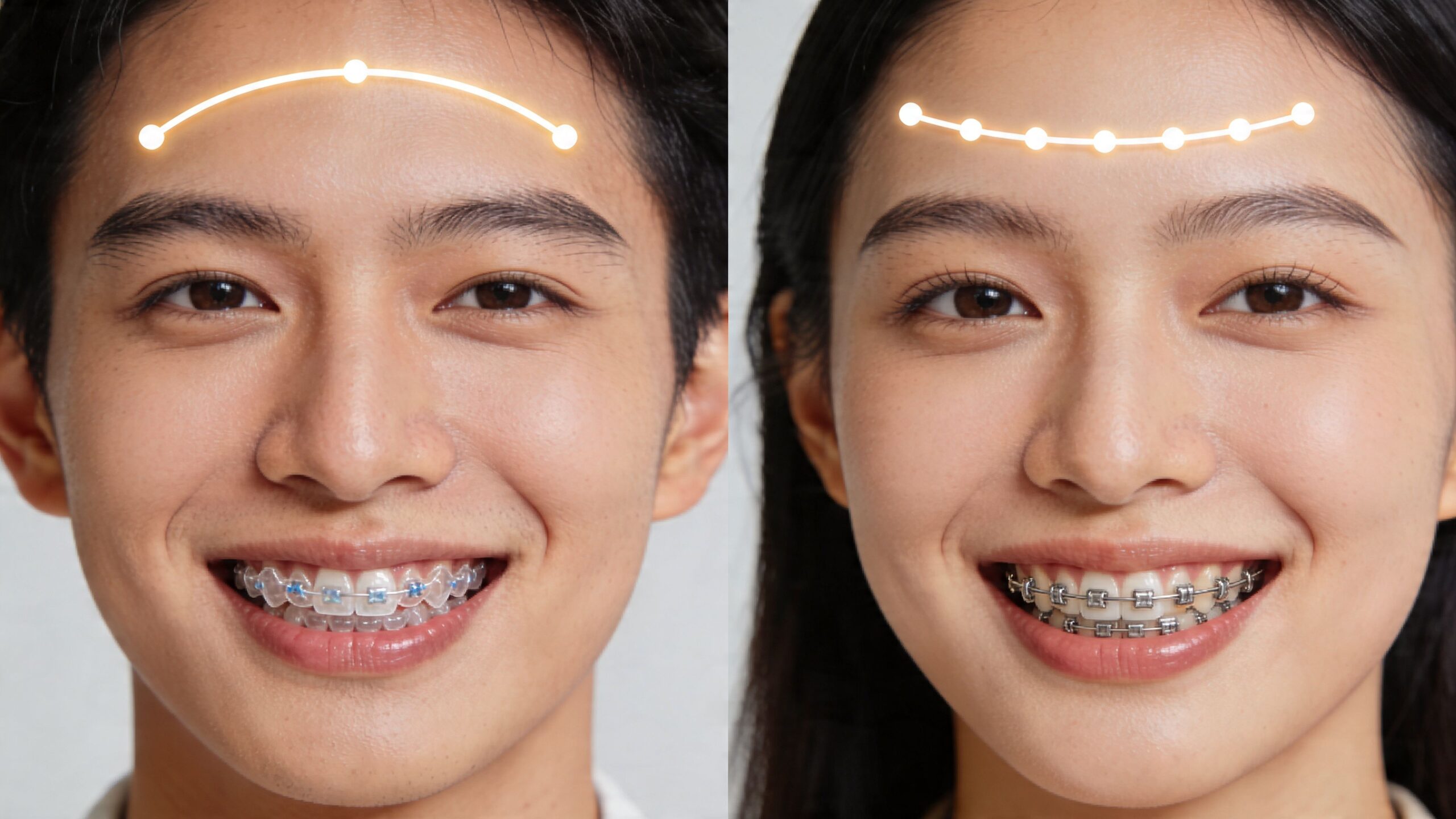
For many adults, the question isn't only how long does Invisalign take. It's whether Invisalign is faster than braces for the same kind of correction.
Traditional braces often take 18 to 36 months on average. Invisalign can achieve equivalent corrections 20 to 40 percent faster in 70 percent of cases because of its sequential aligner approach and digital treatment planning (Scantlebury Orthodontics, 2024).
That doesn't mean Invisalign wins in every situation. Some tooth movements are more demanding, and some patients do better with a system they can't remove.
A practical comparison looks like this:
| Question | Invisalign | Traditional braces |
|---|---|---|
| Daily responsibility | Higher | Lower |
| Visibility | Lower | Higher |
| Food restrictions | Fewer | More |
| Timeline for many common adult cases | Often shorter | Often longer |
If you're weighing both options, this comparison of Invisalign vs traditional braces in Huntington Beach can help you think through the trade-offs.
If you want removable treatment, Invisalign offers that convenience. If you know you won't wear trays reliably, braces may be the more dependable path.
Frequently Asked Questions About Invisalign Treatment
A common Huntington Beach question sounds like this: “If I start Invisalign, what can I do to stay on schedule, and what part is up to Dr. Kalvin?” That is the right way to look at it. Some parts of the timeline depend on your daily habits. Others depend on how your teeth respond and how the treatment is adjusted along the way.
Will Invisalign hurt
Most patients describe Invisalign as pressure, not sharp pain. You will usually feel it most during the first day or two of a new tray.
The aligners also tend to be gentler on the cheeks and lips than brackets and wires. If one tray feels noticeably off, too tight, or rough on the gums, let the office know. That is usually something to check, not something to ignore.
What happens if I don't wear my aligners enough
This is the biggest patient-controlled factor in the whole process. If aligners are not worn for the recommended hours each day, teeth can fall behind the plan and the next tray may not fit properly.
Once that starts, treatment may need extra time, additional trays, or a refinement scan. Patients who want to avoid those delays should focus on one simple habit: wear the aligners as directed, every day. If you want help avoiding common compliance problems, this guide on choosing clear aligners and avoiding common mistakes covers the issues I see most often.
Can I still eat normally during treatment
Yes. You remove Invisalign to eat, so there are fewer food restrictions than with braces.
The trade-off is responsibility. After meals, the aligners need to go back in promptly. Brushing before reinserting them is ideal, especially after coffee, snacks, or anything sugary.
What if my teeth aren't moving exactly as planned
That happens sometimes, even with good compliance. Teeth are biological, not mechanical, so they do not all move at the same speed.
This is the clinical side of the timeline. Dr. Kalvin monitors the fit of the trays, checks whether tooth movement matches the plan, and decides if attachments, small adjustments, or refinement trays are needed. Catching those issues early helps keep a minor delay from turning into a longer one.
How often will I need appointments
Most Invisalign visits are short and focused. The schedule depends on your case and how predictably your teeth are tracking.
For many working adults and parents in Huntington Beach, that visit pattern feels manageable. The appointments are there to keep treatment on course, not to fill your calendar.
How does insurance work for Invisalign
Insurance coverage varies by plan. Some dental plans include orthodontic benefits that can apply to Invisalign, while others do not.
Ask for a benefit review early so you know what is covered, what is not, and what your out-of-pocket cost may be. That does not change how fast teeth move, but it does make planning treatment much easier.
Is Invisalign a good option for adults
In many adult cases, yes. Adults often like the low-profile appearance and the ability to remove aligners for meals, brushing, and social events.
The better question is whether the case is suitable for aligners and whether you are likely to wear them consistently. If both answers are yes, Invisalign can be a very efficient option.
Find Out Your Personal Invisalign Timeline
General timelines are helpful, but your own answer comes from an exam and a customized plan. If you're looking into choosing clear aligners and avoiding common mistakes, the next step is getting a realistic estimate for your teeth, your bite, and your schedule.
Sources
Marina Dentistry. "How Long Does Invisalign Take? What to Expect Month by Month." 2024. https://www.marinadentistry.com/how-long-does-invisalign-take-what-to-expect-month-by-month/
South Shore Orthodontics. "Invisalign: How Long Does It Take? Treatment Timeline Explained." 2024. https://www.southshore-ortho.com/2024/08/21/invisalign-how-long-does-it-take-treatment-timeline-explained/
Scantlebury Orthodontics. "How Long Does Invisalign Take to Work?" 2024. https://www.scantlebury-orthodontics.com/how-long-does-invisalign-take-to-work/
Smile Mas Dental. "How Long Does Invisalign Take?" 2025. https://smilemasdental.com/blog/how-long-does-invisalign-take/
If you want a clear answer about how long does Invisalign take for your smile, a consultation is the best place to start. Kali Dental offers comfort-first care and a personalized dental experience for Huntington Beach families and adults who want straightforward guidance. Call (657) 800-5254, visit 19201 Brookhurst Street, Suite 103, Huntington Beach, CA, or stop by during Monday to Friday 9:00 AM to 6:00 PM or Saturday 8:00 AM to 2:00 PM.