
Quick Answer
No. If you're asking can i use white strips while pregnant, the safest answer is to wait until after pregnancy, and often until after breastfeeding. Whitening strips use peroxide-based chemicals, and there isn't enough research proving they're safe during pregnancy. For now, focus on cleanings and preventive care, then review best teeth whitening options later.
You may be looking in the mirror, noticing more staining than usual, and wondering whether whitening strips are a simple fix. That question is common in pregnancy, especially when you want to feel like yourself but don't want to take chances.
The short answer is still no, but the reason matters. This isn't only about limited research. Pregnancy changes your gums, saliva, enamel comfort, and even how strongly you react to tastes and smells.
Your Guide to a Healthy Smile During Pregnancy
If you're wondering can i use white strips while pregnant, it helps to know what those strips do. Most use peroxide ingredients that bleach stains by moving through the outer tooth surface and reacting with the darker compounds that cause discoloration.
That matters because pregnancy isn't a normal baseline for your mouth. Your gums are often more reactive, and comfort can change quickly from week to week. Along with your prenatal medical care, a complete guide to prenatal vitamins can be useful if you're trying to support overall health from multiple angles, and strong daily preventive dental care helps protect your smile while you wait on cosmetic treatment.
How Do Teeth Whitening Strips Work
A whitening strip is a thin plastic film coated with a bleaching gel that sits directly on the front surface of the teeth for a set period each day.

What the peroxide does
Most strips use hydrogen peroxide or carbamide peroxide. These ingredients work by oxidizing stain compounds inside the tooth, not just by scrubbing the surface. That is why whitening can change the color of deeper stains from coffee, tea, or aging, rather than polishing away buildup.
In practice, strips are designed for repeated use over days or weeks. The gel stays in contact with enamel long enough to lighten pigment, and some of that gel can also reach the gumline if the strip does not sit perfectly.
Why strips can feel stronger than people expect
Patients often assume strips are mild because they are sold over the counter. The active ingredient is still a bleaching chemical, and repeated applications are what make the product work. In my office, that is the part many people underestimate. A small strip can still trigger tooth sensitivity or gum soreness, especially if the teeth already feel reactive.
That detail matters even more during pregnancy because the mouth is often less forgiving. A product meant for cosmetic whitening may feel harsher than expected when gums are already tender or inflamed.
If you want to compare store-bought products with supervised care, this guide on from drugstore kits to in-office results explains the differences clearly.
Why Dentists Advise Caution with Whitening Strips During Pregnancy
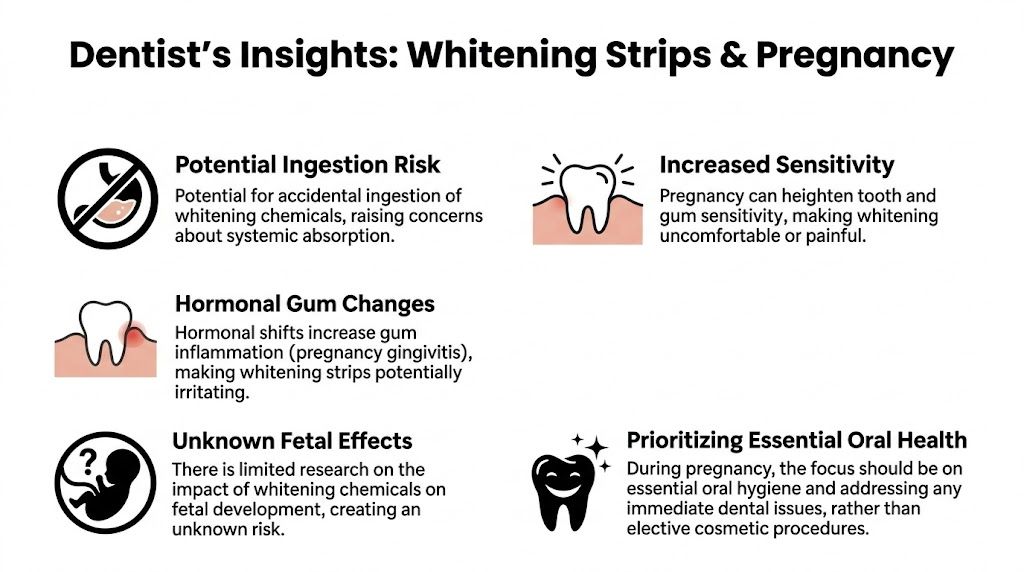
You notice your teeth looking a little dull in the mirror, reach for a box of whitening strips, and then remember you are pregnant. That is usually the point where I tell patients to pause. The recommendation to wait is not just a generic “we do not know.” Pregnancy changes the mouth in ways that can make whitening feel harsher, less predictable, and not worth it for a cosmetic treatment.
There is no strong pregnancy-specific safety research
The first concern is straightforward. Researchers have not produced the kind of pregnancy-specific human evidence that would let dentists confidently say whitening strips are proven safe during pregnancy. That absence matters more with an elective treatment than it would with something medically necessary.
Manufacturers and dentists generally take the same cautious position. Use should wait unless your own physician and dentist think there is a good reason to proceed. For a cosmetic product, postponing is the safer choice.
Pregnancy often makes gums react more strongly
The more practical reason is what I see chairside. Pregnancy hormones can make gums swell, bleed more easily, and feel tender with routine brushing alone. The American Dental Association notes that pregnancy gingivitis is common because hormonal changes can exaggerate the body’s response to plaque (American Dental Association).
Place a peroxide strip against already irritated gum tissue and problems start to make sense. A product that felt tolerable before pregnancy can sting, leave the gumline sore, or make existing inflammation harder to settle down. If your gums are puffy or bleeding now, whitening strips are poor timing.
Dry mouth, enamel sensitivity, and nausea change the risk-benefit balance
Pregnancy can also come with dry mouth, more mouth breathing, reflux, and nausea. The American College of Obstetricians and Gynecologists advises patients to pay attention to oral changes during pregnancy and maintain preventive dental care because the mouth often becomes more reactive during this period (ACOG).
That helps explain why whitening can feel worse than expected. Bleaching products already cause temporary tooth sensitivity in some users. Add a drier mouth, acid exposure from vomiting or reflux, and heightened taste and smell sensitivity, and the experience can go from mildly annoying to completely intolerable.
This is the trade-off I want patients to understand. The benefit is cosmetic and temporary. The downside can be irritated gums, sharper sensitivity, more nausea, and one more thing to manage during a time when comfort and safety should come first.
Dentists usually postpone cosmetic whitening until after delivery
This cautious approach is not limited to store-bought strips. In-office whitening is also commonly delayed during pregnancy for the same reasons: limited pregnancy-specific safety evidence, a higher chance of soft-tissue irritation, and no medical need to do it now.
That is why the usual recommendation is simple. Keep up with cleanings, protect your gums, and save whitening for later, when your mouth is more stable and the process is easier to tolerate. If you want an extra consumer-focused overview of the broader safety discussion, this article on Are Teeth Whitening Strips Safe may be helpful.
Safe and Healthy Ways to Keep Your Smile Bright
A lot of pregnant patients tell me the same thing. They are not trying to get a movie-star white smile. They just want their teeth to look clean again after months of nausea, dry mouth, snack changes, and gums that seem to react to everything.
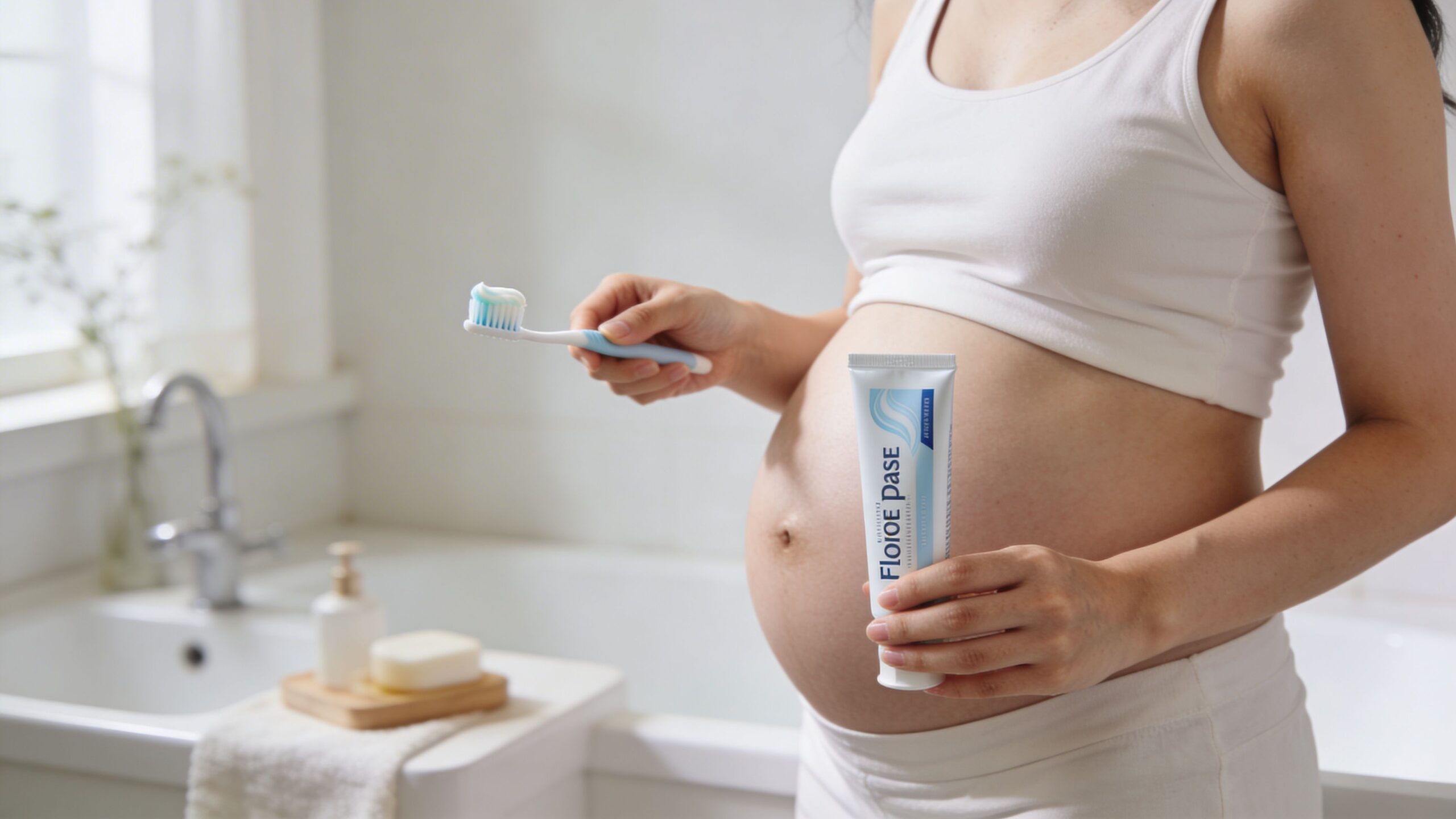
The safest approach during pregnancy is stain control, not bleaching. That means keeping the teeth as clean as possible, limiting new discoloration, and avoiding anything that is likely to irritate already sensitive gums.
A professional cleaning is often the best place to start. It can remove surface stain from coffee, tea, and plaque buildup without exposing your teeth and gum tissue to whitening gel. In real life, that alone is enough to make many smiles look noticeably brighter.
Home care matters just as much, especially because pregnancy hormones can make gums swell and bleed more easily. Gentle, consistent care usually works better than aggressive brushing.
- Brush twice a day with fluoride toothpaste using a soft-bristled brush.
- Floss once a day to reduce plaque around the gumline, where inflammation tends to build quickly during pregnancy.
- Rinse with water after vomiting or reflux and wait a bit before brushing if your teeth feel sore or acidic.
- Cut back on common stain sources like coffee, black tea, cola, and intensely pigmented berries if you are seeing new yellow or brown buildup.
- Use a straw for cold dark drinks when possible to reduce contact with the front teeth.
Small changes can help more than patients expect. Drinking less coffee or tea, rinsing after meals, and staying current with cleanings will not whiten teeth the way bleaching does, but they can keep stains from getting worse while your mouth is more reactive.
I also tell patients to be careful with "natural whitening" trends during pregnancy. Scrubs, charcoal powders, and acidic DIY remedies can wear enamel down or irritate gum tissue that is already tender. If you want safer ideas, review these dentist-approved tips on how to whiten teeth naturally.
The goal right now is simple. Keep your teeth healthy, your gums calm, and your smile as bright as possible without adding discomfort.
Planning Your Post-Pregnancy Whitening Treatment
A common postpartum question sounds like this: "My baby is here, my gums finally feel calmer, and I want my smile back. When can I whiten?" The safest answer is to wait until after delivery, then choose the timing based on how your mouth feels, whether you are breastfeeding, and what your dentist sees on exam.
I usually recommend patience for a practical reason. Pregnancy often leaves gums more reactive and teeth more sensitive than usual, and whitening can intensify both. If you start too soon, you are more likely to get soreness, patchy results, or treatment you end up stopping halfway through.
What usually works better after pregnancy
Once you are ready for cosmetic treatment, professional whitening is often easier to control than strips. Your dentist can check for gum inflammation, enamel wear, exposed root surfaces, dry mouth, and cavities before any bleaching starts. Those details matter because recently irritated gums do not tolerate whitening the same way healthy gums do.
Breastfeeding adds another layer to the timing conversation. Many dentists advise waiting until after nursing or, at minimum, discussing the plan with both your physician and dentist before using bleaching products. The recommendation is conservative by design. Cosmetic whitening can wait. Comfort and caution come first.
Why an exam first is worth it
Post-pregnancy whitening works best when the mouth is stable. If there is lingering gingivitis, new decay, or root exposure from gum recession, bleaching usually feels harsher and looks less predictable. A cleaning or small repair may need to happen before whitening if you want a result that is comfortable and even.
That is why I prefer an exam before any whitening plan, even for patients who used strips in the past without a problem. Your mouth after pregnancy may not respond the way it did before. If you want to see the treatment options available once you are cleared, this overview of cosmetic dentistry services can help you understand what your dentist may recommend.
Frequently Asked Questions About Pregnancy and Dental Care
Can i use white strips while pregnant if they're only over the counter
No. Over-the-counter doesn't mean pregnancy-safe. Whitening strips still use active bleaching chemicals, and dentists generally recommend waiting because safety during pregnancy hasn't been clearly established.
Are regular dental cleanings safe during pregnancy
Yes, routine cleanings are generally part of good pregnancy dental care. They're especially helpful when your gums are more likely to get inflamed and bleed.
What if I have a toothache while I'm pregnant
Don't wait it out. A toothache, swelling, or a broken tooth should be checked promptly because untreated dental problems are more important to address than elective cosmetic concerns.
Can I get digital X-rays during pregnancy
If X-rays are needed, your dental team will weigh the reason for them and use appropriate precautions. The key is to let the office know you're pregnant before your visit so treatment can be planned carefully.
Will whitening toothpaste be a better option than strips
Sometimes, but it depends on the formula. Some whitening toothpastes rely more on surface stain removal than bleaching, which may be a gentler conversation to have with your dentist during pregnancy than using strips.
Should I wait until after breastfeeding too
Many dentists recommend that, yes. The concern isn't proof of harm. It's the lack of clear safety evidence for elective whitening during that stage as well.
I'm worried about cost and surprise fees. What should I ask before booking
Ask what the visit includes, whether it's a cleaning, exam, or limited problem-focused appointment, and whether any X-rays or follow-up care might be needed. A clear office will walk you through fees and payment arrangements before treatment starts.
Is it okay to postpone cosmetic care but still come in for an exam
Absolutely. That's often the smartest choice. You can keep your mouth healthy now, stay comfortable during pregnancy, and make a whitening plan later when the timing is better.
Your Partners in Health During Pregnancy and Beyond
If you've been asking can i use white strips while pregnant, the safest answer is to wait. Pregnancy is the time to protect your gums, stay ahead of inflammation, and keep up with routine dental care so your mouth stays healthy and comfortable.
If you're in Huntington Beach or nearby Orange County communities and want straightforward guidance, personalized answers, and family-friendly dental care, Dr. Kalvin and the team at Kali Dental are here to help.
If you have questions about pregnancy dental care, cleanings, tooth sensitivity, or when to safely revisit whitening, Kali Dental offers a personalized dental experience with comfort-first care. Call (657) 800-5254, visit 19201 Brookhurst Street, Suite 103, Huntington Beach, CA, or stop by during Monday to Friday 9:00 AM to 6:00 PM and Saturday 8:00 AM to 2:00 PM. You can also learn more at kalidental.com.
Sources
Crest. "Can I Use Whitestrips While Pregnant or Nursing?" 2024. https://crest.com/en-us/oral-care-tips/teeth-whitening/can-i-use-whitestrips-pregnant-nursing
MDSG Dentistry. "Can You Use Teeth Whitening Strips While Pregnant?" 2024. https://www.mdsgdentistry.com/can-you-use-teeth-whitening-strips-while-pregnant/
Enlighten Smiles. "Teeth Whitening During Pregnancy." 2024. https://patient.enlightensmiles.com/blogs/teeth-whitening/teeth-whitening-during-pregnancy