
Maintaining your oral health is simpler than you think. It boils down to a few key habits: brushing twice a day for two minutes, flossing every day, and visiting your dentist regularly.
These simple, consistent actions are your best defense against cavities and gum disease. They are the bedrock of a healthy smile that lasts a lifetime.
The Foundation: Your Daily Oral Health Routine
The secret to a great smile isn't some complicated formula. It's built on the small things you do consistently, day in and day out.
Think of your daily routine as the most critical piece of your preventive dental care. These non-negotiables actively remove the plaque and bacteria that cause decay and inflammation.
Consistency is key. Studies show that a consistent oral hygiene routine of brushing twice a day and flossing daily can reduce the risk of periodontal disease by up to 60%.
Master Your Brushing Technique
Brushing is about more than just scrubbing—it's about technique. Angle your toothbrush at 45 degrees toward your gums.
This allows the bristles to clean the tooth surface and the small pocket beneath the gumline where plaque hides. Use gentle, short strokes in a circular motion.
To get it right, remember these points:
- Use a Soft-Bristled Brush: Hard bristles can damage enamel and gums.
- Choose Fluoride Toothpaste: Fluoride strengthens your teeth against acid attacks that cause cavities.
- Brush for Two Full Minutes: Most people only brush for about 45 seconds. Set a timer to ensure you're giving every tooth the attention it needs.
Don't Skip Flossing
Flossing cleans the 35% of your tooth surfaces that a toothbrush simply can't reach. Skipping this step leaves plaque and food particles to fester between your teeth.
The best flossing tool is the one you'll use consistently. We know life in Huntington Beach can be hectic, so find an option that works for you.
Here are a few popular choices:
- Traditional String Floss: This is highly effective, especially for tight spaces.
- Dental Picks: These are great for convenience and easier to maneuver.
- Water Flossers: These devices use pressurized water and are excellent if you have braces, bridges, or implants.
"A consistent daily routine is more powerful than any complex treatment. The simple acts of proper brushing and daily flossing are the cornerstones of preventive dentistry and lifelong oral wellness." — Dr. Kalvin Nguyen, Kali Dental
How Nutrition Affects Your Smile
What you eat has a profound impact on your oral health. It’s not just about avoiding sugar; it’s about choosing foods that fortify your teeth and gums.
Sugary snacks and acidic drinks erode enamel and increase your risk of decay. Every time you consume them, you feed harmful bacteria in your mouth that produce enamel-destroying acids.
Choosing Smile-Friendly Foods
Making mindful swaps in your diet can change the game for your dental health. A diet rich in water, fiber, calcium, and vitamin D supports both your teeth and overall wellness.
Choose water over soda and crunchy fruits over sticky sweets. Crunchy fruits and veggies, like apples and carrots, act like nature's toothbrushes, helping to scrub away plaque.
| Choose These Smile-Friendly Foods | Limit These Enamel Enemies |
|---|---|
| Crunchy Fruits & Veggies: Apples, carrots, and celery scrub teeth and stimulate saliva. | Sticky & Sugary Treats: Candies, dried fruits, and caramels cling to teeth, fueling acid production. |
| Dairy & Alternatives: Milk, cheese, and yogurt are high in calcium and phosphates to strengthen enamel. | Sodas & Sugary Drinks: These are basically acid baths for your teeth, loaded with enamel-destroying sugar. |
| Lean Proteins: Chicken, fish, and nuts contain phosphorus, a key mineral for protecting tooth enamel. | Starchy, Refined Carbs: Chips, white bread, and crackers break down into simple sugars right in your mouth. |
| Leafy Greens: Spinach and kale are packed with calcium and folic acid, promoting gum health. | Citrus & Acidic Foods: While healthy, frequent exposure to lemons, oranges, and tomatoes can erode enamel. |
This infographic drives home how these choices fit into the bigger picture of daily oral care.
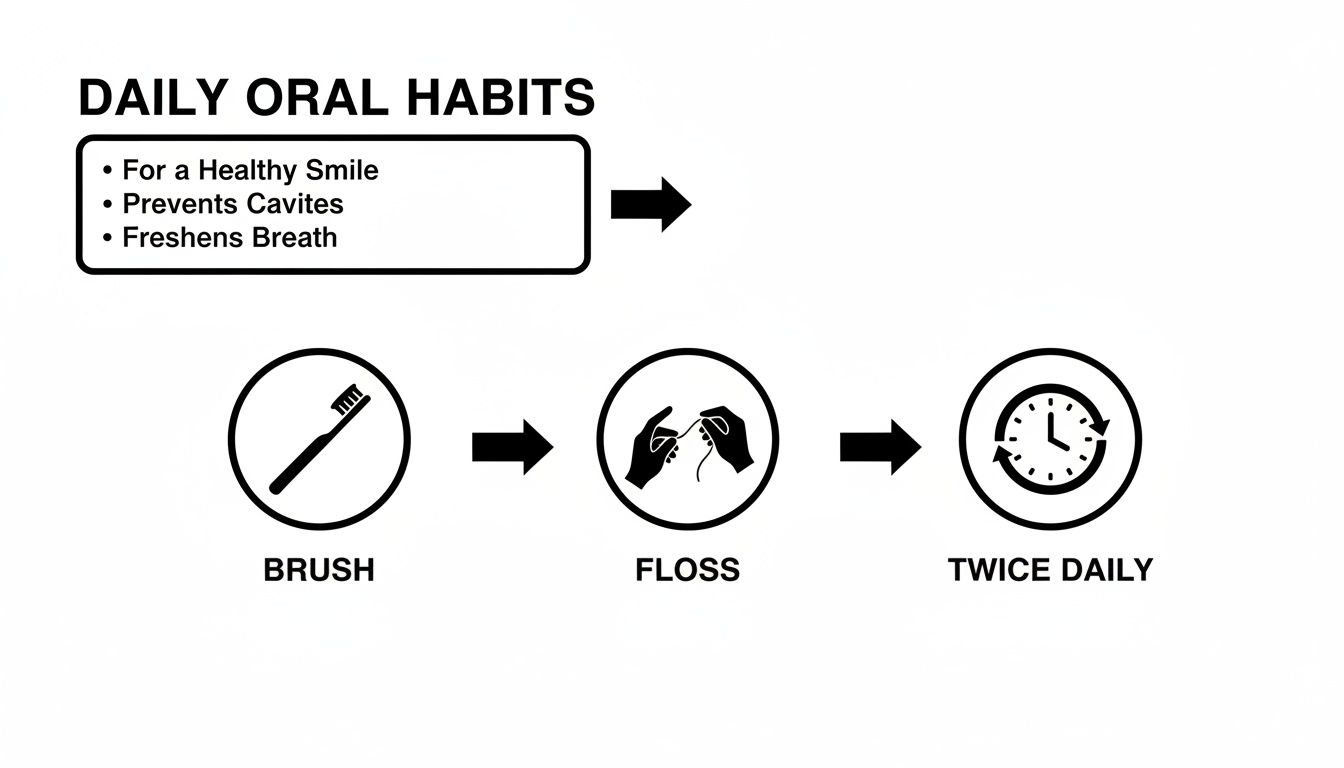
It’s all connected. Brushing, flossing, and smart food choices work together to protect your smile.
The Power of Hydration and Nutrients
Never underestimate the power of water. Staying hydrated is one of the easiest things you can do for your teeth because it keeps saliva flowing.
Saliva is your body’s built-in defense system. It neutralizes acids, washes away food particles, and bathes your teeth in essential minerals.
Beyond water, a few specific nutrients are superstars for dental wellness:
- Calcium: The main building block for your teeth and jawbone.
- Phosphorus: Works with calcium to keep enamel strong.
- Vitamin D: Helps your body absorb calcium effectively.
"Your diet is a daily opportunity to either feed the bacteria that cause cavities or to nourish the teeth and gums that protect your smile. Smart food choices are just as important as brushing and flossing." – Dr. Kalvin Nguyen, Kali Dental
Understanding how sugar affects your entire body is also important. A common question is, "Does sugar cause inflammation"? The answer has huge implications for your gum health.
Why Regular Dental Visits Make a Difference

It's easy to put a dental check-up on the back burner. But these visits are a proactive investment in your long-term health and comfort.
Regular preventive visits every six months allow for the early detection of cavities, gum issues, and even oral cancer. Routine cleanings can reduce long-term dental costs by catching problems before they worsen.
Beyond the Cleaning: Early Detection Is Key
During a professional cleaning, our hygienists use specialized tools to remove hardened plaque (tartar) that you can't remove at home. This is vital for preventing gum disease.
After your cleaning, Dr. Nguyen conducts a thorough exam. This is a crucial early warning system for your oral health.
This examination includes:
- Catching Cavities Early: We look for tiny spots of decay that can be treated with simple, minimally invasive procedures.
- Checking Gum Health: We check for signs of gingivitis, the earliest and most reversible stage of gum disease.
- Screening for Oral Cancer: We carefully examine the soft tissues of your mouth for any abnormalities.
The Financial and Health Benefits
It's a simple truth in dentistry: preventive care is always more affordable than fixing a problem. Catching an issue early can save you hundreds, sometimes thousands, of dollars.
The health benefits are even more significant. Gum disease is a major concern, but professional cleanings and early detection can halt its progression in most cases.
"A six-month check-up is your opportunity to press the 'reset' button on your oral health. It allows us to remove stubborn tartar and spot potential issues when they are small and easy to manage, ensuring your smile stays healthy and strong." — Dr. Kalvin Nguyen, Kali Dental
Finding the right dentist is about trust. That's why we created this guide to quality dental care in Huntington Beach, CA, to share why local families trust us.
The Mouth-Body Connection: Whole-Body Wellness

Your mouth is a direct window into your overall wellness. The link between oral health and the health of your entire body is surprisingly strong.
Poor dental hygiene has been linked to heart disease, diabetes, and even cognitive decline. Keeping your mouth healthy protects more than just your smile—it supports total body health.
How Oral Bacteria Impact Systemic Health
Your mouth is full of bacteria. If oral hygiene slips, harmful bacteria can multiply and cause infections like gum disease (periodontitis).
Chronic inflammation from gum disease can create openings in your gum tissue. This allows bacteria to escape into your bloodstream, causing inflammation elsewhere.
The Link to Heart Disease and Diabetes
Research has shown a strong connection between gum disease and cardiovascular health. Inflammation from your gums can contribute to clogged arteries, increasing the risk of heart attack and stroke.
The relationship with diabetes is a two-way street. Uncontrolled diabetes makes you more susceptible to gum disease, and a serious gum infection can make it harder to control blood sugar.
"We often tell our patients that their mouth is a mirror reflecting their overall health. When we address inflammation in the gums, we're not just saving teeth; we're helping to reduce a major source of stress on the entire body." — Dr. Kalvin Nguyen, Kali Dental
Protecting Your Brain and Lungs
The connections don't stop there. Studies suggest a tie between gum disease and a higher risk of cognitive decline, including conditions like Alzheimer's.
Bacteria from your mouth can also be inhaled into your lungs, leading to respiratory infections like pneumonia. Dive deeper into these connections in our guide on the surprising health impacts of oral care.
How Modern Technology Improves Your Dental Care
The days of intimidating dental offices are gone. Modern technology improves your experience, making visits more comfortable, diagnoses more precise, and treatments more effective.
Technology can improve care. Modern tools like digital X-rays and intraoral cameras help identify issues earlier and reduce treatment discomfort.
See What We See with Intraoral Cameras
One of the most impactful tools we use is the intraoral camera. It’s a tiny, pen-sized camera that gives us a real-time video tour of your mouth.
Instead of just telling you there's an issue, we can show you the image on a screen. This helps you understand your diagnosis and make informed decisions about your treatment.
Digital X-Rays: More Accuracy, Less Exposure
We use digital X-rays, which offer incredible benefits. They emit up to 90% less radiation than traditional film X-rays, making them a much safer option.
The images appear instantly on our screen with incredible detail. This allows Dr. Nguyen to catch problems when they are tiny and simple to fix.
"Technology in our practice isn't for show—it's for service. Every tool we use is chosen because it helps us deliver safer, more accurate, and more comfortable care to our Huntington Beach community." — Dr. Kalvin Nguyen, Kali Dental
This precision is key for treatments like Invisalign and dental crowns. Advanced digital scanners create flawless 3D models of your teeth without messy impression trays. Learn more about the tech behind a better dental experience in Huntington Beach.
Your Partner for Lifelong Oral Health
Maintaining a healthy smile comes down to three pillars: solid daily habits, smart food choices, and a dental team you trust. Each is critical for protecting you from common dental problems.
If you're in Huntington Beach—whether near Goldenwest or Huntington Harbour—Kali Dental makes it easy to stay on top of your oral health. We provide comfortable, preventive care and personalized tips to keep your smile strong year-round.
We believe an informed patient is an empowered one. If you're due for a check-up or have a question, we'd love to hear from you. Let's work together to ensure you have a healthy, confident smile that lasts a lifetime.
Frequently Asked Questions About Oral Health
How often should I really go to the dentist?
For most patients, a visit every six months is ideal. These check-ups allow us to catch small issues like cavities or early gum disease before they become bigger, more complex problems. Regular visits are the best way to invest in your long-term oral and overall health.
Is an electric toothbrush actually better than a manual one?
Electric toothbrushes often have an edge because their rotating heads are highly effective at removing plaque, and most have built-in two-minute timers. However, a manual brush can work just as well with the right technique. The best toothbrush is the one you will use consistently and correctly every day.
What are the first signs of a cavity?
Early on, a cavity may cause no symptoms at all, which is why regular check-ups are so important. As it progresses, you might notice sensitivity to sweet, hot, or cold foods, a persistent toothache, or a visible dark spot or hole in your tooth. If you experience any of these, schedule a visit right away.
My gums bleed when I floss. Should I be worried?
Bleeding gums are usually a sign of early gum disease, or gingivitis, caused by plaque buildup. It’s a signal to be more consistent with your hygiene, not to stop. Continue to floss gently every day, and the bleeding should resolve within one to two weeks as your gums heal.
What happens if I neglect my oral health?
Aside from common issues like cavities, bad breath, and tooth loss, poor oral hygiene can impact your entire body. The chronic inflammation from gum disease is linked to serious systemic conditions, including heart disease, diabetes, and stroke. Taking care of your mouth is a critical part of maintaining your overall wellness.
At Kali Dental, we are committed to helping you protect your smile. If you have more questions or are ready to schedule your next visit, contact our Huntington Beach office. Let's work together to keep your smile healthy and bright for a lifetime.